
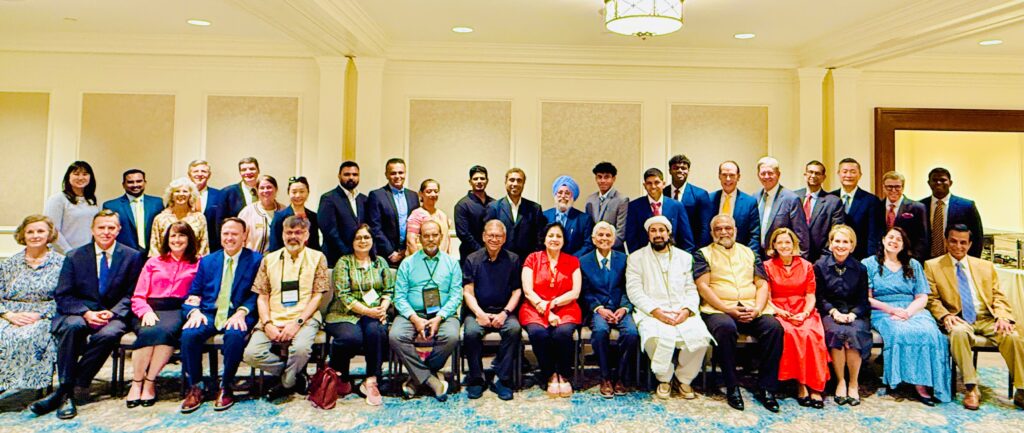
PROVO (Utah): Haji Syed Salman Chishty, the 26th-generation Gaddi-Nashin of Dargah Ajmer Sharif, represented the shrine and India at the 33rd Annual International Law and Religion Symposium at Brigham Young University (BYU) in the United States, highlighting India’s religious pluralism and the importance of protecting freedom of belief.
Held in Provo, Utah, under the theme “Building an Infrastructure for Freedom of Religion or Belief”, the symposium brought together ministers, ambassadors, United Nations officials, jurists, scholars and religious leaders from across the world.
Chishty offered the opening prayers, invoking peace, dignity and harmony among all faiths and nations. He also participated in a panel discussion titled “Religious Minorities in India: Experiences and Perspectives”, moderated by Prof. W. Cole Durham Jr., Founding Director of BYU’s International Center for Law and Religion Studies. Other panellists included Archbishop Felix Machado of the Diocese of Vasai and Pericho Peter Prabhu Rangaraj of the All Karnataka United Christian Forum for Human Rights.
Presenting Ajmer Sharif as a living example of India’s pluralistic traditions, Chishty highlighted how people from different religious communities have gathered at the shrine of Hazrat Khwaja Moinuddin Chishty, Gharib Nawaz, for more than eight centuries. He emphasised the shared tradition of sacred vegetarian langar meals as a symbol of unity beyond religious boundaries.
“India’s pluralism is one of the greatest gifts we can offer the world, and it is a gift we must also preserve, protect and enhance at home,” he said.
Referring to India’s constitutional values and diversity from Kashmir to Kanyakumari, Chishty said the country’s strength lay in the ability of people of different faiths to live, serve and celebrate together. He reiterated the message, “Love Towards All, Malice Towards None”, stressing that religious minorities should not merely be protected but should also feel a genuine sense of belonging.
He proposed establishing interfaith councils in every district to respond promptly to rumours and hate, promoting shared cultural heritage in classrooms, encouraging responsible digital spaces and strengthening global partnerships between academic institutions and grassroots organisations.
During the visit, Chishty met Dallin H. Oaks, President of The Church of Jesus Christ of Latter-day Saints. He conveyed the greetings and blessings of Dargah Ajmer Sharif and shared the universal message of love, service and peace associated with Khwaja Gharib Nawaz.
He also interacted with members of the Indian community in Utah, appreciating their contributions to American society and their role as cultural ambassadors of India. He encouraged them to uphold the values of unity in diversity, service and communal harmony.
Chishty expressed gratitude to BYU President C. Shane Reese, J. Reuben Clark Law School Dean David H. Moore, Prof. Brett G. Scharffs, Prof. Elizabeth A. Clark, Prof. W. Cole Durham Jr. and the International Center for Law and Religion Studies team for their hospitality. He also acknowledged the contribution of student ambassadors who helped make the delegates feel welcome.
“The spirit of service we saw at BYU reflects the very khidmat that Ajmer Sharif has taught for eight centuries,” he said.
Chishty is the chairman of the Chishty Foundation and a proponent of interfaith dialogue, peace and humanitarian service in India and internationally.