
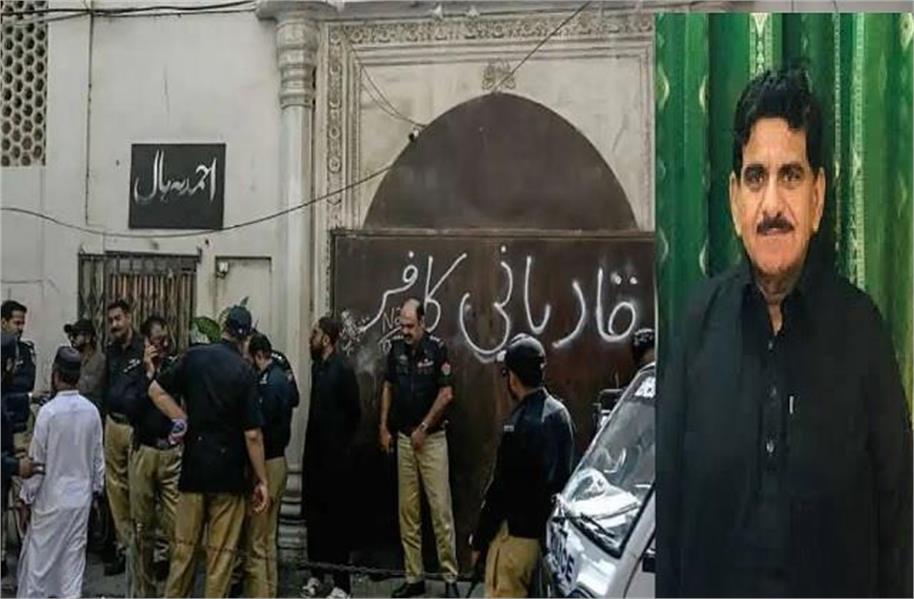
Lahore: A 65-year-old Ahmadiyya community leader, Safdar Mahmood, was shot dead by unidentified assailants in Pakistan’s Punjab province, with his family alleging that he was deliberately targeted because of his religious identity.
The killing took place on the evening of 2 September near the entrance of an Eidgah ground in Mandi Bahauddin district. According to the Ahmadiyya community, the attackers opened fire on Mahmood, killing him at the scene.
The murder has renewed concerns over the safety of Pakistan’s Ahmadiyya minority and allegations of growing religious hostility against the community. Mahmood is survived by his wife and two sons, while his funeral was held in Rabwah, the community’s principal centre.
In a police complaint, Mahmood’s son, Kamran Safdar, alleged that his father had no personal enmity with anyone and claimed the killing was intended to create fear among members of the Ahmadiyya community. Police, however, have yet to establish a religious motive.
Afzal Ahmed, an investigating officer at Mandi Bahauddin’s City Police Station, said authorities had begun searching for the unidentified attackers. Investigators are examining several possible motives, including Mahmood’s recent second marriage and his business affairs. Police said it was too early to conclusively determine whether the killing was religiously motivated.
The incident follows previous violence against Ahmadis in the district. In June 2024, two members of the community were shot dead in the Sadullahpur area. Police subsequently accused a teenage student of a local madrasa, alleging that he had been influenced by a cleric’s speech and regarded Ahmadis as ‘infidels’. The case remains before the courts, with the accused facing the possibility of the death penalty if convicted.
Ahmadiyya spokesperson Amir Mahmood described Safdar Mahmood’s death as the first reported killing in Pakistan this year of an Ahmadi allegedly targeted because of his religious identity. In a statement issued on 3 September, he alleged that campaigns of hatred and incitement against Ahmadis continued in Mandi Bahauddin and other parts of Pakistan.
Sohail Alam, a member of Punjab’s Minority Advisory Council, termed the killing unfortunate and urged police to ensure an impartial investigation, secure the early arrest of the perpetrator and strengthen intelligence measures in sensitive areas.
The Ahmadiyya movement originated in British India in the 19th century. Its followers regard themselves as Muslims, although their beliefs concerning the finality of Muhammad’s prophethood differ from mainstream Islamic doctrine. Pakistan declared Ahmadis non-Muslims in 1974 and subsequently introduced legal restrictions on their use of Islamic terminology and religious symbols.
Pakistan’s 2023 census recorded 162,684 Ahmadis. The Ahmadiyya community’s annual report said that three Ahmadis were killed for religious reasons in 2025, while one death in police custody and five attempted killings were also recorded.