
As many as 70 people reportedly lost their lives in police firing on protesters across Pakistan-occupied Jammu and Kashmir (PoJK) during July 2026, exposing the growing gulf between the trajectories of the two sides of the Line of Control (LoC).
For decades, the international discourse on Jammu and Kashmir was trapped in a familiar cycle of diplomatic rhetoric and political theatre. Every year, August 5 brings this contrast into sharp focus. While the Narendra Modi government commemorates the anniversary of the abrogation of Article 370 as a milestone in national integration and economic transformation, Pakistan observes Youm-e-Istehsal (Day of Exploitation), projecting a narrative of repression for domestic audiences and international forums.
Yet, in the realist tradition of international relations, competing narratives are ultimately judged not in diplomatic chambers but through measurable outcomes—economic performance, governance, infrastructure, and state capacity.
An examination of the two sides of the LoC reveals an increasingly stark structural divergence. Jammu and Kashmir is witnessing sustained public investment, infrastructure expansion, and economic integration, while Pakistan-occupied Jammu and Kashmir remains mired in economic stagnation, institutional neglect, extractive governance, and growing public unrest.
The contrast is perhaps most evident in the architecture of connectivity. In geopolitics, infrastructure is more than concrete and steel; it reflects political intent. It determines whether a territory is treated as an integral economic asset or merely as a strategic buffer.
India has clearly chosen the former. Since 2019, Jammu and Kashmir has witnessed an unprecedented expansion of connectivity. The integration of the region into the national railway network marks a historic turning point. Engineering landmarks such as the Chenab Bridge—the world’s highest railway bridge—are not only feats of engineering but also strategic assets that dramatically reduce travel time and integrate Kashmir with the broader Indian economy. Modern airports, all-weather highways, tunnels, and expanding logistics corridors are steadily transforming the region from a geographically isolated conflict zone into a major economic gateway.
The situation across the LoC presents a markedly different picture.
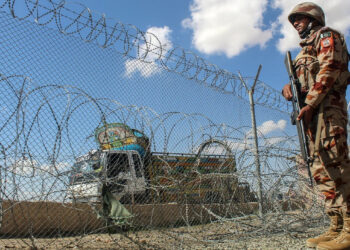
PoJK continues to suffer from chronic infrastructural isolation. The region lacks railway connectivity and remains dependent on narrow, ageing, and geographically vulnerable road networks. Although the Karakoram Highway passes through the broader region, its primary function is to facilitate strategic and commercial transit between China and Pakistan under the China-Pakistan Economic Corridor (CPEC). The economic benefits for local communities have remained limited. Rather than serving as an engine of regional development, infrastructure has largely been designed to meet Islamabad’s security priorities and Beijing’s strategic interests.
These contrasting policy choices are reflected in economic outcomes.
Post-2019 reforms have significantly expanded Jammu and Kashmir’s economic potential. The removal of administrative barriers, new industrial policies, improvements in ease of doing business, expanding digital infrastructure, and greater public investment have encouraged private capital. Jammu and Kashmir’s Gross State Domestic Product (GSDP) is projected to reach approximately ₹2.65 lakh crore (around US$30 billion) in 2024-25, with real growth estimated at over 7 percent.
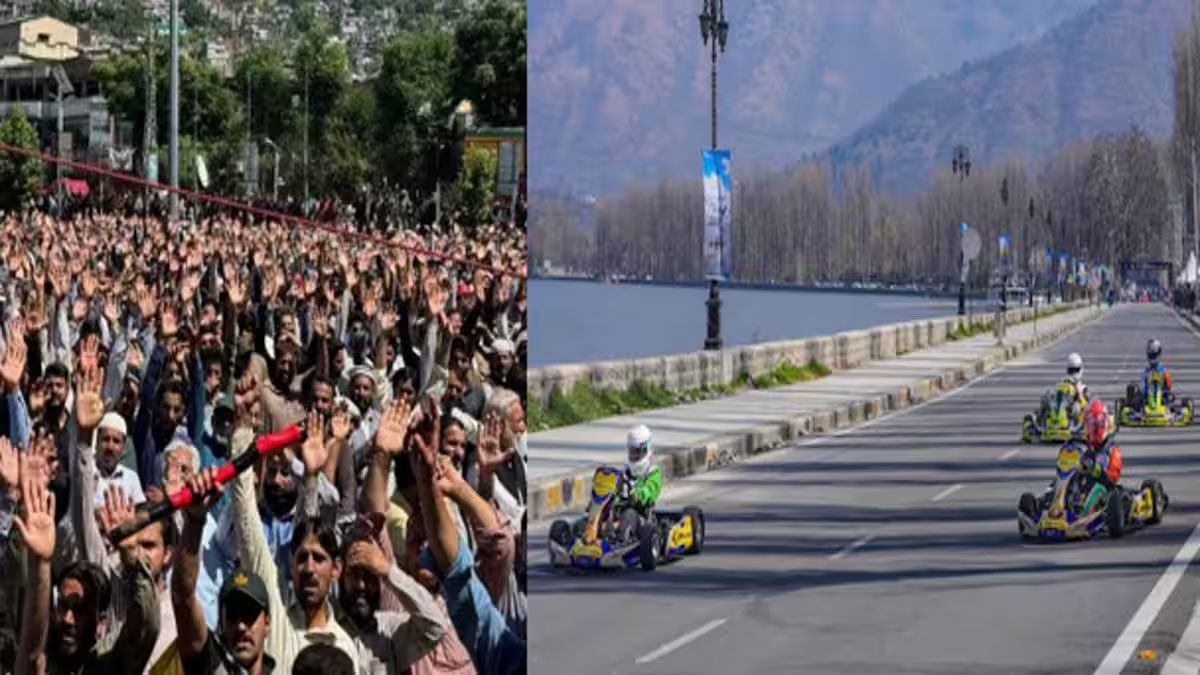
Tourism, historically one of the region’s economic pillars, has experienced an unprecedented revival. More than 2.36 crore visitors have travelled to Jammu and Kashmir in recent years, generating employment across hospitality, transport, handicrafts, retail, and services. The resulting multiplier effect has contributed to a more vibrant urban economy, particularly in Srinagar, where expanding commercial activity and nightlife reflect growing investor confidence and improving security conditions.
Across the LoC, however, economic realities remain far less encouraging.
PoJK’s economy is estimated at roughly US$6 billion—only a fraction of Jammu and Kashmir’s output—and remains heavily dependent on Pakistan’s financially strained economy. Rather than encouraging diversified growth, the region functions largely as a supplier of natural resources, particularly hydroelectric power, to Pakistan.
Large projects such as the Mangla and Neelum-Jhelum dams generate substantial electricity for Pakistan’s national grid. Ironically, many residents of PoJK continue to endure prolonged power outages lasting 12 to 14 hours a day while paying high electricity tariffs. This disconnect between resource generation and local welfare has become a major source of public resentment.
The consequences have become increasingly visible.
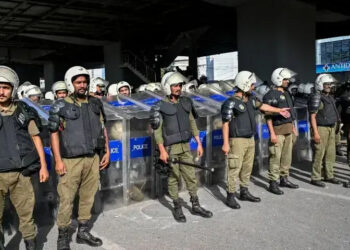
Over the past year, widespread protests have swept across PoJK—not over geopolitical slogans but over basic economic grievances such as soaring wheat prices, electricity bills, unemployment, and perceived administrative neglect. During July 2026 alone, protests reportedly spread across Rawalakot, Poonch, Mirpur, Kotli, Sudhnoti, Muzaffarabad, Bagh, Bhimber, Dadyal, and Amb. Reports indicate that approximately 70 people were killed and more than 300 injured in clashes involving police and paramilitary forces. Some estimates suggest the death toll could rise further, although independent verification remains difficult amid reports of internet restrictions imposed since early July.
Ironically, the kind of mass public unrest that Pakistan long sought to encourage in Jammu and Kashmir has increasingly emerged within territories under its own administration, fuelled not by constitutional questions but by everyday economic hardship and governance failures.
The divergence extends beyond economics.
Jammu and Kashmir has also invested substantially in disaster preparedness through improved emergency response systems, climate-resilient infrastructure, modern forecasting capabilities, and institutional capacity. In contrast, PoJK continues to face recurring floods, landslides, and infrastructure failures with limited administrative autonomy and inadequate financial resources, leaving local authorities poorly equipped to respond effectively.
Ultimately, the contrasting trajectories of Jammu and Kashmir and Pakistan-occupied Jammu and Kashmir illustrate a fundamental geopolitical reality: political narratives cannot compensate for deficits in governance, infrastructure, and economic opportunity.
By integrating Jammu and Kashmir more fully into India’s constitutional and economic framework, New Delhi has sought to unlock the region’s long-term developmental potential and connect it more closely with one of the world’s fastest-growing major economies. Pakistan’s approach, by contrast, has left PoJK economically dependent, institutionally constrained, and increasingly vulnerable to domestic discontent.
As investment, connectivity, and institutional capacity continue to expand in Jammu and Kashmir, the developmental gap across the Line of Control is likely to become even more pronounced. In the long run, it is these material realities—not competing diplomatic narratives—that will shape international perceptions of the region.