
Within hours of announcing the closure, Pakistan, like a jet, reversed its decision to bar Taiwanese airlines from its airspace, restoring overflight rights just hours after announcing restrictions in support of Beijing’s One-China policy. The swift U-turn comes after Defence Minister Khawaja Asif confirmed the initial ban to Bloomberg.
Faster than an aircraft, Pakistan has reversed its decision to bar Taiwanese airlines from using its airspace, restoring overflight rights to the island’s two major carriers just hours after Defence Minister Khawaja Asif said Islamabad was restricting access in support of Beijing’s One-China policy.
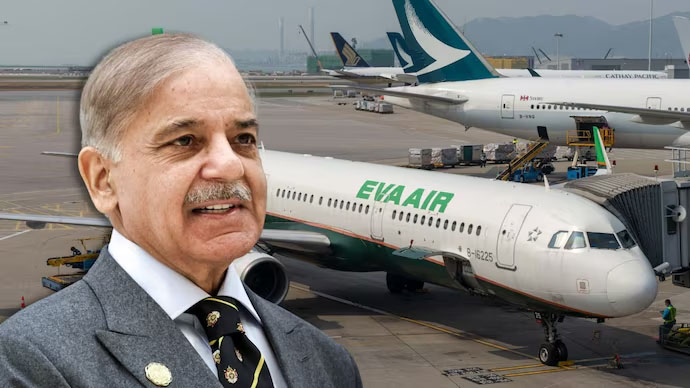
Pakistan’s Civil Aviation Authority has permitted China Airlines Ltd and Eva Airways Corp, commonly known as EVA Air, to use Pakistani airspace from October 28 to March 27, 2027, according to documents dated October 28 cited by Bloomberg. The development was reported by Bloomberg, which cited a person familiar with the situation.
The reversal came shortly after Asif, who also oversees aviation, told Bloomberg that Pakistan’s aviation division followed the One-China policy, under which only mainland China was allowed to use its airspace.
“We have permitted only Chinese airlines to fly over Pakistan,” Asif said, according to Bloomberg.
The initial restriction had made Pakistan the first country reported to have barred Taiwanese carriers from its airspace in support of Beijing’s position on Taiwan. However, the subsequent approval for the two airlines marked a swift reversal of that decision.
The reason behind Islamabad’s change of position was not immediately clear.
TAIWANESE AIRLINES HAD ALREADY REROUTED FLIGHTS
The brief restriction had disrupted established flight paths used by Taiwanese airlines operating between Asia and Europe. According to Bloomberg, flight-tracking data from Flightradar24 showed that China Airlines and EVA Air had stopped flying over Pakistan from the morning of October 25.
At least a dozen flights operated by the two carriers between Asia and Europe had taken longer routes over Russia since Sunday, October 25, the report said. The airlines had also been routing aircraft through other parts of South Asia and the Middle East.
China Airlines and EVA Air declined to comment to Bloomberg, while Taiwan’s Civil Aviation Administration did not comment on the rerouting.
Taiwanese airlines have largely avoided Russian airspace since Russia’s invasion of Ukraine in February 2022, following the lead of several Asian, European and North American carriers. Although they were not formally prohibited from using Russian airspace, airlines have generally steered clear of routes that could expose aircraft to risks associated with the conflict.
The disruption had threatened to increase journey times and operating expenses for Taiwanese carriers. Longer routes typically require more fuel and can add to crew and other operational costs.
WHY PAKISTAN’S DECISION MATTERS TO CHINA
Beijing considers Taiwan part of its territory and opposes moves that could imply the island is an independent state. Taiwan, which governs itself, rejects Beijing’s claim to sovereignty over it.
China has used diplomatic and economic pressure to discourage governments from treating Taiwan as a separate political entity. Pakistan’s initial airspace restriction appeared to extend that position into international aviation, potentially affecting Taiwanese airlines’ access to important routes between Asia and Europe.
Other countries have also taken measures affecting Taiwan’s international engagement. In April 2026, Seychelles, Mauritius and Madagascar revoked overflight permission for Taiwanese President Lai Ching-te, forcing him to postpone a visit to Eswatini.
Somalia stopped accepting Taiwanese passports from April 30, 2025, while Kenya denied Taiwanese scholars access to a pre-conference event in Mombasa in June 2026, citing its One-China position.
Those measures differed from Pakistan’s initial decision, which directly concerned Taiwanese commercial aircraft flying through Pakistani airspace. Islamabad’s subsequent reversal means the two carriers have now received permission to use that airspace for the period specified in the documents.
PAKISTAN AND CHINA’S CLOSE STRATEGIC PARTNERSHIP
Pakistan and China maintain close economic, military and diplomatic ties, reinforced by Chinese President Xi Jinping’s Belt and Road Initiative and the China-Pakistan Economic Corridor, which has channelled billions of dollars into infrastructure and other projects in Pakistan.
The two countries describe their relationship as an “all-weather” strategic partnership, with Chinese officials frequently referring to Pakistan as an “iron-clad friend”.
Pakistan severed official relations with Taiwan in 1951 in favour of closer ties with Beijing. Its initial airspace restriction appeared to take its support for China’s One-China policy further than mainland China’s own aviation practice, as Chinese airspace remains open to Taiwanese airlines.
The swift reversal, however, has left questions about the reasoning behind Islamabad’s initial move and its subsequent decision to restore overflight rights.
(This article was earlier published with the information that Pakistan had barred Taiwanese airlines from its airspace. It has been updated to reflect the reversal of the decision by Pakistani authorities.)