
By Chandan Singh | Page 3 News Worldwide | New Delhi
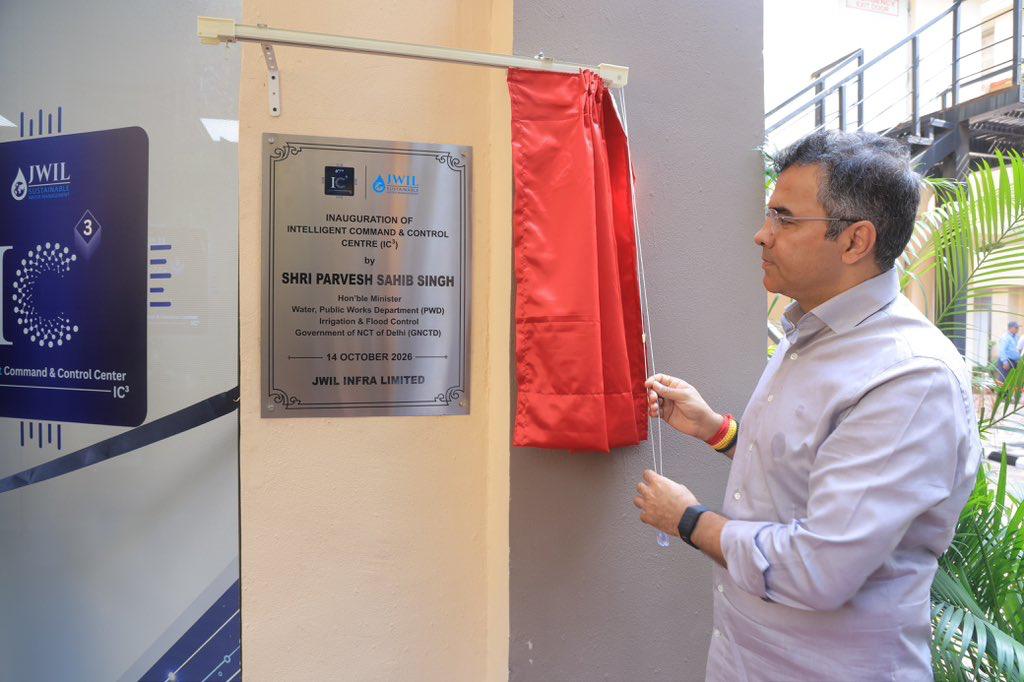
New Delhi: Delhi is moving towards smarter water management, with Water Minister Parvesh Sahib Singh inaugurating an Intelligent Command & Control Centre (IC³) and flagging off a dedicated Emergency Response Vehicle to improve leak detection, reduce water wastage and speed up repairs.
The initiatives were launched at JWIL Infra Limited’s office on Shivaji Marg, New Delhi, with the aim of strengthening water supply network monitoring, improving accountability and ensuring quicker responses to consumer complaints and pipeline disruptions.
The IC³ facility will integrate network monitoring, maintenance, consumer complaints and field operations on a single digital platform. It will enable officials to monitor water supply infrastructure, identify vulnerable locations, track repair teams and review complaint status through an integrated dashboard.
The platform brings together data from Supervisory Control and Data Acquisition (SCADA) systems, Geographic Information Systems (GIS), smart meters, consumer complaints, maintenance systems and GPS-enabled field vehicles.
Artificial Intelligence (AI) and digital-twin technology will also help anticipate pipeline bursts, identify low-pressure areas and assess demand patterns. The system is expected to support a shift from reactive repairs to identifying potential problems before they develop into major disruptions.
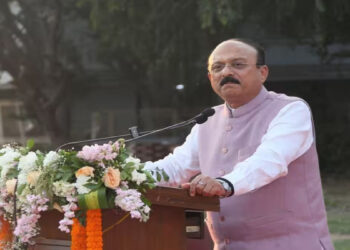
Speaking at the inauguration, Singh said water management was not limited to supplying water but also involved preventing wastage, identifying problems quickly and ensuring that residents did not suffer because of pipeline leaks or avoidable disruptions.
“Technology must translate into a visible improvement in the everyday lives of Delhi’s residents,” he said.
Emphasising the importance of accountability, the minister said the government’s focus was on reducing water wastage, speeding up repairs and ensuring that complaints and the action taken on them could be tracked. He added that technology should help officials make better decisions on the ground and improve public services.
The Emergency Response Vehicle has been designed to address delays in arranging equipment during major pipeline repairs. It is equipped with high-capacity submersible dewatering pumps, a 60 kVA generator set and essential repair equipment, allowing it to operate independently of power availability at the site.
Integrated with the IC³ platform through GPS, the vehicle will enable the control room to track its location and coordinate its deployment during emergencies.
The vehicle is expected to reduce repair delays, shorten water supply interruptions and minimise water loss and damage to roads. It will support emergency response operations across all three packages of the Chandrawal Water Supply Project.
“A few minutes can make a significant difference when a major water pipeline develops a leak. Having equipment ready to move, instead of arranging it after an emergency occurs, can save time and help restore services sooner. This is the kind of practical improvement Delhi needs,” Singh said.
JWIL is currently executing the Delhi Jal Board’s Chandrawal Water Supply Project under Packages 2, 3 and 4. The areas covered by these packages together account for approximately 10 per cent of Delhi’s population and geographical area, including important VIP areas.
The new command centre and emergency response vehicle are intended to strengthen operational coordination and help Delhi move towards more efficient water network management, with faster repairs, reduced losses and improved service delivery for residents.