
Breaking up Pakistan’s giant provinces could weaken alternative centres of power and make the country’s administrative structure more responsive to the demands of the military establishment.
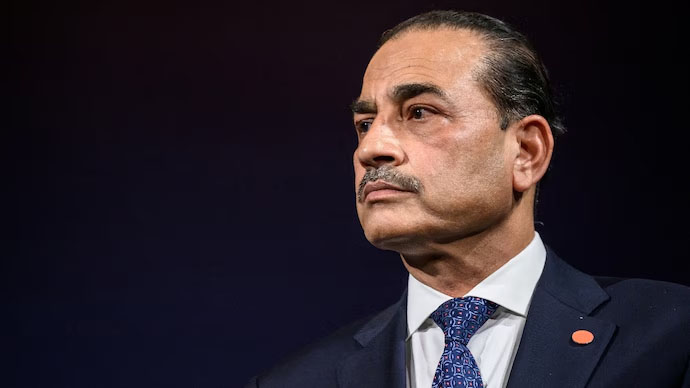
The biggest change to Pakistan’s political map in decades could be under consideration. Pakistan is currently organised around four provinces — Punjab, Sindh, Khyber Pakhtunkhwa and Balochistan. The Economist reports that army chief Field Marshal Asim Munir now wants to divide these large provinces into smaller states, potentially creating anywhere from 12 to 15 new provinces or even 160 smaller territories.
The proposal would amount to a fundamental overhaul of how power is organised across Pakistan. It would not simply change the names or boundaries on a map. Breaking up Pakistan’s giant provinces could weaken alternative centres of power and make the country’s administrative structure more responsive to the demands of the military establishment.
On paper, there is a straightforward case for restructuring Pakistan’s provinces. The four existing provinces are vastly different in population and size. Punjab, the country’s most populous province, has around 128 million people, or more than half of Pakistan’s population. Balochistan, despite being the country’s largest province by area, has only about 15 million residents.
Governing Punjab’s enormous population has produced serious administrative problems. In rural areas, residents can travel for hours to access government services, while fewer than a quarter of Punjabis have reliable access to safe drinking water at home, according to the report.
Munir has argued that the provinces are simply too large to be governed effectively and that this contributes to Pakistan’s poor performance.
Pakistan’s problems are difficult to dispute. The country has struggled with weak growth, high inflation and punishing debt-servicing costs. But the causes run much deeper than the size of Pakistan’s provinces.
ASIM MUNIR’S RISING INFLUENCE
The military has directly ruled Pakistan for more than two-fifths of the country’s history, while elected governments have often operated under its shadow. The Economist argued that the military itself has contributed to many of the problems Munir says smaller provinces could solve. It noted the army’s control over valuable land and businesses, as well as its large share of state resources.
That creates the contradiction surrounding the proposal.
If Pakistan’s provincial governments are failing to deliver, breaking them into smaller units could be presented as an attempt to bring government closer to citizens. But if the new units are weaker and more dependent on the centre, the restructuring could also make it easier for the military establishment to exercise influence over them.
WHY PUNJAB AND SINDH MATTER
Pakistan’s four provinces are not simply administrative divisions. They are also major political power bases. Punjab has traditionally been dominated by the Pakistan Muslim League-Nawaz, while Sindh remains the stronghold of the Pakistan Peoples Party.
Both provinces have provided alternative centres of political power even during periods of military rule. That makes the prospect of breaking them into smaller units politically significant.
The large provinces have acted as a counterweight to the central government precisely because of their political and electoral strength. Splitting them into smaller units could dilute that influence. The question, therefore, is not only whether smaller provinces would be easier to govern.
It is whether smaller provinces would also be easier for the centre to control.
THE IDEA IS NOT NEW
The proposal to reorganise Pakistan’s administrative structure is not new. Planning Minister Ahsan Iqbal has previously spoken about the need for a larger number of provinces and smaller administrative units, including the possibility of 12 to 15 provinces and up to 160 districts.
The proposal is emerging at a time when Munir has accumulated extraordinary grip over Pakistan’s politics. Munir effectively rules Pakistan despite the existence of an elected government. He has strengthened his position by working with the PML-N and PPP while keeping Imran Khan, the leader of Pakistan’s third major political force, in jail.
Khan’s supporters have protested his imprisonment. Authorities have responded with crackdown on his movement.
That political backdrop makes the proposed restructuring difficult to separate from the wider struggle over power in Pakistan.
PAKISTAN IS ALREADY FACING UNREST IN KP
The debate over provincial restructuring comes as Pakistan is dealing with fresh political turmoil in Khyber Pakhtunkhwa.
Thousands of supporters of jailed former Prime Minister Imran Khan began a march towards Islamabad earlier this week after talks between Khan’s Pakistan Tehreek-e-Insaf and the government failed. The march began in KP, which is governed by Khan’s party. The Pakistani government has deployed heavy security around Islamabad and vowed to prevent the protesters from entering the capital.
The march has put additional pressure on the relationship between the federal government and the PTI-led administration in KP, at a time when the province is also dealing with a serious militancy problem.
BALOCHISTAN AND POK ADD TO THE PRESSURE
Pakistan’s political map is also being tested by unrest beyond the four provinces.
Balochistan has for years faced separatist violence over its so-called independence, resources and the role of Islamabad. Any attempt to divide the province would therefore involve highly sensitive questions about territory, resources and local political power.
Pakistan-occupied Kashmir has also remained an important source of discontent, with anger over governance, prices, taxation and economic conditions periodically spilling into protests. Together, these pressures underline how complicated any attempt to redraw Pakistan’s internal structure would be.
There is a genuine administrative argument for smaller provinces. Pakistan has grown enormously since 1947, and some of its existing states are vast and difficult to govern. Against that backdrop, breaking four powerful provinces into smaller states would not simply redraw Pakistan’s administrative map. It could redraw Pakistan’s balance of power.