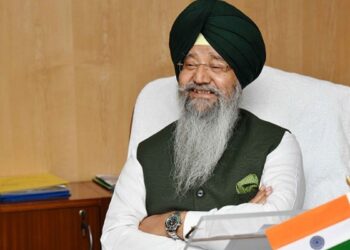

By Dr Iqbal Singh Lalpura
Every human being is given a choice every morning when he or she opens their eyes: to live with gratitude or to live with anger. We can look at life and count our blessings, or we can count our complaints. We can remember the kindness we have received, or continue carrying the pain caused by those who may have hurt us. We can appreciate what God has given us, or remain dissatisfied because of what we believe has been denied to us. The circumstances of life may not always be in our hands, but our
response to those circumstances certainly is.
Gratitude and anger cannot comfortably live together. One brings peace to the mind, while the other burns the heart. One makes us humble and compassionate, while the other fills us with bitterness, complaints and grudges. The choice, ultimately, is ours.
Religion, in its purest sense, is a path that helps human beings realign themselves with the Divine. Throughout history, prophets, saints, sages, Gurus and enlightened souls have appeared in different parts of the world. They spoke different languages, lived in different cultures and used different expressions, but their essential message was remarkably similar. They taught humanity to rise above hatred, greed, ego and ignorance. They encouraged love, compassion, truth, service and remembrance of the Divine.
Humanity has given these paths different names and created different traditions around them, but the destination remains the same. Religion was meant to become a bridge between human beings and God, not a wall between one human being and another. Unfortunately, over time, we have often become more concerned with the outer form of religion than with its inner message. We argue about identities, rituals, customs and interpretations, but frequently forget the fundamental purpose of spiritual wisdom: to transform the human being from within.
Since time immemorial, kings and rulers have also compelled people to live according to their own way of life. In many periods of history, people were forced to accept the religion of the ruler under the threat of death or persecution. Such coercion was often presented as a religious duty, although it was essentially a means of political control. Even today, in democratic societies, enormous resources are sometimes spent persuading people to follow particular religions or specific interpretations promoted by influential religious organisations. Religious institutions, preachers and groups may compete to expand their influence, followers and resources.
There is nothing wrong with supporting genuine religious or charitable work. Institutions require resources, and spiritual traditions have contributed greatly to education, healthcare and humanitarian service. The danger begins when religion becomes a business, spirituality becomes a product and human beings become customers or followers rather than sincere seekers of truth. A person who is already confused or unhappy can become even more dependent when repeatedly told that happiness exists somewhere outside himself—in another place, another ritual, another object or another person.
When there is one God and we are all His children, why do we not live like one family? Why do we not learn from all the scriptures and benefit from the wisdom given to humanity through different spiritual traditions? Instead of fighting over the ownership of religion, we should seek the common truth contained in its teachings. We should respect every genuine path that encourages love, compassion, honesty, service and humility, while remaining cautious of those who turn faith into a business or use religion merely to control others.
Guru Nanak Dev Ji expressed one of the most profound spiritual truths in a few simple words: “Man tu jot sarup hai, apna mool pachhan.” O mind, you are the embodiment of Divine Light; recognise your own origin. What could be a greater spiritual teaching than this? The human being spends a lifetime searching for God outside himself. We travel to sacred places, visit temples, gurdwaras, mosques and churches, meet saints and listen to religious discourses. All these efforts may be meaningful if they help us discover the Divine Light that already exists within us. But the tragedy is that we often forget the most important part: recognising and transforming ourselves.
Guru Nanak Dev Ji gave another universal message: “Ek Pita Ekas Ke Hum Barik”—we are all the children of the One Father. If we truly accept this principle, humanity itself becomes one family. Similarly, the Guru rejected the divisions created by caste and social status, reminding us through the teaching “Jaano jot, na puchho jaati; aage jaat na hai” that we should recognise the Divine Light within a person rather than ask about his or her caste. In South Asian society, the caste system has divided people for centuries, but the Divine Light within all human beings remains the same. Our bodies, languages, social positions and identities may differ, but our spiritual origin is one.
If I understand that the Divine Light exists within me, how can I hate another human being? If I understand my divine origin, how can I allow jealousy, anger and revenge to dominate my life? If I recognise that my life itself is a precious gift, how can I spend every day complaining about what I do not possess? The purpose of spiritual wisdom is not merely to increase our knowledge. Its purpose is to change the way we live.
Our scriptures contain the recipes for a meaningful life, but a recipe is useful only when it is followed. Knowing that healthy food is good does not improve health unless we eat it. Knowing the importance of exercise does not strengthen the body unless we exercise. Similarly, listening to spiritual wisdom does not transform us unless we bring that wisdom into our daily conduct.
We are told to remember sacred verses and recite them repeatedly. We may memorise large portions of religious literature. These practices can undoubtedly be valuable, but recitation without implementation can become mechanical. The real question should be whether the teaching has changed our behaviour. Has our anger reduced? Have we become more compassionate? Do we speak more gently? Do we forgive more easily? Do we feel grateful for our lives? Are we less jealous of others? Do we serve those who need help? If our religious practice does not gradually make us better human beings, then perhaps we need to return to the original purpose of religion.
Guru Nanak Dev Ji made spirituality wonderfully practical. He did not ask human beings to run away from life, nor did he teach that happiness belongs only to those who abandon the world. He taught humanity how to live in the world without becoming imprisoned by it. The Guru Granth Sahib beautifully expresses this wisdom: “Nanak Satgur bhetiya puri hove jugat; hasandia khalendia pahanendia khawandia viche hove mukat.” When one meets the True Guru, one learns the complete way of living; while laughing, playing, dressing and eating, one can still attain liberation.
Life is not meant to be a permanent punishment. It is a divine opportunity. We can laugh, play, enjoy good food, wear good clothes, love our families, work, travel and participate in society. Yet, while living fully in this world, we can remain spiritually free. This is one of the most practical definitions of spirituality: to enjoy the gifts of life without becoming a slave to them. Enjoyment is not the problem; attachment is. Possessions are not the problem; possessiveness is. Success is not the problem; ego is. Relationships are not the problem; expectations and the desire to control others often are. The world is not the prison; our uncontrolled desires, anger, jealousy and ego can become the prison.
God has given us human life. Whether we understand the full mystery of creation or not, one fact is undeniable: we are here. We have been given the ability to think, love, learn, serve and create. We can see the sunrise, listen to music, enjoy the beauty of nature, hold the hands of those we love and experience the countless miracles of existence.
Yet the human mind has an extraordinary ability to ignore hundreds of blessings and focus upon one complaint. We may have good health but complain about a minor inconvenience. We may have a loving family but remain upset because someone did not behave according to our expectations. We may possess enough for a comfortable life but remain unhappy because someone else possesses more. We may receive a hundred acts of kindness but spend years remembering one insult.
Gratitude trains the mind to see differently. It does not mean that life is perfect. Every human being experiences loss, disappointment, injustice and pain. Being grateful does not mean pretending that suffering does not exist. It means refusing to allow suffering to become the only story of our lives. We can acknowledge pain and still appreciate life. We can face difficulties and still thank God. We can lose something and still recognise what remains. We can disagree with people without hating them. We can remember the past without becoming prisoners of it.
Anger may sometimes be a natural human emotion, particularly when we witness injustice. But when anger becomes our permanent companion, it begins to destroy us from within. A grudge is especially dangerous because it allows another person to occupy our mind without paying any rent. We repeatedly revisit old conversations, remember the insult, imagine what we should have said, wait for an apology and hope that the other person will suffer. Meanwhile, our own peace disappears.
Guru Tegh Bahadur Ji gave us a courageous and dignified way of life through the principle: “Bhai kahu ko det neh, neh bhai manat aan.” We should neither threaten or intimidate another person, nor should we live under the fear or intimidation of anyone else. This is not a call for anger or hatred. It is a call to live with courage, dignity and righteousness. True strength does not require us to dominate others, and true spirituality does not require us to live in fear.
The person against whom we hold a grudge may have forgotten the incident long ago, but we continue carrying it every day. Why should we surrender our present happiness to the mistakes of the past? Forgiveness does not always mean that we approve of what someone has done. It does not mean that we must forget injustice or allow wrongdoing to continue. Forgiveness means that we refuse to poison our own hearts. The greatest punishment we can give ourselves is to remain angry for years. The greatest freedom we can give ourselves is to let go.
God has given us consciousness and the ability to choose. Every day, we can choose between gratitude and complaint, forgiveness and resentment, peace and anger, love and hatred, appreciation and endless dissatisfaction. No one can make this choice for us. Religion can guide us, scriptures can inspire us, and saints and teachers can show us the path, but ultimately we have to walk it. We have to implement the wisdom and transform our own minds.
Guru Gobind Singh Ji expressed this spirit of righteous action in the prayer: “Deh Shiva var mohe eh, shubh karman te kabhun na taron.” Grant me this boon, O Divine Power, that I may never refrain from doing righteous and noble deeds. Spirituality should not make us passive observers of life. It should give us the courage to do good, serve humanity, stand against injustice and fulfil our responsibilities without hatred in our hearts.
I have chosen gratitude. I choose to thank God for the life He has given me—for the opportunities, the experiences, the people I have met, the lessons I have learned and even the difficulties that have made me stronger. I may not understand everything that has happened in my life, but I can still be grateful for life itself.
Let us look at our lives not through the eyes of complaint but through the eyes of gratitude. Let us thank God for another morning, another opportunity and another breath; for the people who love us, for the lessons that have shaped us and for the Divine Light that exists within every human being.
The choice is before us. We can live with anger, complaints and grudges, or we can live with gratitude, peace and love. I choose gratitude. Let us all thank Him.
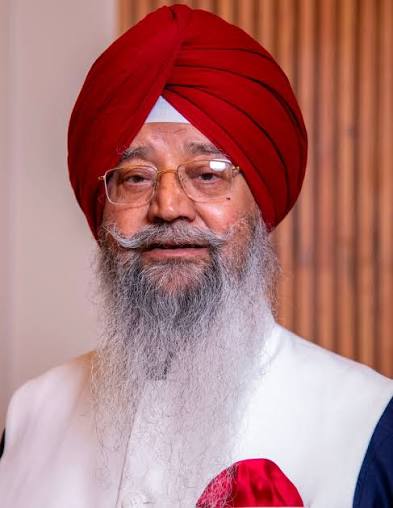
Former Chairman, National Commission for Minorities
Government of India