

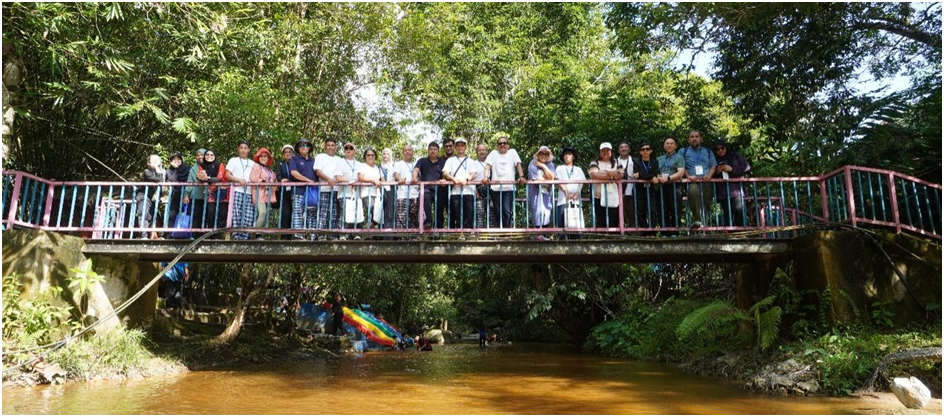
ICA-AP immersion programme brings participants from seven countries together to explore sustainable, community-led tourism in Pahang
Kuala Lumpur: Malaysia’s cooperative tourism model took centre stage as the International Cooperative Alliance–Asia and Pacific (ICA-AP), in collaboration with the Malaysian National Cooperative Movement (ANGKASA), hosted a three-day Regional Immersion Programme titled “Coop Tourism – Unlocking Business Potential” in Pahang from July 22 to 24, 2026.
The programme brought together 23 delegates representing 14 organisations from seven Asia-Pacific countries—India, Japan, Indonesia, Palestine, Cambodia, Vietnam and the Philippines—to study how community-led cooperatives can create sustainable and commercially viable tourism enterprises.
Hosted by Koperasi Homestay Kampung Peruas Raub Berhad (KOPERAD) in Kampung Peruas, Raub, participants experienced Malaysia’s rural cooperative tourism model through cultural performances, traditional cuisine, heritage demonstrations and hands-on village activities. The delegates explored local agriculture, traditional Malay attire, indigenous cuisine and community games designed to preserve local customs while generating economic opportunities for villagers.
The immersion also highlighted the integration of agriculture and eco-tourism through activities such as rubber tapping demonstrations and the Awan Karpet Trail Walk, illustrating how natural resources and traditional livelihoods can be transformed into sustainable tourism products.
A knowledge-sharing session on July 24 featured presentations on Malaysia’s cooperative tourism ecosystem and community-based tourism development. Delegates from all seven participating countries exchanged experiences and discussed opportunities to strengthen cooperative tourism across the Asia-Pacific region through regional collaboration and knowledge exchange.
The programme concluded with an official dinner attended by senior Malaysian government representatives, cooperative leaders and ICA-AP officials, who underscored cooperative tourism’s potential to boost rural economies, promote cultural preservation and expand regional partnerships.
On July 25, delegates visited Koperasi Sekolah Menengah Kebangsaan Temin (KOSTEM), a school cooperative that has developed a tourism package centred on Taman Negara National Park. Participants experienced canopy walks, jungle trekking, visits to an Orang Asli village and river activities, while observing how the cooperative combines tourism, entrepreneurship and experiential learning to benefit students and the surrounding community.
The immersion programme showcased Malaysia’s cooperative tourism framework as a replicable model for sustainable rural development. ICA-AP noted that similar eco-tourism initiatives, including those in India’s Himalayan region and Kerala, could be further strengthened through government-cooperative partnerships, enabling primary cooperatives to diversify livelihoods while promoting responsible tourism across Asia.