
The warning highlights how rising insurgent attacks in Balochistan are threatening Pakistan’s copper exports and billions of dollars in Chinese investments
A Chinese-operated copper and gold mine in Pakistan has warned the government that production could halt within a month if worsening security in Balochistan continues to disrupt supplies, according to a Financial Times report.
In a letter addressed to Pakistan’s energy minister, the Managing Director of Saindak Metals Limited (SML) wrote, “The prevailing law and order situation in the province has severely affected the transportation of essential project cargo.”
The company warned that if the situation continues unabated, uninterrupted operation of the Saindak Copper-Gold Project may become unsustainable.
“There is a serious likelihood that the Project’s operations may be forced to cease within a month owing to the non-availability of essential production materials and logistical support,” added the letter dated June 29 and accessed by the Financial Times.
Saindak, Pakistan’s largest Chinese-operated copper and gold mine, has been jointly operated by China’s state-owned Metallurgical Corporation of China (MCC) and Pakistan’s state-owned SML since 2001.
Almost the entire output of the mine is shipped to China and made up a substantial portion of Pakistan’s approximately $750 million in copper product exports last year, the Financial Times report said.
Why is the company warning of a shutdown?
The project’s location in the restive province of Balochistan, a mountainous south-western region plagued by a separatist insurgency, leaves it in a precarious situation.
Insurgent groups such as the Baloch Liberation Army (BLA) have ramped up attacks on military installations, police posts and transport routes. The militants have been targeting infrastructure linked to the China-Pakistan Economic Corridor (CPEC), such as mines, highways and even Chinese personnel.
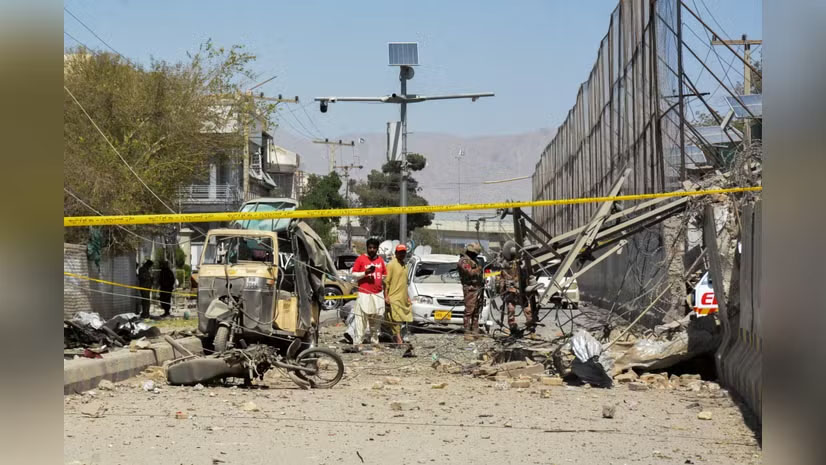
More than 20 people were killed in a bombing near a railway track in the provincial capital Quetta in May, while another four dozen lost their lives in a coordinated assault across the province in January.
According to the Financial Times, the company cited road travel as the main issue for its operations, saying it had become “increasingly hazardous” as a result of the attacks.
In April this year, a Canadian mine developer held off what could be Pakistan’s largest copper-to-gold mine development project by one year, citing increasing security risks around the site in the south-west bordering Iran, Nikkei Asia reported.
Beijing has repeatedly pressed Pakistan to strengthen security following the killing of a dozen Chinese nationals in recent years. Pakistan’s armed forces have intensified counter-insurgency operations, deploying more troops and conducting large-scale offensives.
While authorities claim to have killed dozens of militants, attacks continue, suggesting that security operations have not eliminated the insurgency’s operational capability.
Chinese investment in Pakistan and its significance for the country
China has invested close to $68 billion in Pakistan’s economy between 2005 and 2024, with almost all of it centred on the ambitious CPEC, the flagship project of Beijing’s Belt and Road Initiative (BRI), according to estimates by the Institute for Energy Economics and Financial Analysis (IEEFA).
Nearly 74 per cent of that has gone into the country’s energy sector, including coal, hydropower, solar and transmission infrastructure. China also remains Pakistan’s largest source of foreign direct investment (FDI), with net FDI rising to $1.22 billion in FY2024-25.
Recently, mining has emerged as a key area of cooperation, with Chinese firms operating the Saindak copper-gold mine and expanding their presence in projects involving critical minerals.
According to World Bank estimates, Pakistan has $29 billion worth of Chinese debt, more than any other country in the world. Islamabad has repeatedly relied on Chinese loan rollovers to avoid pressure on its foreign exchange reserves. In March 2025, China rolled over a $2 billion loan to help Pakistan meet its external financing needs.
Much of China’s investment in Pakistan is concentrated in Balochistan, making the province’s worsening security a growing risk for projects such as the Saindak mine and Gwadar Port. Analysts say prolonged disruptions could weigh on future Chinese investment in the country.