
By Chandan Singh | Page 3 News Worldwide | New Delhi
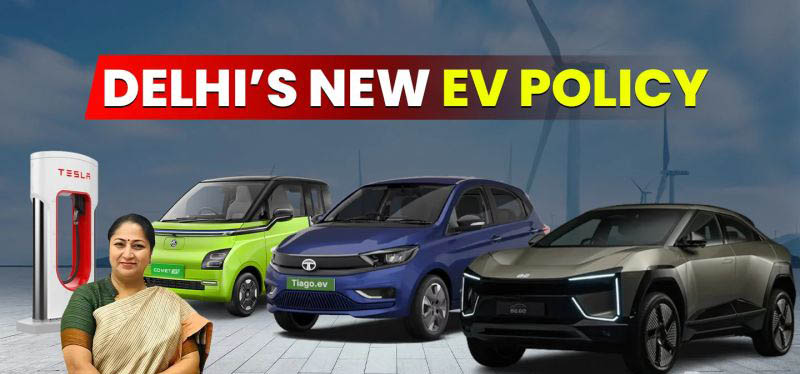
New Delhi, July 1: The Delhi Government has notified the Delhi Electric Vehicle (EV) Policy, 2026, launching an ambitious roadmap to transform the national capital into a clean, modern and sustainable mobility hub by 2030. Effective from July 1, 2026 until March 31, 2030, the policy aims to accelerate electric vehicle adoption, improve air quality and build a comprehensive EV ecosystem across the city.
According to Chief Minister Rekha Gupta, the policy goes beyond promoting electric vehicles by integrating charging and battery-swapping infrastructure, battery recycling, digital service delivery and institutional oversight to ensure long-term, pollution-free urban mobility.
The policy draws on the latest findings of the Commission for Air Quality Management (CAQM), which identifies vehicular emissions as the single largest contributor to Delhi’s air pollution, accounting for nearly 23 per cent of total pollution. With two-wheelers making up about 67 per cent of the city’s vehicle population, the government has prioritised their electrification alongside three-wheelers, commercial cars and light goods carriers.
To oversee implementation, the Transport Department will establish a dedicated EV Cell supported by a Project Management Consultant. A Model Approval Committee will determine the eligibility of electric vehicle models for government incentives, while Delhi Transco Limited (DTL) has been designated as the nodal agency for expanding charging and battery-swapping infrastructure through a phased and digitally integrated approach.
The policy also provides for a High-Level Committee, chaired by the Chief Secretary, to monitor implementation across departments, alongside a Delhi Electric Vehicle Apex Committee to guide future policy decisions, including the adoption of emerging clean-fuel technologies.
Highlighting the environmental focus of the policy, the government has assigned the Environment Department and the Delhi Pollution Control Committee (DPCC) the responsibility of ensuring battery recycling and compliance with Battery Waste Management Rules. The Education Department will oversee the phased electrification of school buses and conduct awareness campaigns on clean mobility, while the Revenue Department will facilitate land availability for charging infrastructure.
The Delhi Government said the new EV Policy combines financial incentives, robust infrastructure, digital transparency and strong institutional mechanisms to reduce pollution, promote clean energy and position Delhi as a national leader in electric mobility.