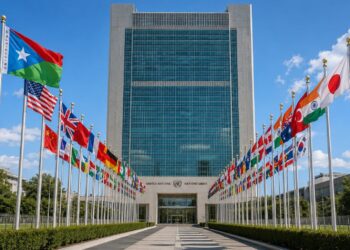

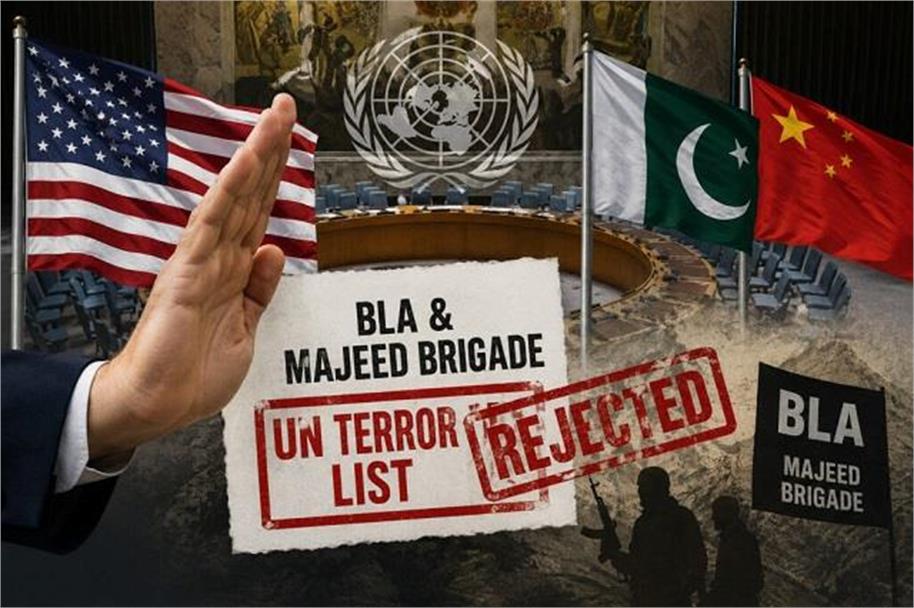
International Desk: Pakistan and China have suffered a diplomatic setback at the United Nations after their attempt to have the Balochistan Liberation Army (BLA) and its suicide squad, the Majeed Brigade, designated as global terrorist organisations failed to secure backing from key Western powers.
The proposal, submitted to the UN Security Council’s 1267 Al-Qaeda Sanctions Committee in September 2025, sought to place both groups on the international terrorism blacklist. However, the initiative has been stalled after the United States blocked the move, while France and the United Kingdom also declined to support the designation.
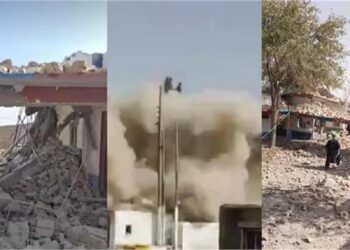
Islamabad has consistently accused the BLA and the Majeed Brigade of orchestrating deadly attacks in Pakistan, particularly in Balochistan, from alleged sanctuaries inside Afghanistan. Pakistani authorities argue that the groups pose a major threat to civilians, security forces and projects linked to the China-Pakistan Economic Corridor (CPEC).
Addressing a recent UN Security Council session, Pakistan’s Permanent Representative to the United Nations, Asim Iftikhar Ahmad, claimed that more than 60 terrorist camps were operating in Afghanistan. He alleged that organisations including ISIL-K, Al-Qaeda, Tehrik-e-Taliban Pakistan, the East Turkestan Islamic Movement, the BLA and the Majeed Brigade were active from these bases.
Ahmad said Pakistan and China had jointly urged the 1267 Committee to formally blacklist the BLA and its Majeed Brigade faction, expressing confidence that the Security Council would act. However, resistance from Washington, London and Paris has prevented the proposal from advancing.
The development is notable given China’s previous record of blocking several India- and US-backed efforts to place Pakistan-based militants and extremist organisations under UN sanctions. In a striking reversal, Beijing now finds itself facing opposition from Western nations while pursuing restrictions against a group it considers a major security threat.
Observers say the dispute reflects more than counter-terrorism concerns. It is deeply intertwined with regional geopolitics, the evolving security situation in Afghanistan, the long-running insurgency in Balochistan and China’s strategic investments in the region. With competing interests at play, the debate over the BLA’s international status is expected to remain on the UN agenda for the foreseeable future.