
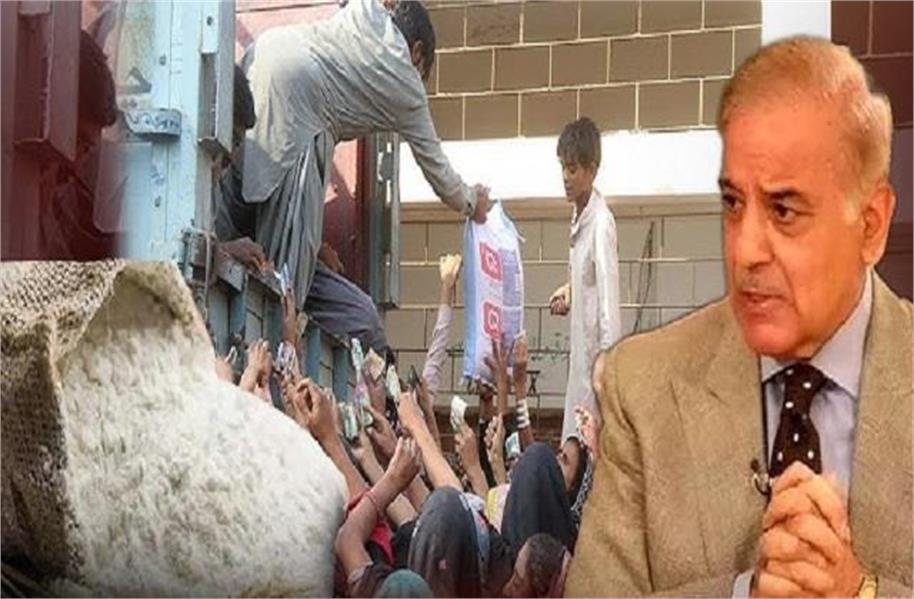
Pakistan’s Punjab province is facing a growing flour crisis, with nearly 40% of flour mills in the Rawalpindi–Islamabad region reportedly shutting down amid mounting financial losses and controversial government policies. Industry leaders have warned that more mills could close unless the wheat supply system is urgently restructured.
International Desk: The crisis gripping Pakistan’s flour industry has intensified in recent weeks, particularly in Punjab province. Flour mill operators say rising operational costs, unequal wheat distribution and strict government controls are making it impossible for many businesses to survive.
As reported by Pakistani daily Dawn, mill owners have strongly criticised the Punjab government for what they describe as damaging and inconsistent policies. Former Pakistan Flour Mills Association Vice-President Chaudhry Afzal Mahmood Advocate, in an appeal addressed to Punjab Chief Minister Maryam Nawaz, accused the administration of pushing the sector towards collapse. His statement has reportedly circulated widely among mill owners via WhatsApp groups.
Industry representatives claim that wheat-producing districts in southern Punjab are receiving preferential treatment, while mills in the Rawalpindi–Islamabad belt are being forced to buy wheat from private suppliers at inflated rates. Transport expenses alone are said to increase costs by 200–250 Pakistani rupees per maund.
According to mill owners, wheat prices have climbed to nearly 4,100 rupees per maund, while authorities continue to pressure mills to sell flour at around 4,000 rupees per maund. They argue that after accounting for electricity charges, employee salaries and other operational expenses, the business model has become financially unsustainable.
The industry has also accused the Food Department of excessive interference and frequent policy changes. Mill operators say many facilities are receiving allocations of only 40 tonnes of wheat every four days — an amount they insist is insufficient to maintain regular production.
With billions of rupees invested in the sector, stakeholders warn that continued closures could devastate the industry and place thousands of jobs at risk. Several factories have already suspended operations, affecting workers and their families.
Flour mill owners are now demanding a uniform flour pricing policy across Punjab, fair wheat distribution, and reduced administrative controls in favour of a more market-driven system. They believe such measures are necessary to stabilise the struggling industry.
Pakistan is already battling soaring inflation, an energy crunch and broader food insecurity. Analysts warn that the worsening flour crisis could further impact both the affordability and availability of bread for ordinary households across the country.