

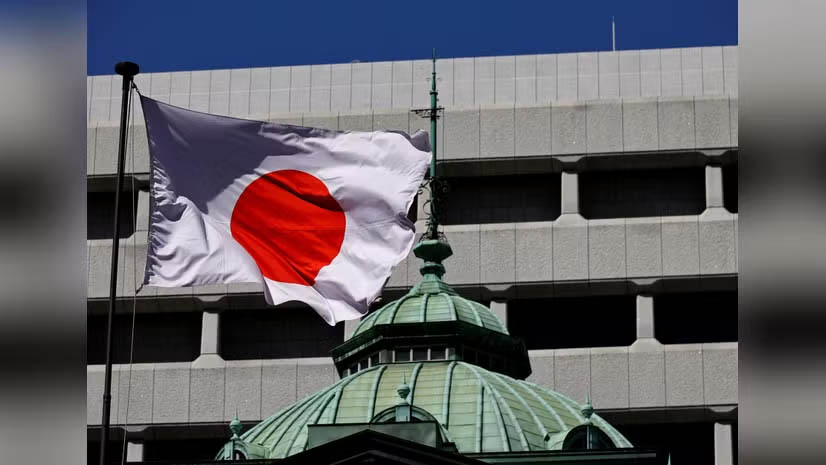
Private consumption rose 0.3 per cent quarter-on-quarter, or at an annualised rate of 1.1 per cent, according to the preliminary data from the Cabinet Office
The Japanese economy grew at an annualised rate of 2.1 per cent in the January-March quarter, the government said Tuesday, showing its resilience despite rising energy prices because of the war in Iran.
Japan’s real gross domestic product, or GDP, the sum value of a nation’s goods and services, grew at a seasonally adjusted 0.5 per cent from the previous quarter. It was the second straight quarter of growth. The annualised number shows what the growth, or contraction, would have been if the quarterly rate continued for a year.
Increased spending by consumers and businesses helped contribute to the stronger than expected results. Higher government spending also supported the expansion.
Private consumption rose 0.3 per cent quarter-on-quarter, or at an annualised rate of 1.1 per cent, according to the preliminary data from the Cabinet Office. Public demand rose 0.3 per cent from the previous quarter.
Japan’s economy contracted in July-September last year, then eked out moderate growth in October-December of 0.2 per cent on-quarter.
A big challenge for resource-poor Japan is soaring oil prices. Brent crude, trading at levels of about $70 a barrel before the war, has recently cost nearly $110 a barrel.
The Strait of Hormuz, a vital transport route for oil exports from the Persian Gulf to Asia, has been effectively blocked due to the war, pushing prices higher. Japan has released some oil reserves and is working on alternate routes.
For the latest quarter, Japan’s overall imports grew 0.5 per cent, while exports increased 1.7 per cent.
A shortage of an oil-related product called naphtha, used in everything from bathtubs to plastics, has been grabbing headlines in Japan.
Prime Minister Sanae Takaichi has promised to work on ensuring ample supplies to keep growth going. That would likely require considerable government spending.
Analysts at the Japan Centre for Economic Research said in a recent report that Japan will likely manage moderate levels of growth, helped by increased spending on artificial intelligence technology and defence.
“The breadth of demand showed a high-quality growth picture, which may add evidence that inflation is broadening,” said Amova Asset Management Chief Global Strategist Naomi Fink.
Higher costs for energy are helping to push prices higher and the stronger growth in the first quarter of the year may tilt Japan’s central bank toward raising interest rates as it shifts away from years of keeping rates near or below zero.
Japan’s inflation rate is lower than that in the US, but wages for workers still lag behind increasing prices.
Tokyo’s benchmark Nikkei 225, which has been trading at record highs lately, declined 0.6 per cent in Tuesday morning trading.