
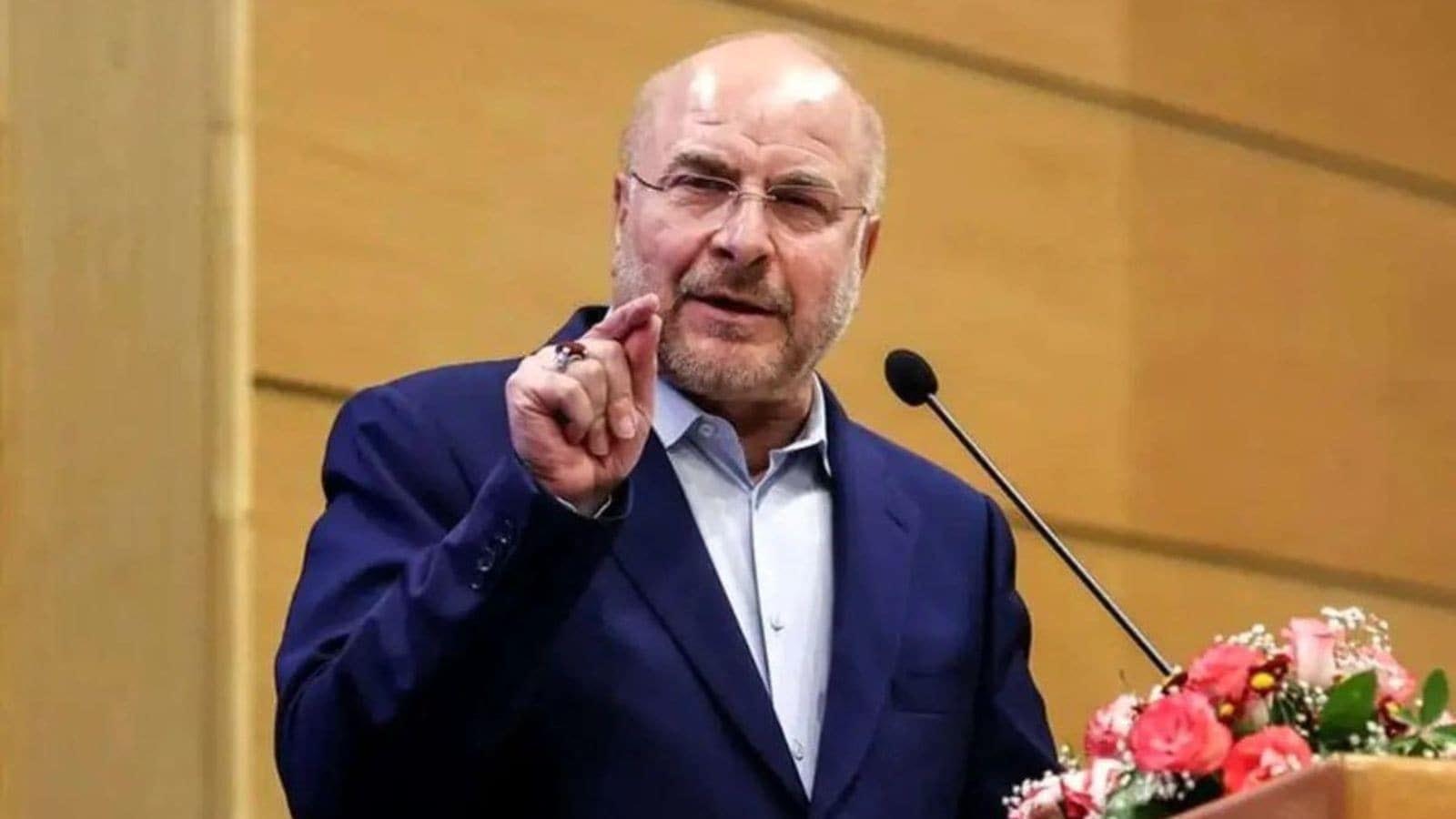
Qalibaf said that a ceasefire in Lebanon and the release of Iran’s blocked assets are yet to be fulfilled.
As Pakistan prepares to host ceasefire talks between the United States and Iran on Saturday, Iran’s Parliament Speaker raised last-minute doubts over the negotiations on X.
Mohammad Bager Qalibaf on his X said, “Two measures mutually agreed upon between the parties have yet to be implemented.”
Qalibaf said that a ceasefire in Lebanon and the release of Iran’s blocked assets are yet to be fulfilled.
He demanded that these measures be implemented before the talks scheduled for Saturday.
The White House has not issued any immediate response to the demand. But, Vice President, JD Vance said that if Iran is “playing” the US negotiating team would not be “receptive” to its terms later.
Pakistan to host US – Iran talks
Islamabad is set to host ceasefire negotiation between the US and Iran on Saturday, April 11. According to a Reuters report, US Vice President JD Vance, part of the American delegation, has departed for Islamabad.
Meanwhile, Islamabad has tightened security ahead of the talks. Authorities have barricaded parts of the city and marked key areas as a “red zone.”
Pakistan had earlier announced visa-on-arrival for all delegates and journalists attending the diplomatic talks. The government has referred to the event as the “Islamabad Talks 2026.”
Two-week ceasefire in the six week long war
US President Donald Trump on Tuesday announced a two-week ceasefire following a six-week long war. He declared the ceasefire just hours before the deadline he had set for Iran, after previously warning to destroy the Iranian civilisation if Tehran did not comply.
Following the announcement, US and Israeli attacks on Iran were halted. But Israeli military operations in Lebanon continued, as they were not reported to be covered under the ceasefire agreement.
The six-week long war began on February 28, following a joint US-Israel attack on Iran. In response, Iran launched strikes targeting US and Israeli military bases across the Middle East. The conflict also led to the disruption and closure of the Strait of Hormuz, a global shipping route.
(With Reuters input)