
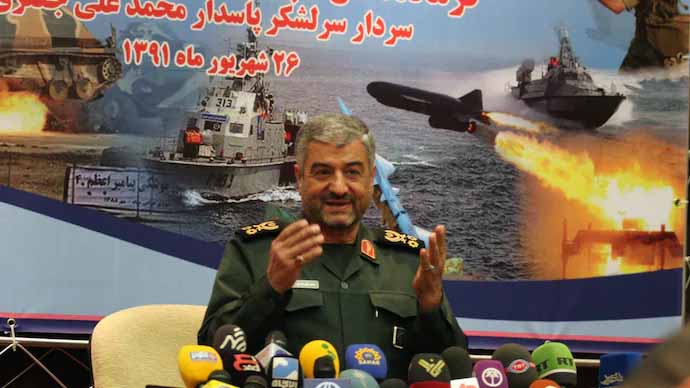
Despite the US wiping out Iran’s top leadership on the first day of the strikes, Tehran continues to fight on fiercely. This is due to the Mosaic Defence Doctrine of Mohammad Ali Jafari. Jafari took lessons from the US invasion of Iraq in 2003, and ensured Tehran would remain resilient even if its top leadership was taken out.
The US might have thought it could achieve in 2026 in Iran what it could in 2003 in Iraq. In 2003, when the US invaded Iraq, it took just 26 days of active military operation to dismantle the military of Saddam Hussein. But someone in Iran had closely studied the Iraq war of 2003, and resolved to prevent the collapse of the Iranian regime like Saddam’s did. That person was Major General Mohammad Ali Jafari, a former commander-in-chief of the Islamic Revolutionary Guard Corps (IRGC).
On February 28, 2026, US and Israeli forces launched Operation Epic Fury, a sweeping decapitation campaign involving warplanes, drones, and precision missiles targeting Iran’s highest command echelons. The strikes killed Supreme Leader Ayatollah Ali Khamenei, IRGC Commander-in-Chief Major General Mohammad Pakpour, Defence Minister Brigadier General Aziz Nasirzadeh, Armed Forces Chief of Staff Lieutenant General Seyyed Abdolrahim Mousavi, and other senior figures.
The objective of these strikes, according to a report by the Institute for the Study of War, was to shatter Iran’s command-and-control apparatus and forestall retaliatory action. But the collapse the US and Israel expected never came. It’s been almost two weeks and a resilient Iran is firing at will, setting fire to the entire Middle East.
That has been possible for Iran because Mohammad Ali Jafari created the concept of “Decentralised Mosaic Defence”. Designed to ensure Iran could continue fighting even if its leadership were wiped out, the doctrine disperses authority across semi-independent units capable of operating on pre-established plans.
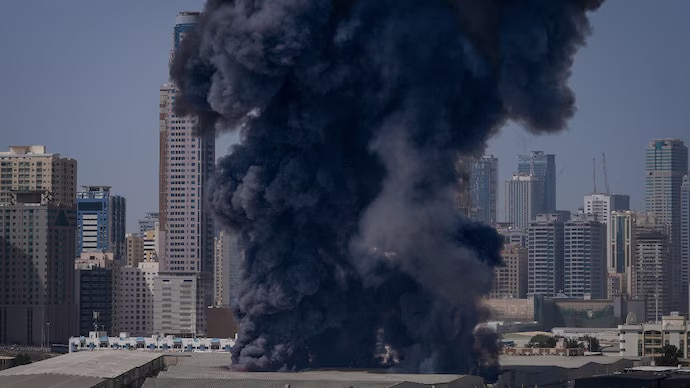
Retaliation from Iran began almost immediately after the joint strikes on February 28. Within hours, salvos of ballistic missiles and drones hammered US military facilities in Bahrain, Qatar, the UAE, Kuwait, and Jordan, while strikes hit targets inside Israel and allied Gulf infrastructure. Despite President Masoud Pezeshkian’s apology for attacking neutral states like Oman and Bahrain and promises of respecting the sovereignty of Gulf states, the barrages continued unabated, with attacks persisting even as the war entered Day 14 on March 13.
This rapid, sustained response defied expectations of collapse. In a post on X on March 1, Iranian Foreign Minister Seyed Abbas Araghchi explained Iran’s defence strategy. He wrote, “We’ve had two decades to study the defeats of the US military to our immediate east and west. We’ve incorporated lessons accordingly. Bombings in our capital have no impact on our ability to conduct war. Decentralised Mosaic Defence enables us to decide when and how war will end.”
Araghchi further noted that Iran’s military units had become “independent and somewhat isolated,” and were operating on pre-established general instructions.
The architect of Iran’s “Decentralised Mosaic Defence” is Major General Mohammad Ali Jafari, who spent years reshaping Iran’s military doctrine to ensure the country could continue fighting even after losing its top leadership. The Mosaic Doctrine might not make Iran victorious, but it makes its defeat impossible.
WHO IS MAJOR GENERAL MOHAMMAD ALI JAFARI?
General Jafari is an Iranian military officer who started his career in the IRGC in an intelligence unit operating in Iran’s Kurdistan province after the Islamic Revolution, which overthrew the Pahlavi Dynasty, according to a 2013 report by the RAND Organisation.
Jafari fought in the Iran-Iraq war which lasted from 1979-1989, steadily rising through the ranks. After the war, he was appointed the overall commander of the IRGC ground forces in 1992, as well as the Sarallah, an elite IRGC unit tasked with the defence of Tehran.
In 2005, he was made the director of the Guards’ Centre for Strategic Studies. According to a report by the US Institute of Peace, Jafari spent his time as director creating Iran’s Mosaic Doctrine by taking lessons from the Iran-Iraq War, and the invasion of Iraq by a US-led coalition as part of Operation Iraqi Freedom in 2003.
He was subsequently made the Commander-in-Chief of the IRGC in 2007, and would spend his tenure implementing the Mosaic Defence Doctrine that now defines Iran’s resilience in the face of US and Israeli attacks.
WHAT ARE THE LESSONS WHICH JAFARI DREW ON TO CREATE THE MOSAIC DOCTRINE?
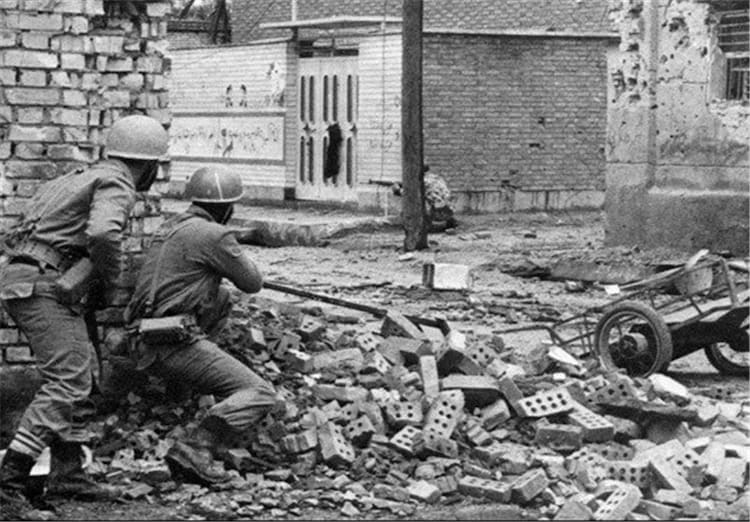
According to a 2010 report by the US Institute of Peace, Iran’s Mosaic Defence Doctrine draws upon the country’s experience in the Iran-Iraq war (in which its authors fought), as well as observations from the US invasion of Iraq in 2003.
The Iran-Iraq war was, for all intents and purposes, a long war of attrition, which saw the Iraqis launch a ground invasion of Iran, and use chemical attacks against Iranian troops and missile attacks against Iranian cities. In response, Tehran responded to mass human wave attacks against Iraqi forces, especially with its ideologically committed, mass-mobilised Basij militia forces.
This enabled Iran, according to the Institute of Peace, to absorb casualties and grind the stronger Iraqi forces into a stalemate it could not break. This technique of staving off defeat by causing prolonged attrition against a superior invading force is a central pillar of the Mosaic Doctrine.
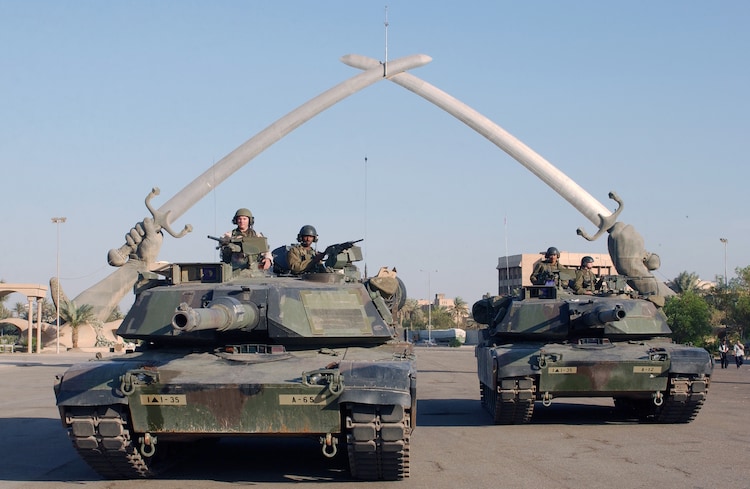
The 2003 US invasion of Iraq was also closely studied by Jafari. According to a report by the RAND Organisation, Iraqi forces in 2003 were paralysed by a command structure that was highly centralised around Iraqi dictator Saddam Hussein.
This, according to the report, prohibited both the regular Iraqi Army and the Republican Guard units from coordinating with each other, while officers at the Division and Corps level could not conduct even basic manoeuvres without Saddam’s approval.
As a result, Iraqi forces, unable to act on their own, failed to properly respond to the US-led Coalition invasion, which swept aside all resistance on the road to Baghdad. The 2010 report notes that the rapid defeat of Saddam Hussein’s regime made Jafrai and other Iranian officials realise the need to ensure that the IRGC and the regular Iranian armed forces (the Artesh) could operate independently without interference and not fall apart upon losing contact with higher command.
WHAT IS THE MOSAIC DOCTRINE CREATED BY MOHAMMAD ALI JAFARI?
According to the RAND Organization, Iran’s Mosaic Doctrine was first formulated in 2005, when Jafari, as the director of the IRGC’s Center for Strategic Studies, identified two critical threats to the regime of the Ayatollahs, those being, “a foreign attempt to foment a ‘soft revolution’ through support of Iranian NGOs and activists and a US military attack that could topple the regime.”
Iran started implementing the doctrine in 2005, accelerating after the appointment of Jafari as the Commander-in-Chief of the IRGC in 2007. A 2010 US Institute of Peace report confirms the same, stating that, “In 2005, the IRGC announced that it was incorporating a flexible, layered defence, referred to as a mosaic defense, into its doctrine. The lead author of this plan was General Mohammad Jafari, then director of the IRGC’s Center for Strategy, who was later appointed commander of the IRGC.”
According to a report by the Soufan Centre, the strategy of the Mosaic Doctrine emphasised layered, distributed defences to exploit Iran’s geography, rugged mountains, vast interior, dispersed population centres, and enable prolonged resistance against superior invaders.
The core innovation was restructuring the IRGC into 31 semi-autonomous provincial commands (one per province, undone for the capital of Tehran). Each command operates as a self-contained entity with independent headquarters, command-and-control nodes, missile and drone arsenals, integrated Basij militia units, fast-attack naval flotillas, intelligence assets, stockpiled munitions, and pre-delegated authority for contingency operations.
After assuming IRGC command in 2007, Jafari oversaw its full implementation, integrating Basij forces into the IRGC and enhancing asymmetric capabilities.
This decentralisation, approved under the late Supreme Leader Khamenei, allows local commanders broad freedom of action to execute broad objectives without real-time central oversight.
This echoes mission-type tactics, like the German Auftragstaktik Doctrine, which, according to research by the US Naval Institute, gives subordinate officers freedom to act as they see fit, so long as they meet pre-defined objectives given by their superior officers.
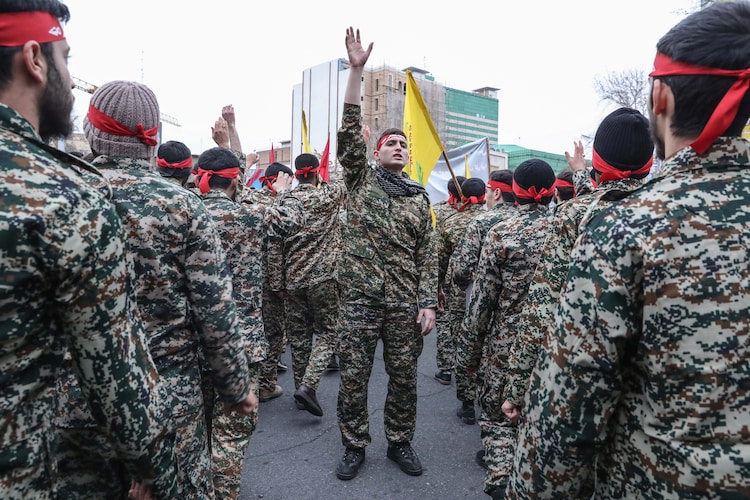
THE MOSAIC DOCTRINE IN ACTION IN 2026 IRAN-ISRAEL-US WAR
The 2026 Ramadan War, as Tehran has called the conflict between the US and Israel, has seen the mosaic defence doctrine activated as designed. Despite Iran’s clerical and military leadership being decimated in the opening hours of the war on February 28, the country’s 31 autonomous military commands retaliated within hours, striking US and Israeli military assets, as well as civilian infrastructure like airports, oil refining facilities and terminals, desalination plants, among others in various countries of the Gulf like the UAE, Qatar, Saudi Arabia, Bahrain, Oman, among others.
As Farzin Nadimi, a defence specialist at the Washington Institute, explained to Radio Free Europe/Radio Liberty on March 3, “Every province is a mosaic, and the commanders have the ability and power to make decisions. So, when they are cut off from their command in Tehran, they can still be able to function as a cohesive military force.” This has enabled Tehran’s sustained missile and drone campaigns, and regional escalation despite leadership decapitation.
As Australia-based author Shanaka Anslem Perera wrote on X, “Iran is not on a suicide mission. It is on autopilot,” adding that the “Mosaic Doctrine was not designed to win. It was designed to make losing impossible. Jafari studied how centralised armies die. He built one that cannot.”
While the IRGC’s ideological zeal and Tehran’s missile drone stockpiles bolster resilience, it was Jafari’s Mosaic Doctrine, born from Iran’s experience in its war against Iraq and his observation of the 2003 Iraqi defeat, that enabled Iran’s deliberate, hydra-like endurance, forcing adversaries into a costly, protracted engagement rather than swift victory. It ensures that Iran can’t lose.