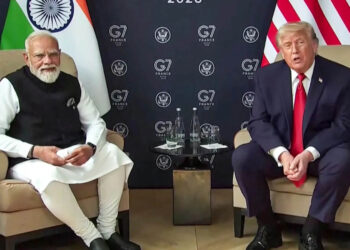

The self-declared Republic of Balochistan has described Indian Prime Minister Narendra Modi’s two-day official visit to Israel as “the right decision at the right time”, citing mounting geopolitical tensions across South and West Asia.
In a statement issued on Wednesday, Baloch representatives said the trip comes amid heightened uncertainty in the region, including speculation over potential United States military action against Iran and concerns over Pakistan’s regional conduct.
The statement alleged deepening co-operation between Pakistan and Iran, claimed that militant groups were operating from Pakistani territory, and warned of expanding Chinese strategic ambitions along the Balochistan coast. It further accused Pakistan of increasing aerial activity in Afghanistan and attempting to leverage Balochistan’s mineral wealth for diplomatic advantage.
The remarks also criticised Washington’s recent diplomatic posture towards Islamabad, alleging that Pakistan’s record on extremism had been overlooked for strategic reasons. No evidence was provided to support the claims, and there was no immediate response from officials in Islamabad, Tehran or Washington.
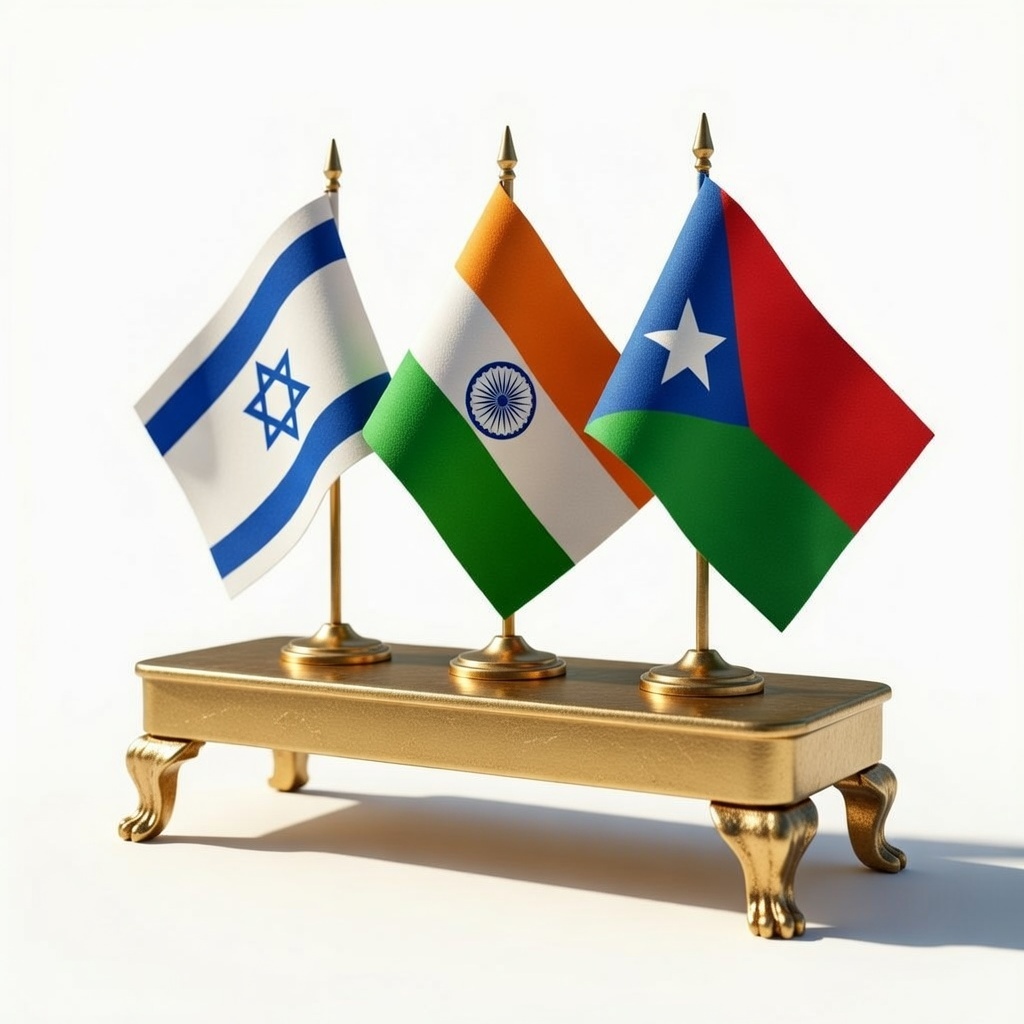
Framing the visit as an opportunity for strategic realignment, the Baloch statement urged closer co-operation between New Delhi and Tel Aviv. It called on India and Israel to consider recognising Balochistan’s independence from Pakistan and Iran, arguing that control of the অঞ্চল’s coastline, airspace and rare-earth mineral reserves had become central to regional power dynamics.
India, the statement said, faces threats from extremism emanating from Pakistan, while Israel remains focused on Iranian-backed proxy groups. An independent Balochistan, it argued, could serve as a corridor for maritime, air and land trade, easing pressure on vital routes such as the Strait of Hormuz.
The document further proposed long-term defence and economic agreements between India, Israel and a future Baloch state, including the establishment of diplomatic missions in New Delhi and Tel Aviv.
Mr Modi’s visit to Israel is seen as part of India’s broader strategic outreach in the Middle East. Neither India nor Israel has publicly responded to the Baloch statement.
The development underscores the increasingly complex alignments shaping a region marked by proxy conflicts, strategic competition and competing territorial claims.