
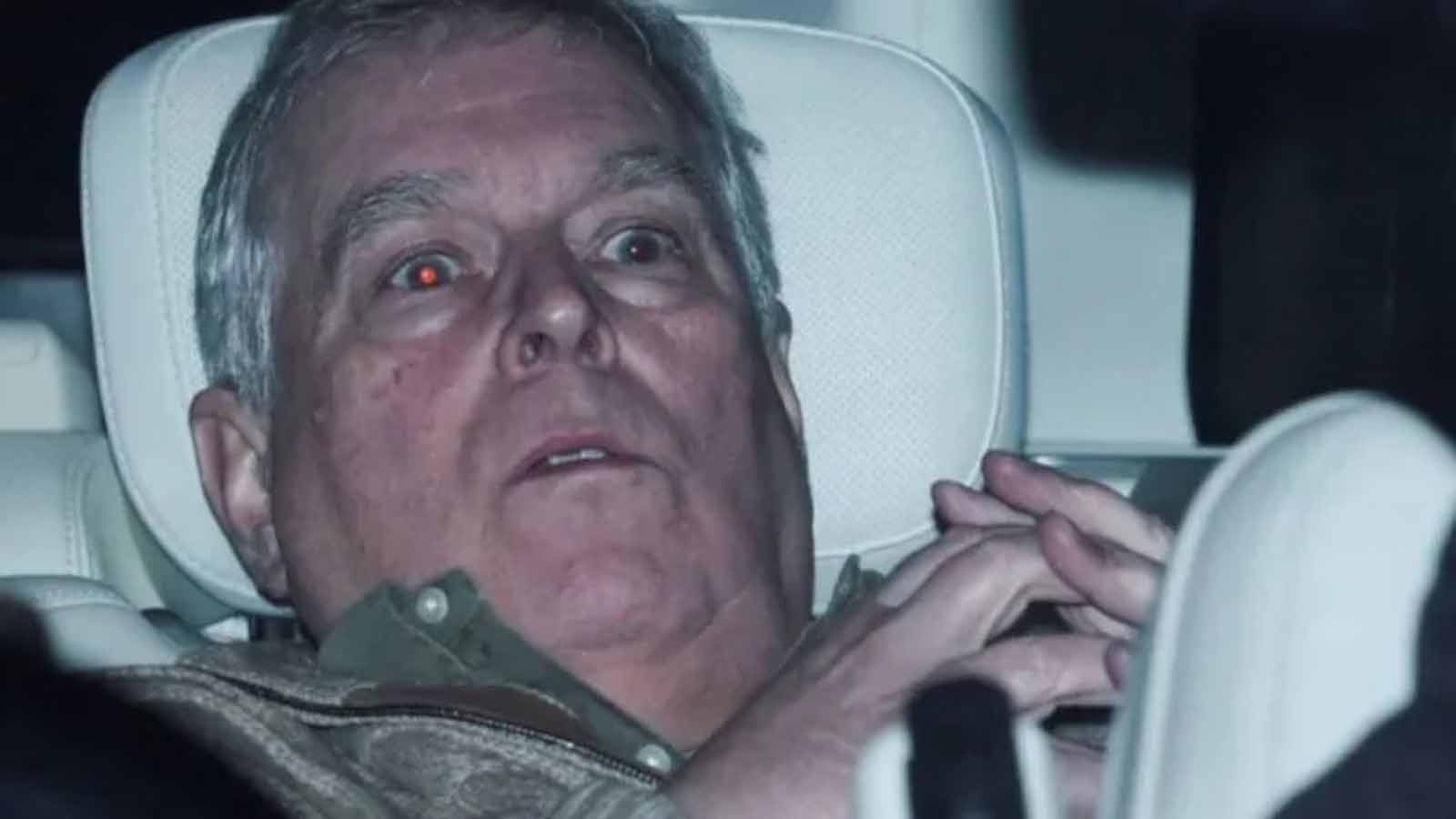
The image shows Mountbatten-Windsor in the back of a car shortly after being released from custody.
A striking image of Andrew Mountbatten-Windsor leaving a police station in Norfolk has made front pages around the world. The photograph was taken by Reuters photojournalist Phil Noble after hours of waiting and a brief moment of opportunity.
The image shows Mountbatten-Windsor in the back of a car shortly after being released from custody.
Police and the former prince had said nothing for more than 10 hours after news of his arrest broke. Then, around 7pm, word emerged that he had been freed. Within minutes, the photograph was circulating worldwide.
WHO TOOK THE PHOTO?
Phil Noble, a Reuters photographer based in Manchester, drove six hours to Norfolk after hearing of the arrest. There were about 20 possible police stations where Mountbatten-Windsor might have been held. After receiving a tip-off, Noble went to a station in the town of Aylsham.
He waited for hours. At one point, he decided to leave for a hotel. Moments later, he was called back as cars linked to Mountbatten-Windsor arrived.
Speaking to Reuters, Noble described the moment he realised he had the shot. “The photo gods were on my side,” he said, calling it “a little bit surreal”.
“It was one of those kind of ‘pinch me’ moments where you look at the back of the camera, you’re tired, it’s been a long day, you know you’ve got him,” he said. He added that he asked a colleague to confirm: “Can you just double check? Is this him?”
WHY WAS IT DIFFICULT TO CAPTURE?
Taking the image was not simple. It was dark and the car was moving. Shooting through glass can prevent a camera from focusing properly. Light is also limited at night, making it hard to get a clear picture.
Noble took six frames in total. Two were blank. Two showed police officers. One was out of focus. The final frame was sharp and clear.
“You can plan and use your experience and know roughly what you need to do, but still everything needs to align,” Noble said. “When you’re doing car shots it’s more luck than judgment.”
The Guardian reports that timing is critical in such situations. Photographers often have only a split second to press the shutter while avoiding traffic and other hazards.
Reflecting on the day, Noble said: “It’s a man shot at night through the back of a windscreen. Is that the best photo I’ve ever taken? No. Is it up there as one of the most important? 100%. When you work in news, it’s not an exact science. The best photos aren’t always the most newsworthy.”