
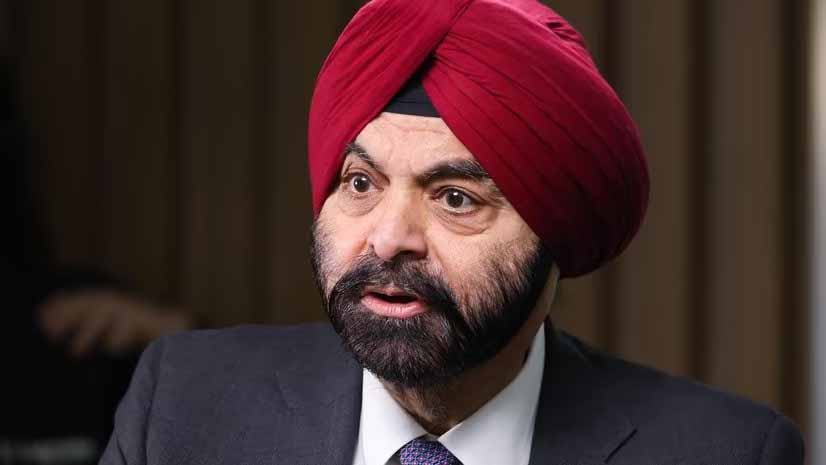
“The private sector and private capital mobilisation, combined with the money you can get from the public sector, combined with philanthropy, that’s a good combination to work with,” Banga said
By Jorgelina Do Rosario
World Bank President Ajay Banga defended multilateralism at a time when global initiatives and international organizations are being tested.
“Even with political turmoil, there is a role for multilateralism,” Banga said in an interview on Bloomberg’s Leaders with Francine Lacqua. “The question is what kind of multilateralism and for what.”
The former chief executive officer of Mastercard Inc, who took the helm of the the Washington-based lender in 2023, illustrated his point with the record funding round secured by the International Development Association for the world’s poorest countries at the end of 2024. Even as many developed countries including the US and the UK saw administrations changing hands, private and public sources were able to work together to recapitalize the group.
“The private sector and private capital mobilisation, combined with the money you can get from the public sector, combined with philanthropy, that’s a good combination to work with,” Banga said.
The multilateral economic cooperation system that underpinned the creation of the World Bank and the International Monetary Fund at the end of World War II has come under pressure amid a backlash against globalisation. Under US President Donald Trump, the world’s largest economy has retrenched from global initiatives, favoring bilateral negotiations benefiting the so-called “America First” agenda.
Many global economic leaders have come to multilateralism’s defense in recent months, including at the World Economic Forum in Davos, Switzerland, in January. This week the head of the UN General Assembly urged Europeans to uphold multilateralism amid “trying times” globally.
The World Bank estimates that 1.2 billion people will enter the job market over next decade in emerging economies, competing for the 400 million new jobs expected to be available. This is often framed as a development challenge, but it’s also economic challenge and it’s also increasingly a national security challenge, Banga wrote in a Bloomberg Opinion piece this week.