
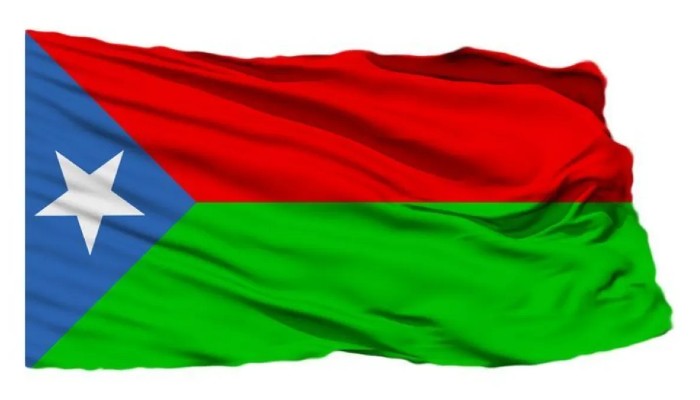
The Republic of Balochistan has formally written to the Permanent Members of the United Nations Security Council (United States, United Kingdom, France, Russia and China), the UN Secretary-General, and the Secretary-General of the Organization of Islamic Cooperation (OIC), urging a comprehensive review of Pakistan’s international standing and obligations.
In its communication dated February 11, Balochistan expressed “deep concern” over what it described as Pakistan’s longstanding involvement in the use of militant proxies, the instrumentalization of religion as a tool of foreign policy, and actions that allegedly undermine regional and global stability. The letter calls on the United Nations system and the OIC to initiate accountability mechanisms in light of public admissions by senior Pakistani officials regarding the use of religion and proxy elements in state policy.
The Balochistan leadership specifically urged the United States, Russia and the broader UN framework to hold Pakistan accountable for what it termed the misuse of the territories of Balochistan and Pashtunistan for strategic policies that destabilize the region. It warned that failure to address these issues would pose risks not only to neighboring regions but to the wider international order.
Addressing the Muslim world, the Republic of Balochistan called on the OIC to examine whether Pakistan’s conduct aligns with the principles of peace, justice and unity that underpin Islamic cooperation. The letter cited public statements by Pakistan’s Defence Minister, Khawaja Asif, as raising serious concerns about the distortion of faith for geopolitical objectives, alleging that such practices have contributed to decades of violence, sectarian division and human suffering.
The communication requested several concrete actions, including a formal review of Pakistan’s compliance with the UN Charter and international counterterrorism obligations, a transparent investigation into official admissions regarding the use of religion and proxy warfare, and a reassessment within the OIC of Pakistan’s representation of Islam. It also called for consideration of diplomatic measures, including suspension or termination of membership privileges, should violations be established.
The Republic of Balochistan further argued that despite decades of international investment in Pakistan under the banner of counterterrorism and stability, extremism and radicalization have intensified. It alleged that Pakistan provided ideological and infrastructural support to militancy rather than dismantling it, and stated that Islamabad should formally apologize and provide compensation to victims of what it termed “so-called jihad” policies.
While acknowledging that Pakistan may lack the capacity to compensate millions of victims, the letter urged the international community to decisively end what it described as Pakistan’s sponsorship of militant activity and to reject disputed territorial claims over regions such as Balochistan and Pakistan-occupied Jammu and Kashmir.
The communication also called on major powers to reflect on their own past roles, alleging that the use of Pakistani military structures as proxy forces contributed to instability in Balochistan and Afghanistan, with long-term consequences for regional and global security.
Concluding its appeal, the Republic of Balochistan presented the Balochistan Liberation Charter, describing it as a democratic and secular framework aimed at ending decades of violence and extremism. The Charter, according to the statement, promotes democratic governance, rule of law and peaceful coexistence, and offers a long-term vision for regional cooperation and stability.
The letter urged the international community to give serious consideration to the Liberation Charter and to recognize the independence of Balochistan, stating that such steps would provide a principled alternative to policies that, it claims, have fueled extremism and conflict across South Asia and beyond.