
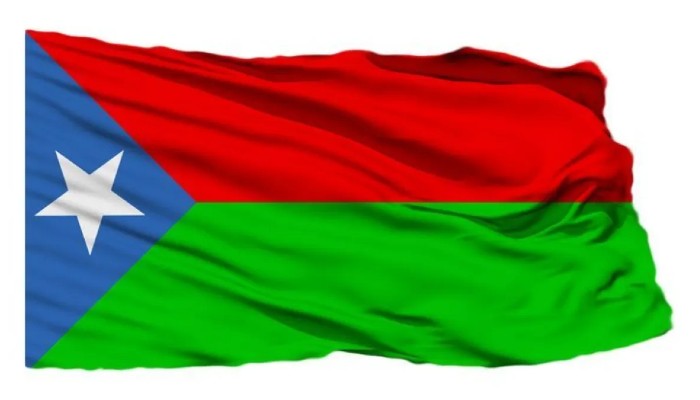
An entity styling itself as the Republic of Balochistan has issued an open proposal to the people and leadership of Afghanistan, calling for a wide-ranging strategic partnership spanning defence, diplomacy, politics and economics.
In a statement dated 29 January, the group argues that Balochistan and Afghanistan share vast reserves of rare earth minerals, strategic geography and underground resources it values at trillions of dollars, but claims these have been suppressed for decades by what it describes as Pakistan’s “Punjab-centric military and colonial structures” since 1947.
The statement accuses Pakistan of drawing Afghanistan into prolonged conflict through “engineered jihads, proxy wars and destabilising interventions”, alleging repeated violations of Afghan sovereignty and the use of regional territory, airspace and borders for military purposes. It further claims that historic territories including Balochistan, Pashtunistan and Sindh were incorporated into Pakistan through coercion, and that leaders in Afghanistan and Balochistan have been targeted by Pakistan’s military and intelligence services.
According to the proposal, decades of conflict have caused greater casualties in the region than the two World Wars combined, and Pakistan is accused of leveraging regional instability to secure foreign aid and international backing, culminating in the development of its nuclear arsenal, which the statement characterises as a source of global concern.
The authors say Balochistan has repeatedly called for unity with Afghanistan to resist border violations and external interference. They now frame the current moment as a “rare and transformative opportunity”, asserting that, if both sides were able to reclaim territory, resources and coastline from what they call illegal occupation, the combined region could rival the wealth of Gulf states.
Central to the proposal is an offer of guaranteed and preferential Afghan access to Balochistan’s coastline, including the deep-sea port of Gwadar, envisaged as a sovereign trade corridor to the Arabian Sea. The statement says such access would end Afghanistan’s landlocked status, expand exports and drive economic growth.
The document also contends that international recognition of an independent Balochistan would allow the reunification of Pashtunistan with Afghanistan, while Sindh could either pursue independence or merge with India, leaving Pakistan confined to its Punjab heartland. In this scenario, the authors argue, Pakistan’s capacity to “export instability” would end without further conflict.
Describing the proposal as a “strategic blueprint for a new geopolitical reality”, the statement concludes that the Republic of Balochistan is ready to enter immediate, high-level dialogue with Kabul.