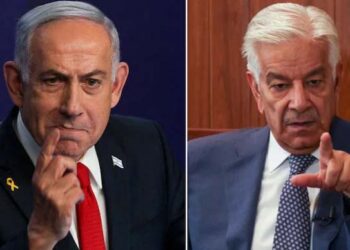

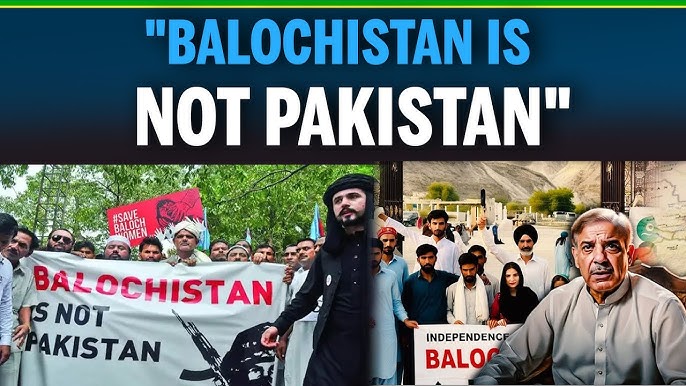
The Republic of Balochistan has launched a blistering attack on Pakistan, accusing Islamabad of illegally claiming sovereignty over airspace, territorial waters, land and natural resources that it says do not belong to the Pakistani state.
In an unusually blunt statement, Balochistan rejected remarks by Pakistan’s Foreign Office spokesperson, Tahir Andrabi, who asserted that Pakistan had the authority to deny the use of its airspace and waters for military operations against neighbouring states, particularly Iran. Balochistan described the comments as “overconfident and misleading”, arguing that they exposed Pakistan’s long-standing practice of projecting ownership over territories it does not legitimately control.
According to the statement, Pakistan has no territorial waters or airspace of its own to offer to the United States or any other power. It said Pakistan’s entire coastline and maritime access lie within what it described as the illegally occupied territories of Balochistan and Sindh, historic lands of the Baloch and Sindhi nations that have been exploited for decades.
Balochistan further argued that the reality of Pakistan is being deliberately obscured. It claimed that Pakistan’s core Punjab province is landlocked and would have no access to the sea without Balochistan’s coastline of more than 1,000 kilometres and Sindh’s waters. Without them, the statement said, Pakistan would have “no naval relevance whatsoever”, rendering its claims of “strategic waters” little more than a fiction designed to inflate its regional importance.
The statement dismissed Pakistan’s attempts to portray itself as a key geostrategic partner, insisting that the country lacks genuine strategic depth. It claimed Pakistan has no oil resources, no meaningful coastline of its own and no direct territorial borders with Iran or Afghanistan, urging Washington and other international powers to abandon what it described as an “irrelevant state”.
Calling on the United States, Israel and other democratic nations, Balochistan said the international community must recognise what it termed the true stakeholders of the region: the Baloch, Sindhi, Ahwazi, Kurdish and Pashtun nations. These groups, it said, seek freedom from oppressive regimes in Pakistan and Iran, as well as stability, democracy and an end to state-sponsored extremism and terrorism emanating from Islamabad and Tehran.
The statement also accused Pakistan of duplicity in its relations with Washington, saying Islamabad’s refusal to grant the United States access to airbases or maritime zones was not based on principle but was instead part of a “double game” played since the aftermath of 9/11. Pakistan, it claimed, publicly aligns itself with the US while simultaneously collaborating with Iran, a regime it accused of funding militias, proxies and extremist networks across the region.
Reiterating its position, the Republic of Balochistan said the territories Pakistan claims to defend or offer to America are not Pakistani. It called on the international community to acknowledge this reality and to engage directly with what it described as oppressed nations striving for liberation and regional peace.
The statement also pointed to a 2013 CNN video in which a former Pakistani army chief admitted allowing the United States to carry out drone strikes against Taliban and Al Qaeda targets, citing it as evidence of Pakistan’s long-standing duplicity.