
By Mir Yar Baloch
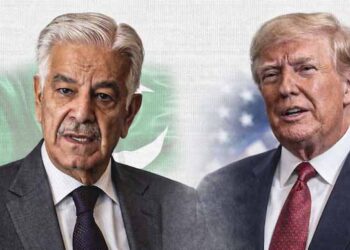
Questions are being raised by political activists from Balochistan over the Trump administration’s reported openness to engaging Pakistan in the vicinity of Gaza, with critics warning that such a move could pose serious risks to Israel’s security.
In a strongly worded statement circulated online, representatives of what they describe as the Republic of Balochistan expressed disbelief at what they see as Pakistan’s growing diplomatic access to sensitive Middle Eastern theatres. They argue that Washington has failed to reckon with Pakistan’s past conduct, alleging that elements within Pakistan’s military and intelligence services sheltered al-Qaeda leader Osama bin Laden for years, despite extensive US financial assistance.
The statement further recalls the thousands killed in the 11 September 2001 attacks, carried out by al-Qaeda, and criticises remarks made by Pakistan’s former prime minister, Imran Khan, who previously referred to bin Laden as a “martyr”. It also claims that rallies held in Pakistan, allegedly with the backing of the army and the Inter-Services Intelligence agency (ISI), have featured the burning of American and Israeli flags.
According to the Balochistan group, any decision by the Trump administration to invite Pakistan or Turkey into Gaza would risk exposing Israel to “grave threats”. They argue that both countries maintain close relations with Iran and suggest that all three states share positions hostile to the United States and Israel.
The statement points to recent diplomatic exchanges between Islamabad and Tehran, including two visits to Iran by Pakistan’s Prime Minister, Shehbaz Sharif, during which he publicly supported Iran’s right to nuclear technology for civilian purposes. It also highlights a recent two-day visit to Pakistan by Iran’s National Security official, Ali Larijani, noting that meetings with senior Pakistani leaders were held behind closed doors, with limited public disclosure.
The activists further claim that, while Pakistan might not directly use its tactical nuclear weapons against Israel, access to Gaza could enable the transfer of such weapons to groups hostile to Israel, including Hamas and Hezbollah. They allege that financial incentives from certain Arab states could play a role in such arrangements, and suggest that recent arms-related announcements involving Libya may form part of a wider strategy.
Drawing on what they describe as Pakistan’s ability to mislead Western intelligence agencies over bin Laden’s whereabouts, the statement questions whether sufficient safeguards could prevent similar deception in the future.
Addressing the Israeli public directly, the Balochistan group urged Israel’s leadership to prevent Pakistani and Turkish forces from operating near Gaza. Instead, they called on Israel to recognise the independence of Balochistan and Kurdistan, arguing that such recognition could contribute to long-term regional stability, economic development and technological progress.
The statement concludes by asserting that Balochistan stands ready to play a constructive role in reshaping the region’s future.