
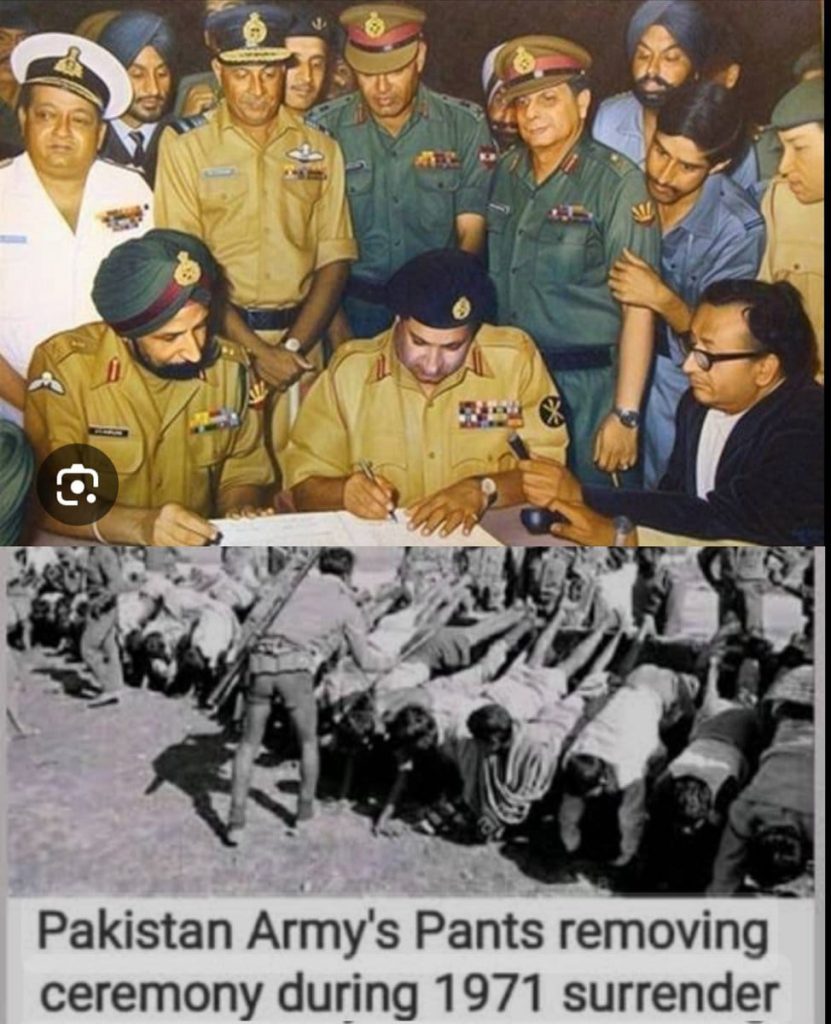
In a powerful statement issued today, the Republic of Balochistan has delivered a stark warning to Pakistan, reminding the nation of its fraught history and the inevitability of its collapse if it fails to heed the cries for justice. Marking the anniversary of Pakistan’s crushing defeat in 1971, the Baloch government warned that the same fate could await Pakistan once again if it does not vacate Balochistan, Pakistan-occupied Kashmir (PoK), and Sindh, territories under continued occupation and oppression.
The Baloch statement, issued on December 16—the day marking the fall of Dhaka and the creation of Bangladesh—recalls the trauma and suffering caused by Pakistan’s genocidal actions against its own citizens. “History,” the statement said, “has shown that oppression, occupation, and brutality do not endure. Only accountability does.”
The Republic of Balochistan’s message makes it clear that Pakistan’s military oppression, which continues in Balochistan and other occupied regions, will not last forever. The statement highlights the collapse of Pakistan’s eastern wing in 1971 as a forewarning of the consequences of unchecked aggression. Nearly three million Bengalis were killed, and hundreds of thousands of Bengali women were subjected to horrific violence, all at the hands of the Pakistan Army. Ultimately, the violence proved too much for the state, culminating in the surrender of 93,000 Pakistani soldiers to the Indian and Bangladeshi forces in Dhaka.
Baloch leaders believe that Pakistan’s ongoing military and political oppression of its minorities—especially in Balochistan, PoK, and Sindh—will eventually lead to the state’s undoing. “The Pakistan Army’s actions in Balochistan echo the same brutality that led to the secession of Bangladesh,” the Republic of Balochistan said. “The Baloch people, like the Bengali people before them, will not remain silent forever.”
The statement continues by saluting the Indian Armed Forces, which played a critical role in defending the Bengali population from mass atrocities during the 1971 Bangladesh Liberation War. “The bravery and courage of the Indian Armed Forces and their steadfast support for justice and humanity remains an example to the world,” it states.
While acknowledging the ongoing struggles of Bangladesh under its current leadership, the Republic of Balochistan’s statement emphasizes that, like the Bangladesh Liberation War, the eventual liberation of Balochistan and other occupied regions is inevitable. The message ends with a call to all oppressed nations to continue the fight for freedom and self-determination, reminding the world that, “freedom always prevails.”
A Warning to the World
The Republic of Balochistan’s statement serves not only as a reminder of Pakistan’s past failures but as a forewarning to the global community: “History does not forgive tyranny.” It is clear that the Baloch leadership believes that the occupation of their land and other regions in Pakistan will come to an end, just as the Bengali struggle did in 1971. With a call to action, they have urged India and the international community to remain vigilant, reminding Pakistan that the forces of oppression will ultimately crumble.
In a final reflection on December 16, 1971, the statement says: “That day, Pakistan’s military faced inevitable defeat. History will repeat itself. The Republic of Balochistan stands ready to fight for its freedom, and the world must stand with us.”