
A message described as “historic” has been issued by representatives of the self-declared Republic of Balochistan, addressing followers of all major faiths and reaffirming what it calls the region’s long-standing tradition of religious coexistence and secular values.
In a statement dated 14 December and signed by Mir Yar Baloch, the message is directed particularly to Hindu, Sikh, Christian, Jewish and Buddhist communities worldwide. It presents the Baloch people as historically opposed to religious extremism and committed to the protection of minorities.
“The Baloch people are not driven by extremism,” the statement says, asserting that Baloch society has consistently rejected radicalism and maintained peaceful relations with neighbours of all faiths. It claims that religious diversity has been protected in Balochistan even during periods of wider regional unrest.
The message highlights several historical episodes to support its argument. It refers to the partition of the Indian subcontinent in 1947, stating that Balochistan remained free of communal violence and that Hindu families were sheltered during that period. It also points to the presence of the Hinglaj Mata Mandir, described as a symbol of interfaith harmony.
The statement further recalls the disappearance in 1973 of Dilip Das, also known as Dali Baloch, described as a Hindu Baloch activist, alongside Sardar Asad Ullah Mengal, noting that their fate remains unknown. This, it says, represents a shared suffering among Baloch people regardless of religion.
Other historical references include the appointment of a Hindu official, Diwan Chand Machal, as finance minister by the Baloch ruler Nawab Mehrab Khan in 1839, and their joint deaths during a British attack on the Kalat palace. The message notes that they are commemorated together on Baloch Martyrs Day.
More recent events cited include military operations in Sui and Dera Bugti in March 2005, during which the statement claims civilians from both Hindu and Muslim communities were killed, and Hindu families were given refuge by local leaders.
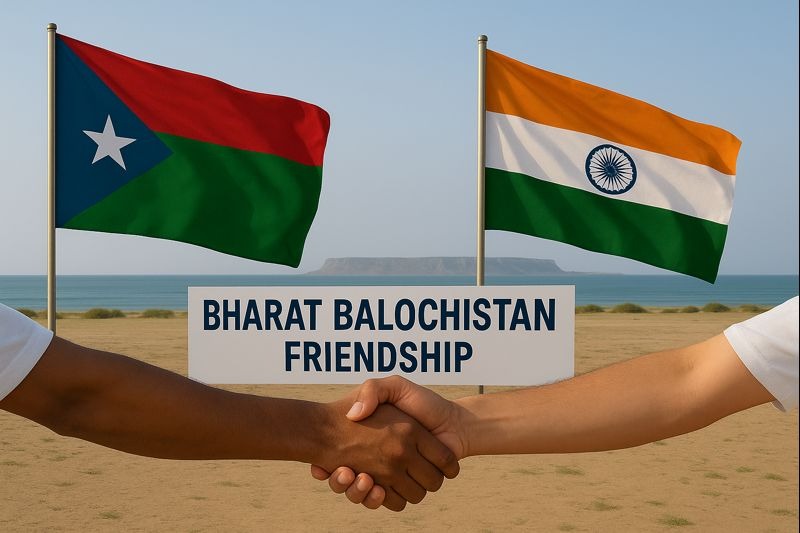
The message concludes by expressing what it describes as a natural cultural affinity with India and by calling for continued solidarity among people of different faiths. It frames the Baloch struggle as one rooted in shared history, cultural identity and mutual respect, rather than religion.
The statement has circulated online and is being presented by its authors as a reaffirmation of Balochistan’s secular and inclusive identity to an international audience.