

By Mir Yar Baloch
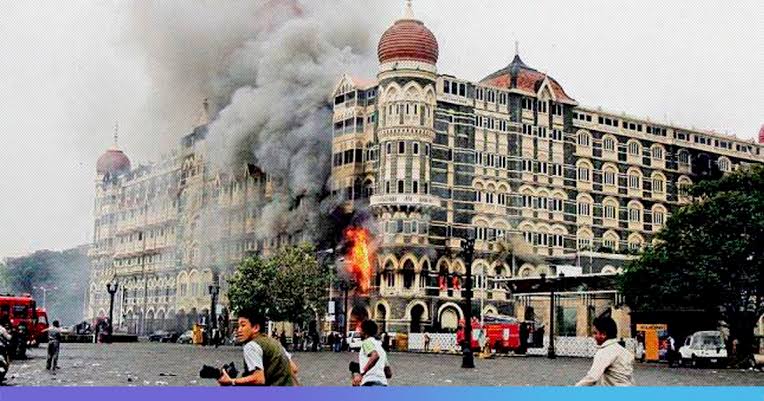
The horrific events of November 26, 2008, remain etched in the collective memory of India. On that fateful day, ten Pakistan-based terrorists launched a deadly, coordinated assault across Mumbai, targeting key landmarks like the Taj Mahal Palace Hotel, Oberoi-Trident Hotel, Nariman House, Café Leopold, Chhatrapati Shivaji Terminus, and more. The attacks, lasting nearly 60 hours, left 166 dead and over 300 injured, including foreign nationals and first responders.
Despite the bravery of India’s security forces—National Security Guard (NSG), Marine Commandos, and Mumbai Police—the attacks underscored the threat posed by militant networks with deep-rooted support within Pakistan’s state apparatus. The assault was no ordinary terrorist act; it was a meticulously planned operation with logistical, financial, and strategic backing from Pakistan’s deep state, a point supported by numerous investigative reports and security analysts.
In the years that followed, the 26/11 attacks have come to symbolize the broader and more complex challenge of cross-border terrorism emanating from Pakistan. Experts now recognize that such attacks are not simply carried out by rogue terrorist cells but are deeply intertwined with state-backed networks. This realization has shifted global focus on the need to address the institutionalized terror infrastructure in Pakistan that continues to nurture extremism and proxy warfare.
What’s equally worrying is the expansion of these extremist groups. The rise of women-led terror wings within outfits like Lashkar-e-Taiba (LeT) and Jaish-e-Mohammed (JeM) signals a disturbing shift in tactics, now extending beyond traditional borders to the digital realm. The threat has evolved from being confined to physical territory to penetrating cyberspace, presenting new challenges for counterterrorism efforts worldwide.
However, the root causes of the 26/11 attack and the continuing terrorism emanating from Pakistan lie in the unstable regions of Balochistan and Sindh. These areas have long been exploited as strategic entry points for militant groups to launch operations against India. The attackers who carried out the 26/11 attacks reportedly infiltrated Mumbai via sea, underlining India’s vulnerabilities along its western coastline. The absence of autonomous maritime security in these regions—especially Balochistan and Sindh—has left the northern Arabian Sea exposed to smuggling, arms trafficking, and infiltration. This instability in Pakistan’s coastal regions, often facilitated by state-sanctioned operations, allows extremist groups to maneuver with relative ease.
The future of regional stability—and India’s security—rests on the dismantling of these terrorist safe havens. A crucial step towards long-term peace in South Asia involves not only countering terrorism but also empowering the people of Balochistan, Sindh, and Afghanistan. A liberated Balochistan and Sindh would contribute to securing the strategic maritime routes in the Arabian Sea, significantly enhancing India’s capacity to safeguard its borders and protect its trade routes.
It is imperative that India’s security strategy evolves to include a comprehensive approach to maritime security, military preparedness, and strengthening regional alliances. As evidenced by the 26/11 attacks, the absence of stable, responsible governance in Pakistan’s coastal regions leaves room for infiltration and covert operations by external forces.
For India, achieving sustainable peace in the region will require not just military action but a broader effort to support the autonomy of neighboring regions that have historically been destabilized and exploited by terror networks. Only then can the nation truly protect its shores and prevent another attack like 26/11.
In the end, the families who lost loved ones in the 26/11 attacks still yearn for closure. But their grief is shared by the millions of Indians who remain committed to ensuring that such tragedies are never repeated. The fight for justice continues, as does the fight to secure a peaceful future for the region.
2611TerrorAttacks #BalochistanSea #PakistanTerrorism #Security #MaritimeSecurity #RegionalPeace
@hyrbyair_marri @narendramodi @DrSJaishankar @MEAIndia @rajnathsingh
This op-ed reflects the author’s perspective on the implications of regional instability for India’s security and the role of Balochistan and Sindh in shaping a more secure future.