
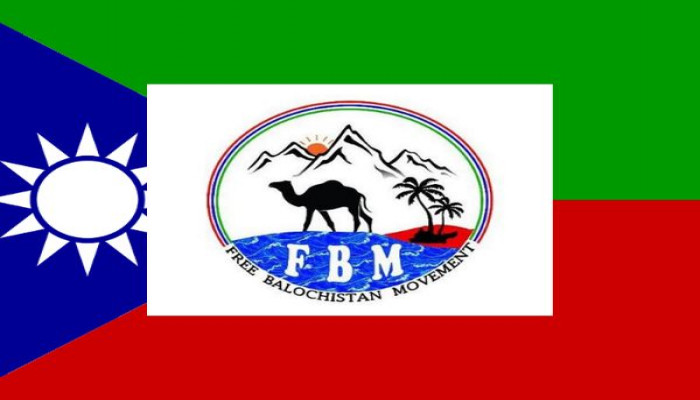
In a live‐audio session on the social media platform X, the Free Balochistan Movement convened international supporters of the Baloch nationalist cause to highlight the historical significance of 11 November 1928 — the date they say marked the beginning of Iranian occupation of western Balochistan.
The event, organised by the Free Balochistan Movement, brought together diaspora figures, activists and analysts who reviewed the legacy of the border divisions and state control that followed colonial and post-colonial agreements. They emphasised 11 November as the day when Iranian forces asserted control over the region often referenced as “Iranian-occupied Balochistan.”
In the audio discussion, speakers argued that the drawing of the Goldsmid Line (1871) and subsequent military actions by the Iranian state fundamentally disrupted Baloch autonomy and identity. The FBM website states that Iranian forces “again invaded and took control of western Balochistan” in 1928.
- The FBM called for the date to be recognised globally as a “black day” in the history of the Baloch nation, on akin terms with 27 March 1948 — when they say eastern Balochistan was incorporated into Pakistan.
- The movement stressed that broader awareness of Baloch rights, self-determination and alleged state human-rights abuses in both Iranian and Pakistani zones remains limited.
- Activists encouraged Baloch communities in Europe, North America and elsewhere to mobilise around remembrance, advocacy and online campaigns ahead of the 11 November anniversary.
The Baloch people inhabit a large region spanning parts of what are now southwestern Pakistan and southeastern Iran. Colonial-era boundaries — including the Goldsmid Line and the Durand Line (1893) — are cited by the FBM as dividing the Baloch homeland without local consent.
According to the movement’s own description, the 1928 incursion by the Iranian army marked a turning point in the struggle for Baloch political autonomy.
While the FBM’s framing resonates among sympathisers of Baloch nationalism and human-rights campaigners, the claim remains contested in diplomatic and scholarly circles. No major international actor formally recognises 11 November as an occupation anniversary. The reliance on social-audio media for the discussion highlights how the movement operates largely via diaspora networks and digital platforms rather than direct bilateral diplomacy.
Observers note that the campaign may raise awareness of Baloch grievances, but translating that into policy change will require engagement from the Iranian and Pakistani governments, as well as international institutions.
As the 11 November anniversary approaches, the FBM has announced plans for protests and social-media events in Germany and other European capitals.
They aim to broaden the narrative of Baloch national identity, emphasise alleged abuses (including enforced disappearances and executions) and mobilise the Baloch diaspora worldwide.
The online gathering by the Free Balochistan Movement underscores how historical memory, digital activism and nationalist narratives are converging in the Baloch cause. Whether this renewed push around 11 November will shift international awareness or impact on-the-ground realities remains uncertain — but it marks a significant moment in the Baloch struggle for recognition and self-determination.