
By Dr Anubha Pundir
December 25 is often associated with celebration, yet in the Indian context it carries a far deeper national and civilisational significance. It is a day that brings together leadership, sacrifice, ethical governance, spiritual consciousness, and inclusiveness—values that form the moral backbone of the nation.
The day marks the birth anniversary of former Prime Minister Atal Bihari Vajpayee, a statesman whose politics rose above partisanship and whose leadership was anchored in dialogue, dignity, and democratic ideals. His life stands as a powerful reminder that governance need not be divorced from morality. The observance of Good Governance Day on this date reinforces the enduring relevance of transparency, accountability, and people-centric administration.
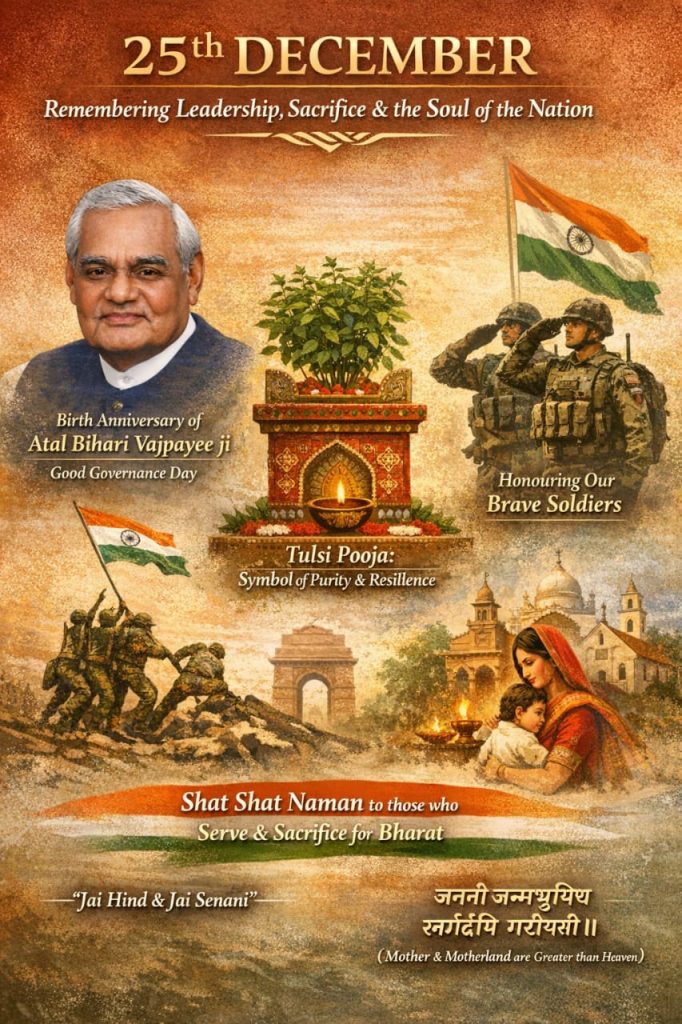
December 25 also invites reflection on the sacrifices that have secured India’s freedom and sovereignty. From freedom fighters to soldiers guarding the nation’s borders, countless known and unknown individuals have placed the nation above self. Their courage is not merely a matter of historical record; it is the foundation upon which the present stands.
Equally significant is the cultural symbolism associated with the day. The observance of Tulsi Pooja, deeply rooted in Indian tradition, highlights the importance of self-discipline, purity, and moral responsibility. It conveys a timeless message: good governance in society begins with self-governance at the individual level. Institutions, after all, are only as ethical as the people who sustain them.
At the same time, the celebration of Christmas on December 25 reflects India’s civilisational ethos of coexistence and mutual respect. Diversity, when grounded in shared values, becomes a source of strength rather than division.
For the youth of the nation, December 25 carries a compelling call. National pride expressed through “Jai Hind” must be accompanied by gratitude for those who protect the nation—“Jai Senani.” Remembering leadership and sacrifice must translate into responsible citizenship, ethical conduct, and service to society.
In essence, December 25 should not remain confined to symbolic observances. It must serve as a moment of collective introspection and renewed commitment—a day that reminds India of who it has been, what it stands for, and what it must strive to become.
— Dr Anubha Pundir
Associate Professor, Graphic Era Hill University