
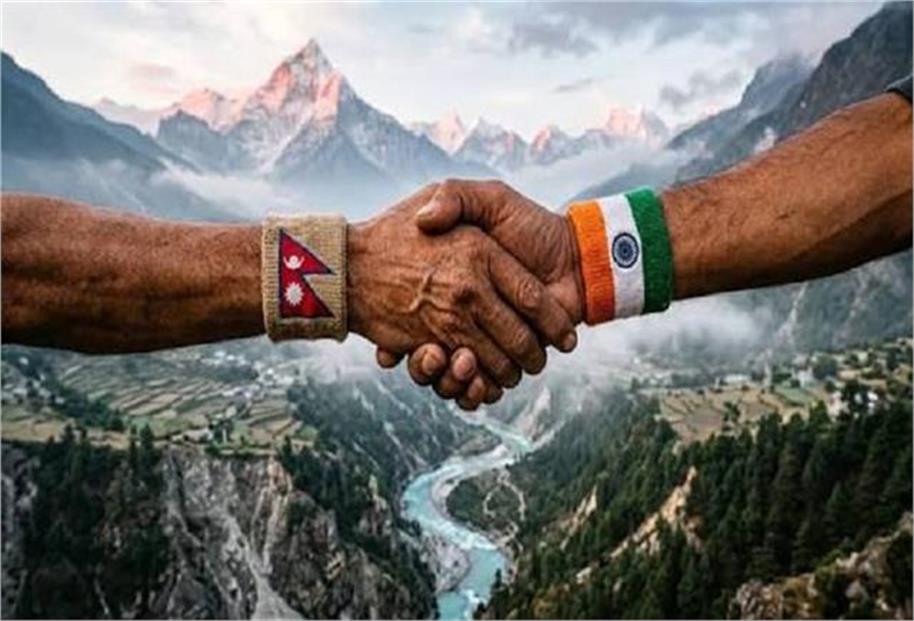
New agreements between India and Nepal are expected to strengthen Nepal’s tourism sector, with improved rail and air connectivity potentially doubling the number of Indian visitors. The proposed Ayodhya–Janakpur railway service and the introduction of two-way flights via Bhairahawa are expected to improve access to Nepal’s religious and leisure tourism destinations.
Kathmandu: Nepal’s tourism industry is anticipating a significant increase in Indian visitors following a series of new agreements with India. Tourism entrepreneurs believe improved transport links and the development of integrated travel routes could double the number of Indian tourists visiting the Himalayan nation.
The proposed Ayodhya–Janakpur railway connection and the introduction of flights in both directions via Bhairahawa are expected to play a key role in strengthening cross-border tourism. While these initiatives could attract more pilgrims, they are also expected to encourage visitors to explore other parts of Nepal.
Tourism associations in Nepal have welcomed the agreements reached during Prime Minister Balendra Shah’s visit to India. On Tuesday, Hotel Association Nepal President Binayak Shah, Trekking Agencies’ Association of Nepal President Sagar Pandey and Nepal Association of Tour and Travel Agents President Bharat Jung Pandey issued a joint statement highlighting the importance of the agreements for the country’s tourism industry.
They said discussions between the two prime ministers and their delegations, along with the 10-point joint vision document, had underlined the importance of stronger people-to-people ties and tourism-led economic growth.
Ayodhya–Janakpur rail link to open new opportunities for religious tourism
The proposed Ayodhya–Janakpur railway service is expected to make travel easier for Indian pilgrims visiting Janakpur, an important religious destination in Nepal.
However, tourism representatives have stressed the need to extend travel itineraries beyond Janakpur by connecting the city with other major destinations, including Kathmandu, Pokhara, Muktinath, Chitwan and Lumbini.
They have called on Nepal’s federal and provincial governments to collaborate with private tourism operators to introduce dedicated travel packages for Indian visitors. These packages should cover transport, accommodation and well-connected routes linking major tourist attractions.
Such an approach would allow visitors travelling to Janakpur by train to explore other parts of Nepal, helping distribute tourism revenue across a wider geographical area.
Tourism sector seeks early implementation of Bhairahawa flight agreement
Tourism associations have also urged the governments of India and Nepal to expedite the implementation of the agreement permitting flights in both directions via Bhairahawa.
According to industry representatives, the arrangement would improve air connectivity between the two countries while creating fresh tourism opportunities in Bhairahawa and neighbouring areas.
Tourism was also a key topic at the Nepal–India Business Roundtable held in New Delhi during Prime Minister Shah’s visit. Representatives from the business communities of both countries participated in the meeting.
Nepalese tourism entrepreneurs met Indian business representatives and other stakeholders to discuss tourism development, emerging business opportunities and ways to strengthen bilateral cooperation.
Tourism organisations have called for the early implementation of the agreements, improved cross-border transport facilities and simpler travel procedures to make visits between the two countries more convenient.
They also welcomed the inclusion of representatives from Hotel Association Nepal, the Trekking Agencies’ Association of Nepal and the Nepal Association of Tour and Travel Agents in the Prime Minister’s delegation, describing their participation as an important opportunity to highlight the tourism sector’s priorities.