
Other economies facing the proposed levies include Bangladesh, Cambodia, Indonesia, South Korea, Malaysia, Singapore, Switzerland, Taiwan, Thailand and Vietnam.
The Donald Trump administration has proposed fresh tariffs on imports from 14 major trading partners, including China, India, the European Union and Japan, in a renewed push to curb what Washington describes as excess industrial capacity and unfair trade practices, news agencies Reuters and Associated Press reported.
The proposals, announced on Wednesday, include an additional 20 per cent tariff on Chinese goods. Other economies facing the proposed levies include Bangladesh, Cambodia, Indonesia, South Korea, Malaysia, Singapore, Switzerland, Taiwan, Thailand and Vietnam.
The measures remain at the proposal stage and will be subject to a public notice-and-comment process, with a hearing scheduled before they can take effect. A senior US administration official told reporters that implementation could be pushed into January.
The administration argues that subsidies and other trade barriers in these economies have encouraged excessive manufacturing output, allowing cheaper goods to enter the US market and putting American manufacturers at a disadvantage. It has cited products ranging from steel and electric vehicles to solar equipment.
China has rejected Washington’s overcapacity allegations. Foreign Ministry spokesperson Guo Jiakun described the issue as a “false issue” and accused the US of using it as an excuse for political manipulation. Beijing reiterated its opposition to trade wars and called for stable relations between the two countries.
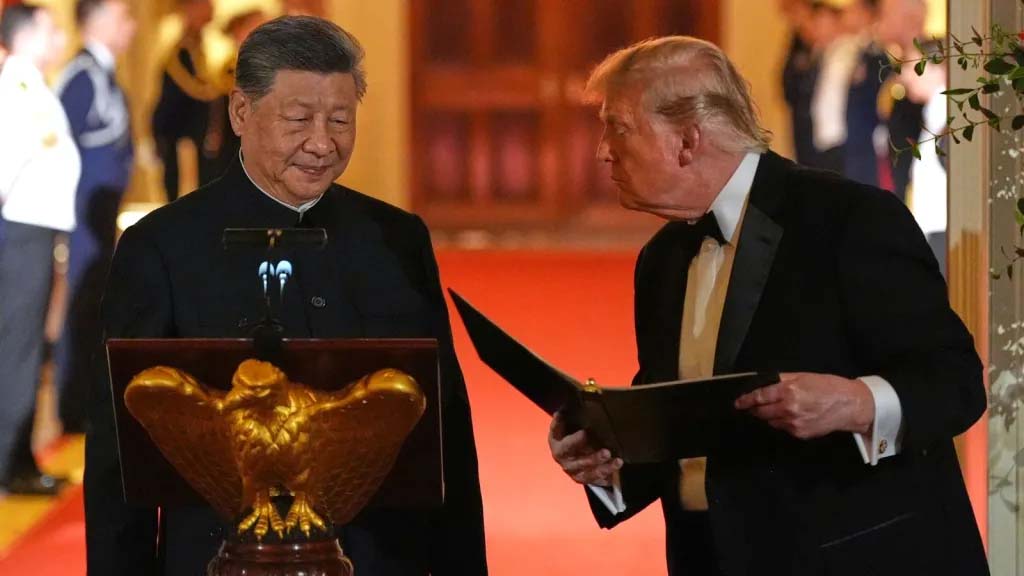
A senior US official, meanwhile, said Washington was seeking stability with Beijing, describing US President Donald Trump’s recent meeting with Chinese President Xi Jinping as “really great”, Reuters reported.
What the proposed tariffs mean for China and other economies
The proposed measures are being framed as part of a broader effort to address what the administration considers unfair trade practices. They are being pursued under Section 301 of the Trade Act of 1974, which allows the US to investigate and respond to foreign trade practices it considers discriminatory or harmful to American commerce.
The Associated Press reported that some Chinese products could face a combined tariff rate of 45 per cent after the proposed additional duties are added to existing tariffs. The administration has said the new measures would be consistent with trade agreements reached with Washington and would not apply on top of certain other product-specific tariffs, including those on cars, steel and aluminium.
The proposals also take into account existing trade arrangements. Reuters reported that the administration said the new duties would not exceed negotiated tariff limits, including a 20% cap for China under a trade truce due to expire on January 10. The proposed measures would also exclude around $30 billion worth of Chinese imports being considered for tariff reductions through a separate bilateral process.
The administration said the proposed duties would not stack on top of tariffs of 10% to 12.5% announced in July for a wider group of trading partners over alleged failures to enforce restrictions on goods produced using forced labour.
Brazil faces separate tariff action
In a separate move, Washington has proposed modifying existing tariffs on Brazilian goods, including a new 10% duty on finished aircraft and higher tariffs on raw and refined sugar imported outside quota limits, Reuters reported.
The proposal could affect Embraer, Brazil’s largest aircraft manufacturer. A senior US official said negotiations with Brasilia had failed to resolve what Washington described as “unreasonable acts, policies and practices”.
The US has raised concerns over a range of Brazilian policies, including deforestation and the country’s Pix instant-payment system. Brazil has rejected the allegations and has sought a World Trade Organization dispute panel to examine the tariffs imposed in July.