
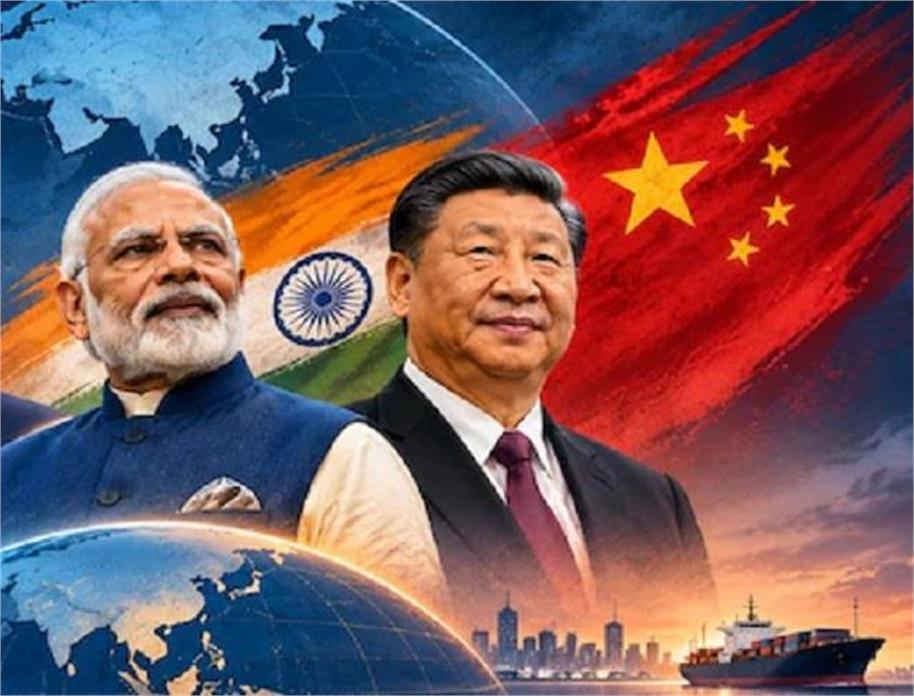
India has strengthened its position in Asia in 2026, with its overall score in the Asia Power Index rising to 40.5 points. The gap between India and China has narrowed to its lowest level since 2018, while Prime Minister Narendra Modi has secured the second position in the regional leadership rankings. Stronger defence partnerships, stable trade relations and growing cultural influence have contributed to India’s improved standing.
New Delhi: Despite facing economic challenges and maintaining a relatively restrained diplomatic approach during the West Asia conflict, India has succeeded in expanding its influence across Asia in 2026. According to the Asia Power Index, the gap in overall power between India and China has reached its narrowest level since the index was introduced in 2018.
Prime Minister Narendra Modi has also received recognition for his regional leadership, ranking as Asia’s second most influential leader after Chinese President Xi Jinping.
India’s overall power score has increased to 40.5 points. Although China continues to hold an advantage, remaining approximately 80 per cent more powerful than India, the narrowing gap highlights India’s gradual rise as a major regional power.
Economic Challenges Persist, but Future Prospects Improve
The report describes 2026 as a mixed year for India in terms of economic performance and diplomacy. India’s economic capacity score declined slightly to 26.4 points, although the country retained its third position in the rankings.
The depreciation of the rupee and changes in the International Monetary Fund’s (IMF) methodology for assessing economies affected India’s relative Gross Domestic Product (GDP) standing. India’s overseas investments also fell by approximately $20 billion.
However, the country’s outlook for future resources improved considerably. India’s score in this category increased to 56.2 points, reflecting more favourable economic growth projections.
This improvement suggests that India has significant potential to expand its economic strength and enhance its overall influence in the coming years.
PM Modi Ranks Second in Regional Leadership
Diplomatic influence remains India’s strongest area, according to the report. Although the country’s score in this category declined marginally, it stood at a strong 70.3 points.
At a time when several countries experienced a decline in diplomatic influence, India managed to maintain much of its standing.
Expert assessments of Modi’s regional leadership improved significantly, helping India move up three positions. He is now ranked as Asia’s second most influential regional leader, behind China’s Xi Jinping.
However, assessments of Modi’s global leadership and strategic ambitions showed some decline. India’s relatively limited diplomatic engagement during the West Asia conflict was identified as one of the contributing factors.
This was particularly evident when a US submarine sank an Iranian warship returning from a naval exercise hosted by India. New Delhi’s response to the incident was relatively restrained, highlighting the limitations of its diplomatic engagement during the conflict.
Defence Cooperation and Cultural Influence Boost India’s Standing
India has also made progress in strengthening its economic and defence relationships across the region.
Stable trade and investment ties helped India become one of the five countries that recorded no decline in their economic relationships scores. As a result, India climbed two places to secure seventh position in this category.
The country also strengthened its defence network through expanding military cooperation with regional partners and the sale of BrahMos missiles to South-East Asian countries.
These developments helped India’s defence networks score rise to 18.6 points, taking the country up two places to ninth position.
India’s cultural influence also witnessed an improvement, with its score increasing to 43.8 points. Greater international exposure for Indian culture, stronger information flows and expanding people-to-people connections contributed to this progress.
India Becomes More Effective in Converting Resources into Power
The report highlights another important development: India’s growing ability to translate its available resources into actual regional influence.
For the first time since 2023, India has succeeded in reducing the gap between its potential resources and its overall influence. This measure is known as power yield.
Power yield assesses how effectively a country converts its available resources into actual influence, compared with the level of power it would theoretically be expected to exercise.
India’s improved performance in this area, combined with its stronger future resources score, points to its growing potential to expand its influence across Asia.
Overall, the Asia Power Index 2026 reflects India’s steady progress as a regional power. While China continues to maintain a considerable advantage, India’s improvements in diplomacy, defence cooperation, economic relationships and cultural influence suggest that its position in the Asian strategic landscape is becoming increasingly significant.