
India’s growing economic influence has not yet translated into a place at one of the Asia-Pacific’s most influential economic forums. Despite submitting a formal application in 2007, India remains outside the Asia-Pacific Economic Cooperation (APEC). US opposition, restrictions on admitting new members, concerns over India’s trade policies and wider geopolitical considerations have all contributed to the delay. With no new economies joining the bloc since 1998, India’s membership ambitions remain on hold.
Beijing: India has emerged as one of the world’s leading economic powers, playing an increasingly important role in global trade, investment and economic growth. Yet, despite its rising international standing, the country remains excluded from APEC, a major platform for economic cooperation across the Asia-Pacific region.
India formally applied to join APEC in 2007, but nearly 19 years later, its membership bid has still not progressed. The delay is not simply a question of economic eligibility. Instead, a combination of political differences, strategic interests, trade-related disagreements and the organisation’s consensus-based decision-making process has made expansion difficult.
APEC has not admitted any new members since 1998, highlighting the challenges India faces in securing support from existing members. So, what exactly has prevented India from joining the influential economic grouping?
US Reservations and Diplomatic Hurdles
India’s efforts to become an APEC member have involved years of diplomatic engagement. When New Delhi formally submitted its application in 2007, former Foreign Secretary Shyam Saran took on the role of special envoy to secure backing from existing member economies.
According to Saran, the United States was among the key countries reluctant to support India’s inclusion. Washington reportedly sought to link its backing to India’s position on issues at the World Trade Organisation (WTO), as well as the resolution of bilateral trade disputes.
India, however, maintained that APEC was not the appropriate forum for resolving trade disagreements. This difference in approach became one of the obstacles to moving the membership process forward.
The lack of enthusiasm for expansion was also evident in 2015, when US officials indicated that there were no active discussions about admitting additional members.
India’s Membership Bid Faced Setbacks as Early as 1997
India’s interest in joining APEC dates back even further than its formal application in 2007. The country had sought membership during the 1997 summit in Vancouver.
However, Peru, Russia and Vietnam were selected to join the organisation, while India was left out. At the time, concerns centred on India’s economic policies, its protection of domestic industries and its commitment to trade liberalisation.
Following the expansion, APEC introduced a 10-year moratorium on admitting new members. This restriction was later extended until 2010.
Despite further discussions at the 2007 summit in Sydney and the 2010 summit in Yokohama, member economies failed to reach an agreement on expansion.
Consequently, APEC has remained unchanged in terms of membership since 1998, leaving India’s application unresolved.
India’s Trade Policies Remain a Point of Concern
Another significant challenge is the difference between India’s approach to trade and APEC’s broader economic objectives.
APEC seeks to encourage regional trade, reduce barriers and promote economic liberalisation. India, on the other hand, has traditionally balanced international trade commitments with the need to protect domestic manufacturers, farmers and small businesses.
India’s decision to withdraw from the Regional Comprehensive Economic Partnership (RCEP) negotiations at the final stage further highlighted these differences.
New Delhi was concerned that joining the agreement could result in a surge of cheaper imports, particularly from China, putting pressure on Indian manufacturers and domestic industries.
However, former diplomat Anil Wadhwa argues that describing India as a protectionist economy would be misleading. India continues to negotiate trade agreements with several countries and is steadily expanding its involvement in international economic cooperation.
Its growing network of trade partnerships also demonstrates a willingness to engage more deeply with the global economy.
Could India’s Entry Reshape APEC’s Strategic Priorities?
India’s possible inclusion in APEC is not just an economic question. It also has important geopolitical implications.
Some existing members are concerned that bringing India into the organisation could broaden its geographical and strategic focus beyond the Pacific towards a wider Asian framework.
There are also concerns about how India’s trade priorities might influence the organisation’s decision-making process. Since APEC operates through consensus, every member economy has a voice in shaping its decisions.
Some countries may therefore be cautious about expanding the membership if they believe it could complicate efforts to reach agreements on trade liberalisation.
At the same time, excluding India means leaving out one of the world’s largest consumer markets, an increasingly important manufacturing destination and a major participant in global supply chains.
India’s economic growth and expanding international influence could bring considerable value to the forum, making its continued absence increasingly significant.
What Is APEC and Why Does It Matter?
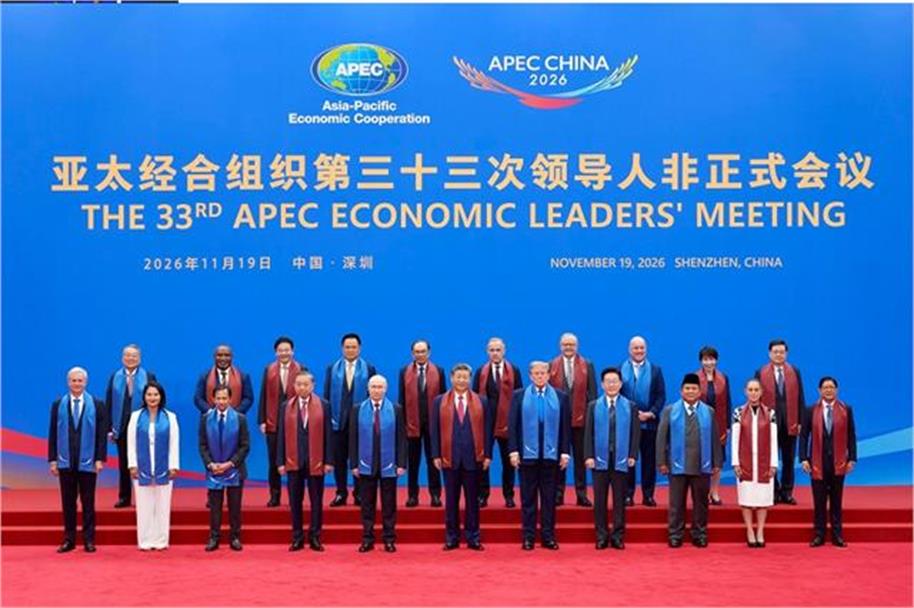
Established in November 1989, the Asia-Pacific Economic Cooperation (APEC) forum was created to strengthen economic cooperation and encourage trade across the Asia-Pacific region.
The organisation began with 12 founding members and now consists of 21 member economies.
Collectively, these economies represent:
- More than 60 per cent of global Gross Domestic Product (GDP).
- Over 50 per cent of international trade.
- Approximately 38 per cent of the world’s population.
APEC provides a platform for member economies to discuss trade, investment, economic integration and regional development.
Unlike conventional international organisations based on legally binding treaties, APEC operates through voluntary commitments, open dialogue and consensus-based cooperation. Its decisions are not legally binding, allowing members to implement agreed initiatives according to their respective national circumstances.
India’s Absence Raises Questions About the Future of Regional Cooperation
Former Foreign Secretary Shyam Saran believes India’s participation in APEC is becoming increasingly important as the global economic and political landscape continues to evolve.
India is now a significant player in international trade, investment, technology and global supply chains. Its growing economic influence makes its absence from a forum shaping the future of Asia-Pacific economic cooperation increasingly difficult to overlook.
Nevertheless, India’s membership prospects remain dependent on the willingness of existing members to reconsider expansion.
For New Delhi, economic credentials alone may not be enough. Securing a place at the table will require sustained diplomatic engagement, greater political support and, most importantly, consensus among APEC’s existing members.
Until that happens, India’s bid to join one of the world’s most influential regional economic groupings is likely to remain unresolved.