
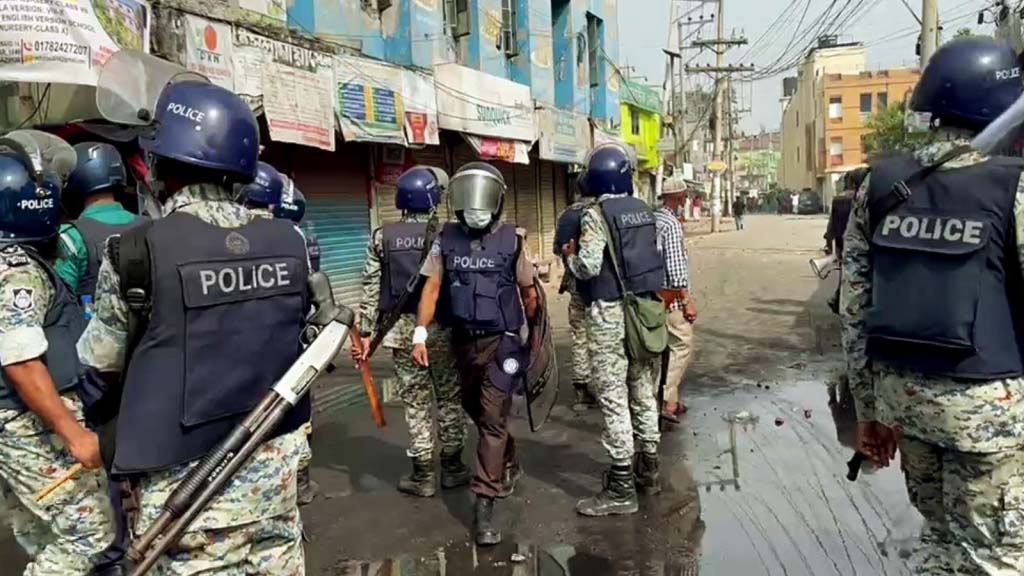
Nearly two years after Sheikh Hasina’s ouster, Bangladesh is witnessing renewed political violence. Her proposed return from India, the Awami League’s attempts to mobilise supporters and growing economic discontent have created a fresh challenge for Prime Minister Tarique Rahman.
Nearly two years after a student-led uprising forced Sheikh Hasina from power, Bangladesh is once again witnessing political violence. Vehicles have been set ablaze, crude bombs have exploded, political workers have been killed, and the ancestral home of Nobel laureate Muhammad Yunus has been targeted in a suspected arson attack.
The immediate trigger is Hasina’s announcement that she intends to return to Bangladesh in December, ending her exile in India. Her banned Awami League party has responded to the government’s refusal to issue her a new passport and national identity card by organising protests and calling for a nationwide shutdown on Thursday, November 19.
The unrest has also taken on a diplomatic dimension, with Prime Minister Tarique Rahman saying, at a public event in the northern district of Lalmonirhat, that Awami League leaders “have not looked at the interests of Bangladesh and its people”, news agency Reuters reported.
“At the same time, the country across the border, where they have fled to, is their master … To satisfy those masters, they have again started conspiring against Bangladesh and its people,” he said, without naming India, Reuters added.
The Ministry of External Affairs did not immediately respond to a request for comment.
Why did Bangladesh reject Sheikh Hasina’s passport?
The latest protests began after Hasina announced that she planned to return to Bangladesh in December and sought a new passport and national identity card to facilitate her journey.
The government led by Rahman’s Bangladesh Nationalist Party (BNP) rejected her request. It has instead maintained that Hasina should be extradited from India under the bilateral extradition treaty.
The Awami League subsequently announced a week-long campaign of demonstrations, culminating in Thursday’s nationwide shutdown.
According to Reuters, the shutdown had mixed success, with the greatest impact in southern districts where the Awami League retains considerable support.
The protests have been accompanied by attacks on vehicles, political offices, markets and residential properties.
Police said two members of the ruling BNP were killed on Wednesday night. The houses of two BNP lawmakers in Gopalganj, Hasina’s home district, were vandalised and set on fire.
At least six buses and pickup vans were torched across several districts, while crude bomb explosions and attacks on railway infrastructure were also reported.
On Thursday, a bus and a truck were set ablaze on the Dhaka-Chattogram highway, although passengers escaped unharmed, police said.
Authorities deployed 97 platoons of Border Guard Bangladesh across seven districts to contain the violence.
In Dhaka, police arrested 107 people suspected of links to the Awami League and its affiliated organisations over 24 hours, including former education minister Nurul Islam Nahid.
Why is Sheikh Hasina’s return so controversial?
Hasina’s proposed return threatens to reopen one of Bangladesh’s deepest political divisions. The former prime minister fled to India on August 5, 2024, after weeks of student-led demonstrations and a deadly government crackdown brought an end to her 15-year rule.
Following her departure, an interim administration headed by Nobel Peace Prize laureate Muhammad Yunus took charge. His government subsequently banned the Awami League.
Hasina was later sentenced to death on charges of crimes against humanity linked to the deaths of protesters during the uprising. The former prime minister has nevertheless insisted that she will return to Bangladesh.
In an interview with the Associated Press earlier this month, Hasina said even death could not prevent her from returning.
Her announcement has emboldened supporters who are seeking to revive the Awami League’s political presence despite the ban.
Why are Muhammad Yunus and institutions linked to him being targeted?
The violence has also affected properties and institutions associated with Muhammad Yunus, who headed the interim administration after Hasina’s ouster. His ancestral home in Chattogram was set on fire late Wednesday.
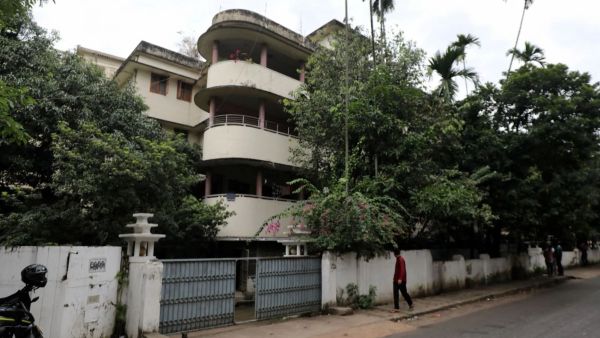
The ancestral home of Nobel laureate Muhammad Yunus (Reuters Photo)
Police officer Mozammel Haque told Reuters that flammable substances were likely thrown into an unused ground-floor room of the building. Yunus’ paternal family members, who live on the upper floors, were safe. AP reported that police were investigating the suspected arson.
Grameen Bank, the microcredit institution founded by Yunus, has also faced attacks on its branches during the recent unrest. According to AP, the bank said at least 72 branches across 40 districts had been targeted by arson and vandalism between November 10 and 19.
Yunus led Bangladesh’s interim administration for 18 months before handing over power to Rahman’s elected government in February 2026.
His role in the transition after Hasina’s removal made him a prominent political target for criticism from her supporters. However, investigators have not conclusively established responsibility for the fire at his ancestral home.
What role is Tarique Rahman’s government playing in the crisis?
Rahman came to power following elections in February 2026, ending the interim administration that had governed Bangladesh since Hasina’s departure.
Rahman has accused Awami League leaders living outside Bangladesh of encouraging unrest and attempting to destabilise the country.
According to Bangladesh’s Daily Star, Rahman also criticised the use of violence in politics. “Enough is enough. We must give a clear answer to these terrorists, arsonists and killers,” he said.
The government has vowed to take action against those responsible for arson, attacks and sabotage. Awami League leaders, many of whom remain in hiding, could not be reached for comment by Reuters.
Why has India become part of Bangladesh’s political turmoil?
India has become central to the latest political confrontation because Hasina has been living in the country since fleeing Bangladesh in August 2024. Both the Yunus-led interim administration and Rahman’s government have sought her extradition.
However, her continued presence in India remains a major point of disagreement between Dhaka and New Delhi. Relations deteriorated sharply following Hasina’s ouster, although ties improved somewhat after Rahman assumed office in February.
(With inputs from agencies)