
By Chandan Singh | Page 3 News Worldwide | New Delhi
One counsellor for every 500 students; district well-being centres, trained teachers and six-tier crisis response system planned across educational institutions
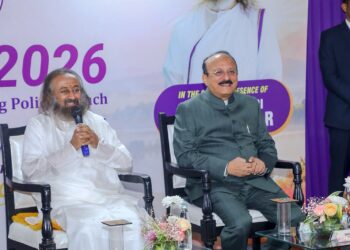
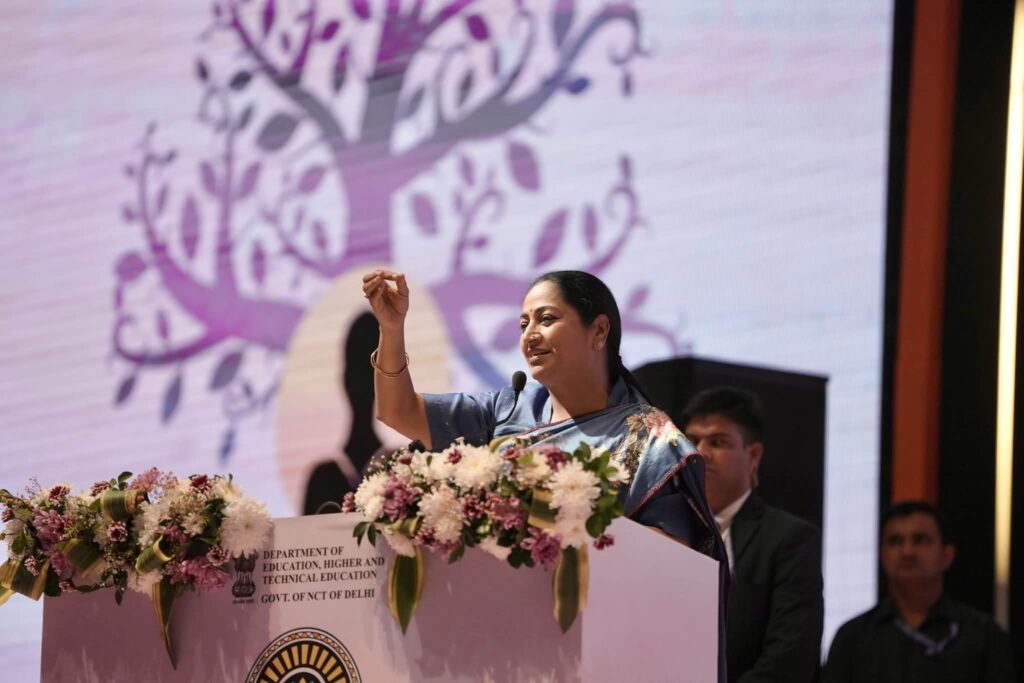
NEW DELHI: Delhi Lieutenant Governor Taranjit Singh Sandhu, Chief Minister Rekha Gupta and Art of Living founder Sri Sri Ravi Shankar on Thursday launched the ‘Ehsaas 2026’ Mental Health and Well-Being Policy for schools and higher educational institutions, marking a major initiative to make emotional and psychological well-being an integral part of education.
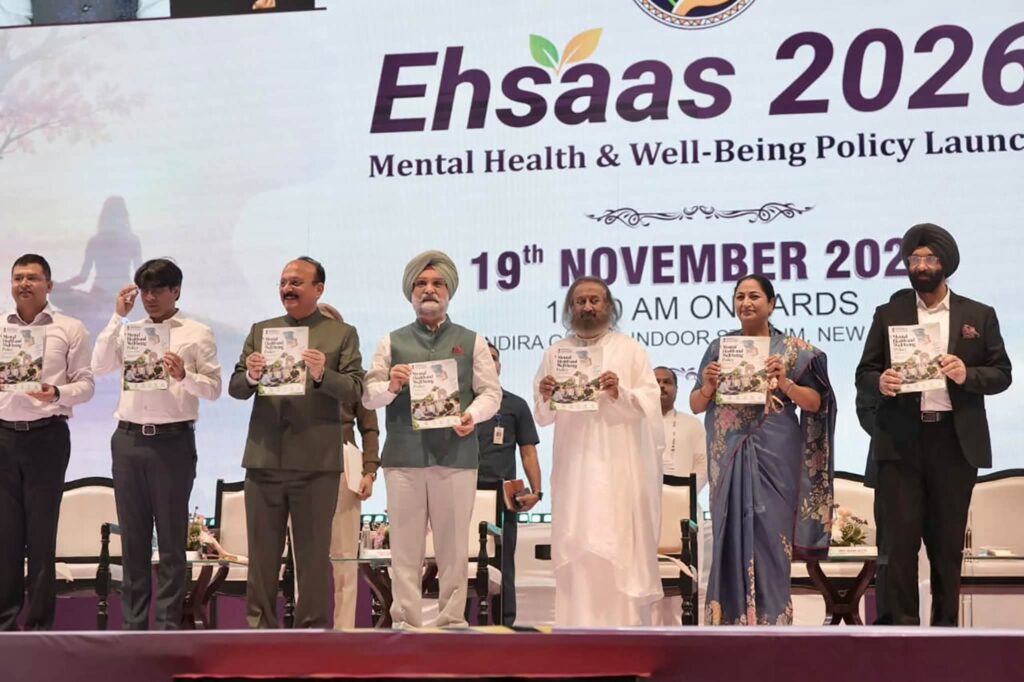
Launched at a grand event at the Indira Gandhi Indoor Stadium, the policy seeks to create safe, inclusive and supportive learning environments where students can express their emotions freely, seek help without hesitation and develop mental resilience alongside academic excellence.
Education Minister Ashish Sood and Environment Minister Manjinder Singh Sirsa were among those present at the launch, which was attended by thousands of people.
A key provision of the policy is the appointment of one counsellor for every 500 students, supported by district-level Well-Being Centres, specialised mental health services and trained school personnel. The framework will cover government, government-aided and recognised private schools, as well as higher educational institutions under the Delhi Government.
Addressing the gathering, Lieutenant Governor Taranjit Singh Sandhu said mental health and emotional well-being must become an integral part of education, particularly as young people face increasing stress and emotional challenges.
He emphasised that every child’s feelings, aspirations and needs matter, irrespective of their background, abilities or circumstances. Children with disabilities and those from disadvantaged communities must receive equal opportunities, acceptance and support.
Highlighting the shared responsibility of schools, families and society, Sandhu said teachers, parents and school management must understand children’s emotions, listen with sensitivity and encourage them to seek professional assistance whenever necessary.
Referring to the spirit of ‘Vasudhaiva Kutumbakam’, he stressed that compassion, mutual respect and a sense of belonging are essential for building confidence and emotional well-being.
He expressed confidence that ‘Ehsaas’ would ensure every child understands that their feelings matter, they are valued and seeking help is a sign of strength, not weakness.
Chief Minister Rekha Gupta said the policy was designed to provide continuous mental and emotional support to millions of students studying in Delhi’s schools and colleges.
She said the initiative would help young people navigate different stages of life and changing emotional needs with greater resilience, positivity and confidence.
The Chief Minister reiterated that the Delhi Government, teachers and parents would stand by students through their challenges and ensure that their overall development receives equal importance alongside academic progress.
Education Minister Ashish Sood described ‘Ehsaas 2026’ as a significant step towards understanding children’s emotional needs, identifying concerns at an early stage and ensuring appropriate support.
He said teachers, parents, principals, Educational and Vocational Guidance Counsellors (EVGCs), drivers, support staff and other school personnel would receive specialised training to recognise behavioural changes and respond sensitively.
Encouraging students to learn from failure, express themselves freely and seek help when needed, Sood said the policy would strengthen counselling services through dedicated counsellors, helplines and professional support mechanisms.
Sri Sri Ravi Shankar said India’s spiritual traditions had long provided a foundation for mental health and emotional resilience. Congratulating the Delhi Government, he emphasised the importance of human connection, sensitivity and a sense of belonging.
He urged people not to overlook students or others who appear sad or distressed, but to reach out with compassion and ask, “What can I do for you?”
Four pillars of the policy
The ‘Ehsaas’ framework is built around four key pillars: a whole-institution approach, proactive and preventive care, system-level accountability and governance, and ethical safety with rights-based support.
The policy seeks to transform educational institutions from spaces focused primarily on textbooks, examinations and marks into environments where students feel safe, respected and supported.
It also incorporates the holistic education vision of the National Education Policy 2020, recognising mental health as a collective institutional responsibility rather than merely a response to emergencies.
District centres and counsellors to strengthen support
Under the policy, every school will be required to strengthen counselling services, with a prescribed counsellor-student ratio of 1:500. Larger institutions may appoint additional counsellors to cater to different academic levels.
Counsellors will identify emotional and psychosocial concerns, provide initial counselling and facilitate referrals to specialists. Their responsibilities will remain separate from administrative and disciplinary duties.
School Well-Being Committees and School Wellness Teams will coordinate mental health initiatives and monitor support systems.
Currently, Delhi Government schools have 540 Educational and Vocational Guidance Counsellors, comprising 348 regular and 192 guest counsellors. More than 500 teacher-counsellors are also contributing to student guidance and awareness activities.
At the district level, dedicated Well-Being Centres will provide psychological assessments, therapeutic interventions and psychiatric consultations. Schools will facilitate early identification and referrals, while specialised professionals will handle clinical assessments and treatment.
Focus on exam stress, bullying and cyberbullying
The policy places particular emphasis on examination pressure, academic stress, anxiety, depression, interpersonal relationships and challenges arising from digital behaviour.
Students will receive guidance in stress management and social-emotional skills, particularly during board and competitive entrance examinations.
Confidential reporting mechanisms will also address bullying, cyberbullying and identity-based discrimination, with provisions for timely action and protection against harassment of complainants.
Six-tier crisis response mechanism
A six-tier escalation system has been introduced to ensure immediate assistance in serious mental health situations.
The mechanism will involve the class teacher, school counsellor or first responder, school head or wellness team, District Well-Being Centre, hospital or emergency mental health services, and relevant statutory agencies.
Clear protocols will guide immediate intervention, student safety, expert assistance and continuous follow-up, particularly in cases involving risks of self-harm or suicide.
Digital monitoring to ensure accountability
To strengthen implementation, the government will introduce a digital monitoring portal to track counselling services, Well-Being Committees, referral arrangements, crisis preparedness and inclusive activities.
Under the School Wellness Services Index (SWSI), schools will conduct quarterly self-assessments and submit reports through the portal. District and state-level reviews will identify gaps and facilitate corrective action.
The monitoring framework will rely on aggregated data rather than students’ personally identifiable information, with safeguards for data privacy and role-based access.
The policy also places considerable emphasis on parental participation and teacher training, recognising that children’s emotional development depends on coordinated support from families, educational institutions and society.
With ‘Ehsaas 2026’, the Delhi Government aims to establish a more compassionate and inclusive education system in which mental resilience, emotional balance and confidence receive the same importance as academic achievement.