
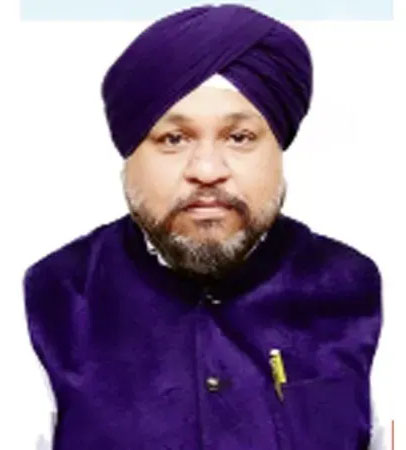
By Sudeep Singh
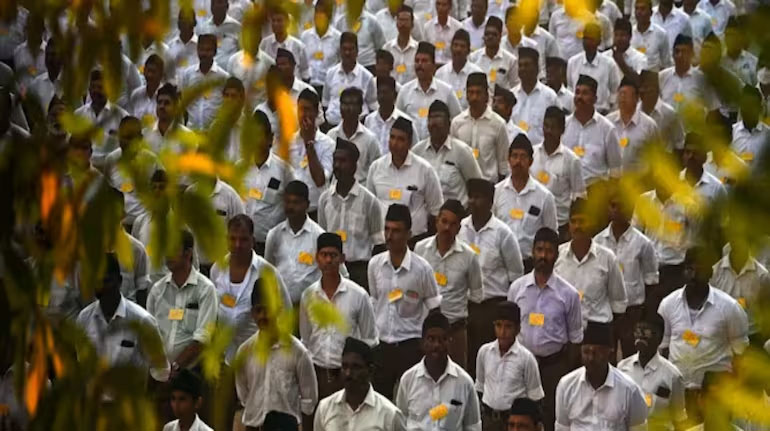
The 1984 Sikh massacre is that dark chapter in Indian history, the mere memory of which brings flash images of the pain of thousands of families, separated loved ones, and events that put humanity to shame. In this carnage, while leaders of the country’s biggest political party and their supporters faced serious allegations of inciting violence and shielding rioters, there were also people during this horrific phase who protected Sikh families without caring for their own lives. The role of swayamsevaks (volunteers) is still mentioned by many today based on their personal experiences. I myself am a living example of this. At that time, I was barely 12 years old. The date was November 1, 1984, and we lived in Chand Mohalla, Gandhi Nagar. Suddenly, sounds of commotion began to be heard. It was learned that rioters had returned after looting the local gurdwara and were now targeting Sikh families living in our lane. There were several Sikh homes in the lane, and the situation was rapidly turning horrific; at such a time, under the leadership of Tej Prakash Chhabra, RSS swayamsevaks stood firmly in front of the rioters. Following their resistance, the rioters retreated from there, but their role was not limited merely to stopping rioters that day. For the next four days, they sheltered Sikh families in their homes, ensured their protection, and provided them with every possible help. Today, looking back, I feel that if the swayamsevaks had not stood with us at that time, perhaps our family would not be alive in this world today. For me, this is not a political statement, but a truth witnessed by my childhood eyes and a favor I will never forget for life.
The Rashtriya Swayamsevak Sangh, which most people in the Sikh community still consider their enemy and make baseless allegations against regarding tampering with Sikh history, is the very organization whose swayamsevaks worked to save Sikhs, shelter them, and help them in Delhi as well as other cities across the country. Yes, it is possible that somewhere a swayamsevak was seen siding with rioters, but based on any single individual or incident, the services of the entire organization and thousands of swayamsevaks who risked their lives to protect innocent Sikhs cannot be dismissed. History should be evaluated based on facts, not political convenience.
Even after 42 years, the wounds of the victim families of 1984 have not healed. At such a time, the decision of Congress party leader Rahul Gandhi to organize a rally at Delhi’s Ramlila Maidan on November 1st naturally came under question. After all, what was the need for a political show of strength on the very day thousands of Sikh families remember the pain of losing their loved ones? Did the Congress leadership not have any other date for this event? As long as questions regarding justice and accountability remain in the minds of the victims, raising questions on the choice of this date is entirely justified. While on one hand Rahul Gandhi was holding a rally, Delhi Chief Minister Rekha Gupta along with the BJP State President and other workers were seen paying tributes to the martyrs in West Delhi together with the Sikh community.
A New Opportunity for Gurvinder Singh Bawa’s Services
The decision to hand over the management of Takht Sachkand Sri Hazur Sahib, Nanded, to a board selected by Sikh congregations has not only provided a renewed opportunity for the system of Sikh representation, but has also opened a new path of service for those who have long striven for the betterment of the Guru Ghar and the Sangat (congregation). In this entire sequence of events, the role and services of Sardar Gurvinder Singh Bawa deserve special recognition. Gurvinder Singh Bawa, who has been serving as the Vice President on the Gurdwara Board, had to take charge of the crucial management responsibilities following the demise of the then President Sardar Bhupinder Singh Minhas. This responsibility is not merely of a position, but also of strengthening the glorious traditions of the Takht Sahib, the expectations of the Sangat, and the institutional framework. An experienced team, including General Secretary Sardar Ravinder Singh Bungai, is present alongside him; hence, it is expected that the collective leadership, with its experience, will take the management to greater heights with transparency.
The way various services and development works worth approximately 20 to 25 crore rupees were announced following the restoration of the board is an indication that the management does not wish to limit its responsibilities merely to the administrative domain. The announcement of a 50 percent festive bonus for employees and a non-refundable financial gift of one thousand rupees to the board’s contractual employees on Diwali is a commendable initiative. Respecting the employees serving the Guru Ghar and taking care of their families’ happiness is also an important part of the spirit of service. Among these announcements, the most significant initiative pertains to healthcare services. The plan to establish modern medical diagnostic facilities at a cost of approximately 15 crore rupees—including facilities such as MRI, CT scan, X-ray, blood tests, and sonography—can prove to be a major relief for the general public. Today, when medical tests in private hospitals and diagnostic centers are becoming an economic burden for ordinary families, such an initiative by the Gurdwara management can serve as a medium to put Guru Nanak Dev Ji’s principle of Sarbat da Bhala (welfare of all) into practice. Similarly, a solar plant will be installed at a cost of 5 crore rupees by Surinder Singh Saluja, a resident of Hyderabad, in Bawa Ji’s denomination to help save on electricity bills. Gurvinder Singh Bawa and his team face both a great opportunity and a great responsibility.
Source: https://english.punjabkesari.com/editorial/rss-volunteers/
Published in Punjab Kesari, November 6th, 2026