
Pakistan has introduced a new automobile policy aimed at making vehicles more affordable, strengthening domestic manufacturing and expanding exports. The initiative also places a strong emphasis on electric mobility, with the government hoping to reduce production costs and encourage the wider adoption of environmentally friendly vehicles.
Islamabad announced the policy on Saturday, outlining a series of measures designed to support local manufacturers, increase industrial output and make vehicles more accessible to consumers, particularly those from middle- and lower-middle-income households.
Haroon Akhtar Khan, the Prime Minister’s Adviser on Industries and Production, shared details of the policy during a press conference alongside Information Minister Attaullah Tarar, according to state broadcaster Radio Pakistan.
Pakistan sets $6 billion automobile export target
Khan said the new policy rests on six key pillars: affordable vehicles, export growth, electric vehicles, localisation, vehicle safety and transparency.
As part of the initiative, the government has reduced import duties to lower manufacturing expenses and make locally produced vehicles more affordable. The move is expected to benefit low-income consumers in particular.
Khan expressed confidence that the measures would lead to a reduction in vehicle prices, saying that lower production costs would allow manufacturers to offer more competitive prices. However, luxury vehicles would be excluded from the proposed price reductions.
He also highlighted the Prime Minister’s particular focus on making vehicles with engine capacities below 1,300cc more affordable.
Alongside domestic affordability, the government is looking to strengthen local production and expand its presence in international markets. Pakistan has set an ambitious target of achieving $6 billion in automobile exports over the next five years.
Electric vehicles in focus as Pakistan seeks to cut oil imports
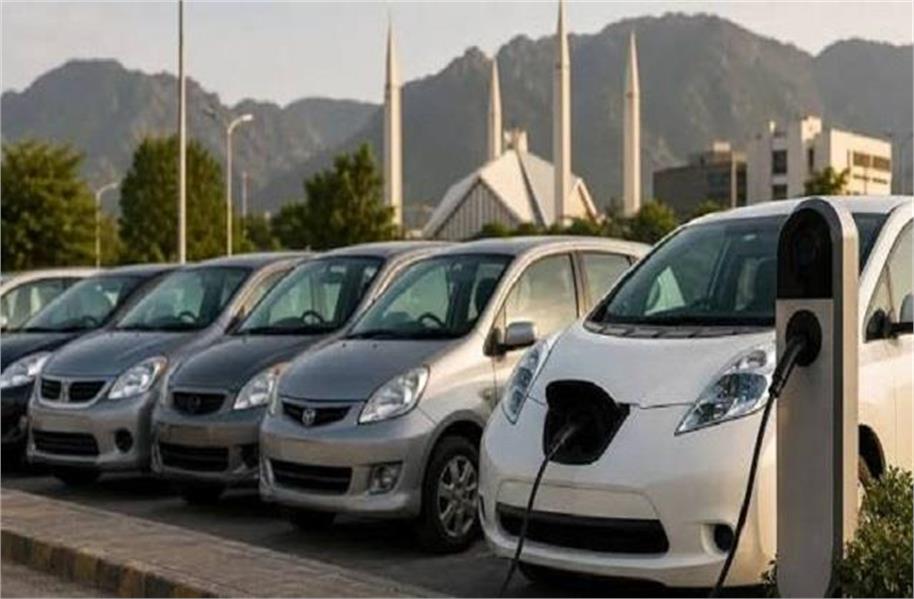
The policy also aims to accelerate the transition towards electric mobility, with incentives designed to encourage the production and adoption of electric vehicles.
Information Minister Attaullah Tarar said the initiative would strengthen Pakistan’s automotive industry while ensuring consumers have access to affordable, reliable and environmentally friendly transport options.
He pointed to the growing popularity of electric scooters among girls and women, who are increasingly using them to commute to schools, colleges and workplaces. Demand for electric motorcycles and scooters is also rising.
Tarar said a wider shift towards electric vehicles could help Pakistan reduce its dependence on imported fuel and lower its oil import bill. He noted that the financial burden of expensive oil imports ultimately affects ordinary citizens, particularly poorer households.
The minister described the policy as a comprehensive effort to transform the country’s automobile sector, highlighting the importance of targeted incentives for electric vehicles and greater investment in domestic manufacturing.
He also stressed that the industry needed to look beyond the domestic market to achieve sustainable growth. According to Tarar, Pakistan’s automobile sector would only realise its full potential by increasing production for export markets and generating more employment opportunities.
With its focus on affordability, localisation, electric mobility and export growth, the new policy represents an important step in Pakistan’s efforts to strengthen its automotive industry and make vehicle ownership more accessible.