

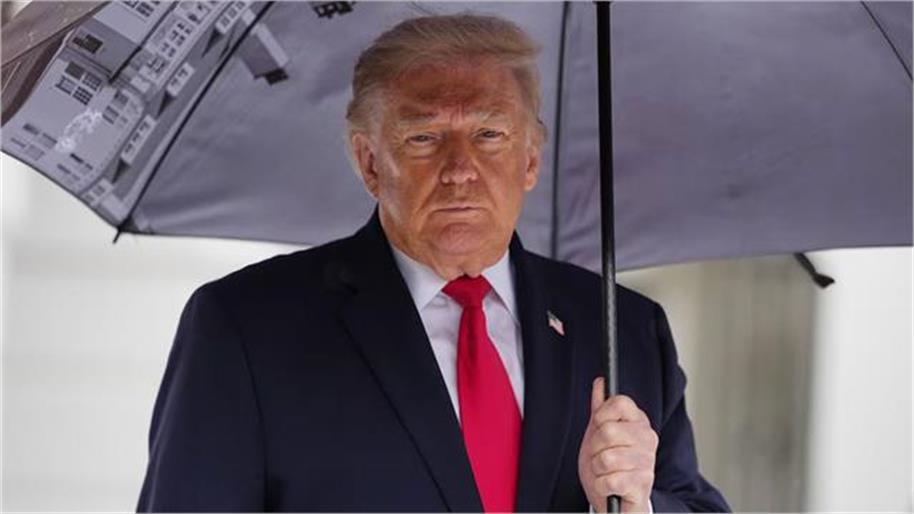
US President Donald Trump has acknowledged that his administration may have taken an overly tough approach to deportations, signalling a possible shift in his immigration stance after Republicans lost control of both the House of Representatives and the Senate in the midterm elections.
Washington: In his first major interview since the Republican Party’s electoral setback, Trump admitted that his administration’s aggressive deportation policy may have contributed to the defeat. He also indicated that his government could explore a bipartisan agreement on immigration with Democrats in the newly elected Congress.
Speaking to CBS’s 60 Minutes in an interview broadcast on Sunday, Trump conceded that his administration might have gone too far with its deportation measures.
“I think, yes, perhaps we were too harsh,” he said, expressing hope that an understanding could be reached with the incoming Democratic majority.
“We can work something out through a compromise. I think that’s actually possible,” Trump added, although he offered no details about what such an agreement might entail.
However, in a move that appeared to contradict his remarks, Trump appointed Stephen Miller, one of the principal architects of his hardline immigration agenda, as the new White House Chief of Staff shortly after the interview was recorded on Friday.
The appointment drew sharp criticism from Senate Democratic leader Chuck Schumer. Reacting on social media after the interview aired, Schumer questioned Trump’s commitment to changing course.
“Trump says his administration was too harsh on immigration. Apparently, his solution is to put the person responsible for that harshness in charge of the White House. That’s not correcting a mistake; it’s promoting the person responsible for it,” Schumer remarked.
Immigration enforcement has remained a cornerstone of Trump’s agenda since his return to the White House. His administration launched extensive operations in several American cities, resulting in a significant rise in arrests and prompting widespread protests.
The enforcement campaign also sparked controversy following the deaths of two American citizens, Renee Good and Alex Pretti, who were shot by federal officers during protests against the operations.
Democrats have indicated that strengthening congressional oversight of Immigration and Customs Enforcement (ICE) and the Department of Homeland Security will be among their key priorities in the new Congress.
Despite acknowledging that his administration may have adopted an excessively tough approach, Trump maintained that individuals living illegally in the United States who are involved in serious crimes, including murder and drug trafficking, should be deported.
At the same time, he appeared open to a more flexible approach towards other undocumented immigrants, particularly those he described as law-abiding and contributing to the economy.
Trump said there could be room for an agreement allowing such individuals to remain in the country, pointing to people employed by landscaping businesses, hotels and other establishments. He also noted that some of them were already paying taxes.
His remarks suggest that while Trump remains committed to deporting those he considers serious offenders, his administration may be willing to consider a more selective approach to immigration enforcement amid growing political pressure.