
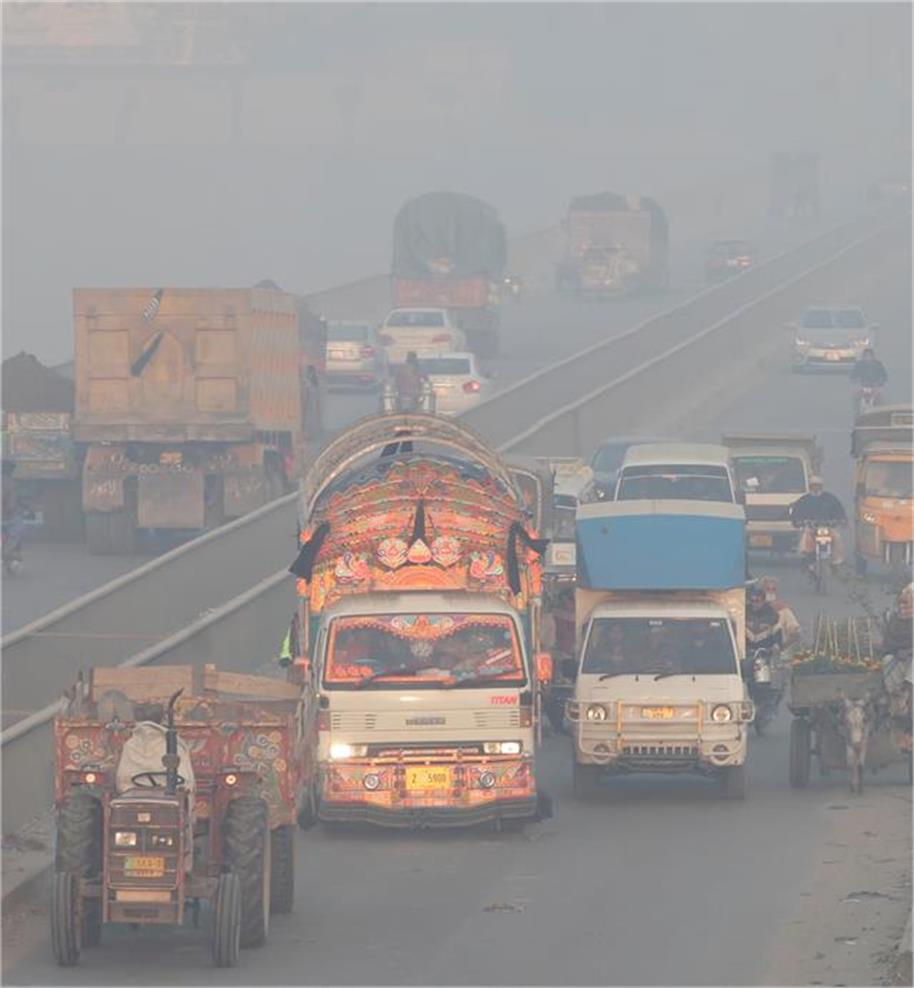
Lahore has emerged as the world’s most polluted city, with its Air Quality Index (AQI) soaring to a hazardous 419 on Thursday. The alarming pollution levels have renewed concerns over the health impact of toxic air, with studies suggesting that air pollution is reducing life expectancy across Pakistan by an average of 3.9 years and contributing to around 128,000 premature deaths annually.
According to IQAir’s global air quality monitoring data, Lahore secured the top position worldwide between 10 am and 11 am on 29 October. Cairo, Egypt, ranked second with an AQI of 274, while Karachi stood eighth globally, recording an AQI of 165, according to Dawn.
The situation is equally concerning across Punjab, where data from the provincial government’s Air Quality Monitoring Dashboard has revealed dangerously high pollution levels in several urban centres. Kasur was among the worst-affected locations.
Other cities also reported alarming AQI readings. Nankana Sahib recorded 261, Hafizabad 250, Sahiwal 210, Sheikhupura 205, Jhang 203 and Rajanpur 201. Multan and Gujranwala both registered 194, followed by Bhakkar at 186 and Vehari at 181.
Air pollution takes a heavy toll on health and economy
The consequences of prolonged exposure to polluted air extend beyond respiratory illnesses, with significant implications for public health and the national economy.
Data released by the Pakistan Air Quality Initiative (PAQI) indicates that air pollution is costing the country approximately 6.5 per cent of its Gross Domestic Product (GDP).
The findings also suggest that continued exposure to polluted air could shorten the life expectancy of Lahore residents by as much as seven years.
These findings are outlined in a comprehensive study titled Unveiling Pakistan Air Pollution: A National Landscape Report on Health Risks, Sources, and Solutions. The report presents Pakistan’s first integrated, multi-sector emissions inventory and examines the deterioration of air quality across several major cities.
As reported by The Express Tribune, the study analyses pollution trends in Karachi, Islamabad, Rawalpindi, Lahore and Peshawar. It identifies the major sources of harmful emissions and outlines potential interventions that could reduce pollution levels by up to 50 per cent.
Transport and industrial activity among major pollution sources
The assessment examines several major pollutants, including carbon dioxide, fine particulate matter (PM2.5), nitrogen oxides (NOx) and sulphur dioxide (SO2). It also provides detailed regional assessments covering four major airsheds.
One of the study’s most concerning findings relates to Lahore’s annual average PM2.5 concentration, which exceeds 110 micrograms per cubic metre. This is more than 22 times the World Health Organization’s (WHO) recommended annual guideline of five micrograms per cubic metre.
According to The Express Tribune, road transport is the largest contributor to PM2.5 emissions in Lahore. Industrial activities account for another 28 per cent, while traditional brick kilns contribute 17 per cent.
The combined impact of vehicle emissions, industrial operations and brick kilns continues to worsen particulate pollution across the city.
The situation becomes particularly severe during winter, when unfavourable weather conditions contribute to the accumulation of pollutants in the atmosphere. As a result, residents face prolonged exposure to hazardous air, further intensifying the public health crisis.