

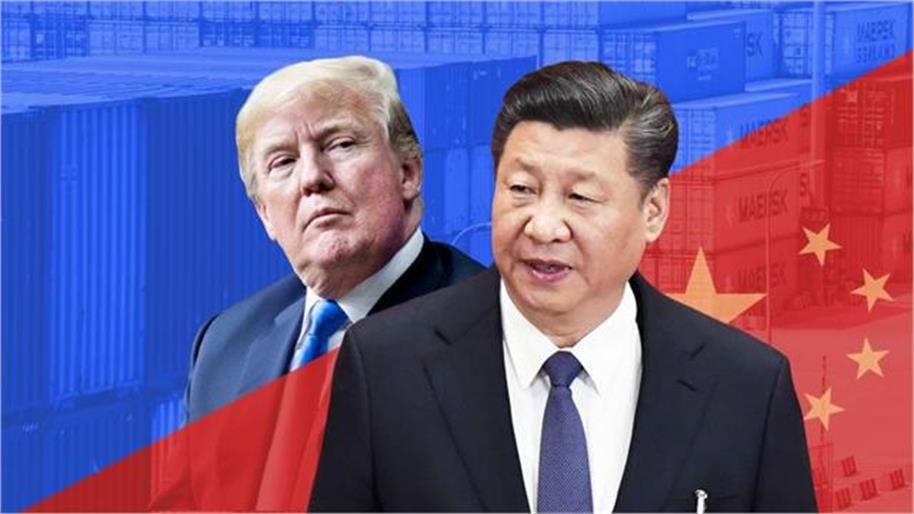
Beijing: China’s trade policies are coming under increasing scrutiny across the world, with concerns extending far beyond its ongoing trade tensions with the United States. Its huge trade surplus, state subsidies, low-cost exports and growing influence over global supply chains have emerged as major issues in international economic debates.
A new analysis published by the Australian Financial Review argues that China’s trade strategy should not be viewed merely through the prism of its tariff confrontation with Washington. According to analyst Ross Babbage, growing trade imbalances between China and several major economies are prompting governments to reconsider their economic and trade policies towards Beijing.
The scale of China’s manufacturing expansion is central to the analysis. In 2004, China’s manufacturing output was around half that of the United States. Nearly two decades later, it had risen to almost twice the US level.
Babbage identifies several structural factors behind China’s manufacturing dominance. These include its enormous domestic market of around 1.4 billion people, which has allowed Chinese companies to achieve economies of scale, as well as extensive government support and subsidies.
The analysis cites the Organisation for Economic Co-operation and Development (OECD) as highlighting significant differences in government support between China and other major economies.
Another issue is the valuation of China’s currency. Citing International Monetary Fund assessments, the analysis claims that the Chinese currency could be undervalued by between 20 and 40 per cent relative to its underlying value. Such an imbalance could make Chinese exports cheaper internationally while making imported goods more expensive in China.
The analysis also raises allegations concerning China’s broader state apparatus, including industrial intelligence activities, intellectual property theft, cyber operations, information campaigns and efforts to expand influence overseas. However, it notes that assessments of such allegations differ across countries and institutions.
$1.2 Trillion Trade Surplus
China’s trade surplus is described as one of the most significant indicators of the imbalance. According to the analysis, it has reached around $1.2 trillion, which it characterises as the largest annual trade surplus recorded by a single country.
The rapid expansion of Chinese electric vehicle exports has further intensified concerns. Countries including the United States, India, Thailand, Pakistan, Egypt, Canada and Indonesia have imposed or considered tariffs and other restrictions on Chinese electric vehicles.
Europe, too, is facing mounting pressure. The analysis says Chinese electric vehicle exports to Europe increased nearly tenfold over a two-year period, prompting renewed discussions about tariffs, import restrictions and other protective measures.
The issue also surfaced at a recent G20 finance ministers’ meeting. According to the analysis, a joint statement was proposed calling on countries with excessive and persistent external trade surpluses to address policy distortions. The proposal reportedly received support from 19 countries, while China alone opposed it.
The episode underlines the growing differences between Beijing and several major economies over global trade imbalances.
China’s trade strategy has also affected countries beyond the United States and Europe. Australia provides a notable example. The analysis says restrictions imposed by China on Australian products during the COVID-19 pandemic exposed the economic vulnerabilities that can arise when a country becomes heavily dependent on trade with a single major market.
The broader trend suggests that concerns over China’s trade practices are increasingly becoming a global issue rather than simply a dispute between Washington and Beijing.