
Russian Foreign Minister Sergey Lavrov backed India’s bid for a permanent UN Security Council seat at the 81st UNGA in New York, while warning against handing more seats to Germany and Japan.
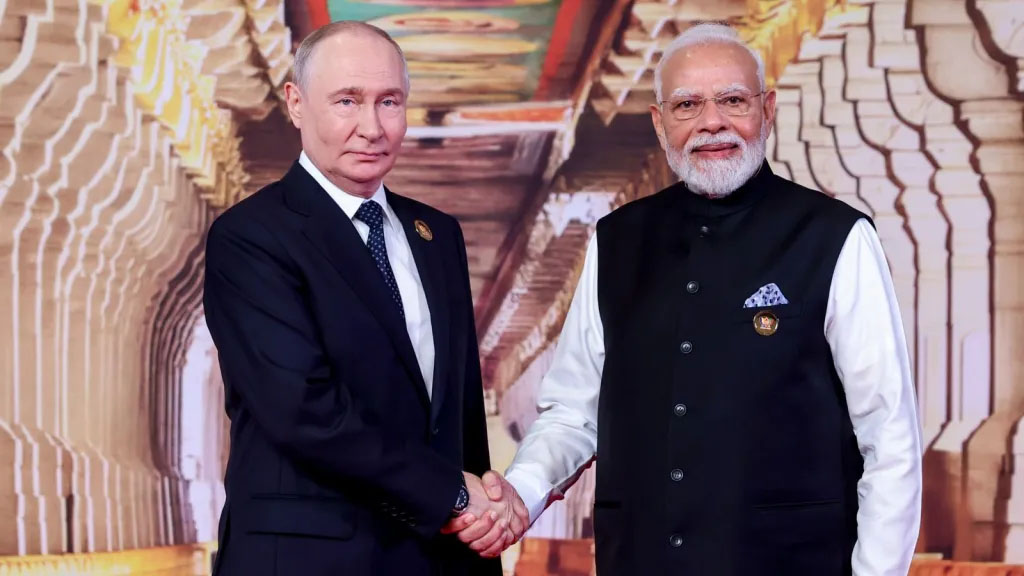
Russia has thrown its weight behind India’s push for a permanent seat on the United Nations Security Council. Speaking at the UN General Assembly session in New York on Saturday night, Russian Foreign Minister Sergey Lavrov said Moscow wants to see greater representation for Asia, Africa and Latin America on the council, and confirmed that Russia backs both India and Brazil for permanent seats.
He pressed for more UNSC seats to go to nations in the Global South and reaffirmed Russia’s support for India and Brazil specifically. At the same time, Lavrov made clear that any reform of the Security Council should not extend to giving Western powers extra seats, singling out Germany and Japan, which he accused of drifting toward militarism and returning to past ambitions.
“We are in favour of broadening the representation of Asia, Africa, and Latin America. We support Brazil’s and India’s candidatures for a permanent seat,” Lavrov said.
He also said that whatever shape council reform eventually takes, it must not weaken the authority currently held by its permanent members.
Meanwhile, Mauritius used its own address at the session to back New Delhi’s candidacy. Foreign Minister Dhananjay Ramful said his country stands behind the positions taken by the G4 and L69 groupings on council reform.
“We support the positions of the G4 and of L69 on Council reform, and we reiterate our support for India’s candidature for a permanent seat, commensurate with its constructive role in global affairs,” Ramful said.
INSIDE THE SECURITY COUNCIL’S STRUCTURE
The Security Council currently has 15 seats. Five belong to permanent members holding veto power China, France, Russia, the UK and the US while the other ten are filled by countries elected for two-year terms.
Adding new permanent seats would require changing the UN Charter itself, which needs a two-thirds vote in the General Assembly and ratification by two-thirds of all member states, including agreement from every existing permanent member.
Even with Russia’s backing, the push to reform the council has made little real progress. Views among the other permanent members are divided, and China, one of Russia’s closest partners, continues to firmly resist India joining their ranks.