
Trump says he’s building an “AI Force” and hiring a new AI czar. He hasn’t explained what either one will actually do. Here’s what we know so far, and the big questions still left open.
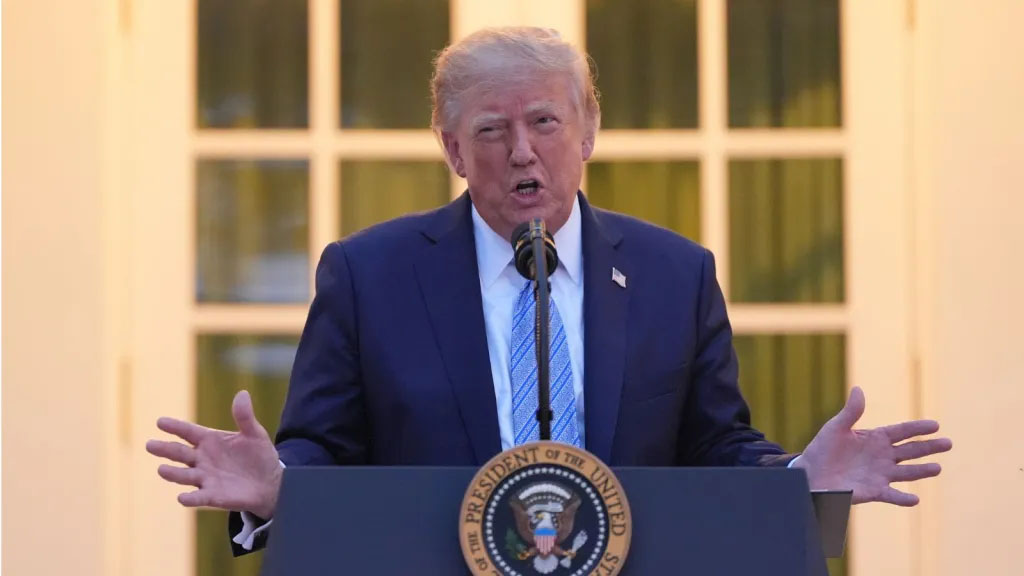
United States President Donald Trump has a new plan for artificial intelligence, and a new name to go with it. In a post on his own platform, Truth Social, he announced he’s building an “AI Force” and hiring a new AI czar to run it. There’s just one problem: he hasn’t said what either one will actually do.
No structure. No budget. No leader. No start date. Just a name, and a comparison to Space Force, the military branch Trump created in his first term. So is this a real government body in the making, or a message dressed up as a plan?
Here’s what’s known, what’s guesswork, and what’s missing.
WHAT IS THE ‘AI FORCE,’ EXACTLY?
At this point, nobody outside Trump’s team really knows. He hasn’t given a structure, a budget, a leader, or a start date. All that’s public is the name and the general goal: to support the growth of AI in the US rather than slow it down.
In his post, Trump said the government would “cherish it, help it, and watch over it, as it grows.”
IS IT ACTUALLY LIKE THE SPACE FORCE?
Trump himself drew that comparison. He set up Space Force, a new branch of the US military, during his first term in office. By comparing the AI Force to that, Trump is suggesting something with real government structure and standing, not just an advisory panel.
But there’s a key difference: Space Force is a branch of the armed forces with a clear legal basis, budget process, and command structure. Trump hasn’t said whether the AI Force would sit inside the military, a civilian agency, or somewhere else entirely.
WHAT WOULD AN ‘AI CZAR’ ACTUALLY DO?
This part has more precedent. Trump already had an AI czar once before: venture capitalist David Sacks, who took the role in December 2024. Sacks stepped down from the formal White House post in May 2026, though he still advises the administration and now chairs Trump’s Council of Advisors on Science and Technology.
Based on how Sacks used the role, an AI czar typically shapes government policy on AI, speaks for the administration’s position, and pushes back on calls for tighter rules. Sacks has said companies, not government, should be the ones making AI products safe, and has called fears about AI’s risks “becoming a panic.”
Trump hasn’t named who the next AI czar will be.
WHY IS TRUMP DOING THIS NOW?
The timing lines up with growing pressure from within the AI industry itself to slow down. Anthropic CEO Dario Amodei has asked companies to ease the pace at which they make AI models more powerful, warning of risks like loss of control, cyberattacks, bioweapons, and economic disruption. OpenAI’s Sam Altman and Elon Musk have both backed that call. A former Anthropic researcher, Jacob Coxon, has raised similar warnings.
Trump has rejected all of this. He has called fears about AI threatening humanity a “HOAX”, and told Nvidia CEO Jensen Huang directly: “The robots will not be taking over.”
Seen this way, the AI Force and a new AI czar look less like new machinery and more like a signal — a way for Trump to show he’s backing fast AI growth, not slowing it down, at a moment when some of the industry’s own leaders are asking for the opposite.
DOES THIS ALSO COVER DATA CENTRES?
It’s not clear yet, but it’s part of the same story. Communities across the US, including areas that voted for Trump, have been pushing back against new AI data centres over their use of power, water, and land, and their effect on people’s electricity bills. That pushback has been strong enough to unite lawmakers from both parties ahead of November’s midterm elections, and this week the US House passed a bill, by 417 to 3, aimed at protecting people’s utility bills from rising data centre power use.
Trump defended the facilities on Saturday, calling them “prestigious” and saying they bring “Higher Salaries, Lower Taxes, and Safer Streets.” Last month, he said towns that turn them away would “end up being backwards and poor.” Al Jazeera reporter Eva McKend said Trump’s position here is now “increasingly out of step with public sentiment,” even among his own supporters.
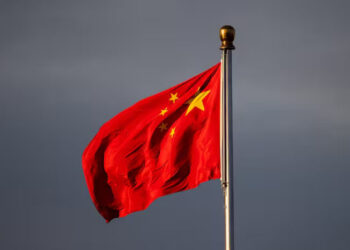
Trump has framed AI as central to competing with China, and says the US currently leads and intends to stay ahead. He has described AI as the next Industrial Revolution, with the potential to account for as much as 25% of the US economy. The subject is expected to come up again next week, when Trump meets Chinese President Xi Jinping in Washington, DC.
Right now, the “AI Force” is a name and an intention, not a working plan. There’s no structure, no leader, and no start date. What is clear is the message behind it: Trump wants the US government seen as backing AI’s growth, not slowing it down, even as parts of the AI industry itself, and communities living near its data centres, are asking for the opposite.