
Seven years is long enough to judge a promise by its results. On 5 August 2019, India dismantled the special constitutional status of Jammu and Kashmir, betting that full integration would deliver what decades of biased and decaying separate status had not: roads, jobs, and an ordinary life free of curfew with return of long-lasting development and push for prosperity. Across the Line of Control, in the territory Pakistan forcibly occupies and calls “Azad” Kashmir, no such bet was ever placed. This week, the contrast between the two Kashmirs has stopped being a matter of rhetoric and become a matter of body count.
Start with what has actually been built. The railway line linking Kashmir to the rest of India, anchored by the world’s highest railway arch over the Chenab, was a fantasy for so long that its completion still feels faintly improbable.
47 highway projects have cut through terrain that swallowed construction budgets for a generation. Investment proposals worth more than a lakh and a half crore rupees have been logged since 2019, and a meaningful share of them have turned into actual factories with actual payrolls. Tourists arrived in numbers the Valley had never recorded, over two crore in a single year, drawn by a Tulip Garden, a UNESCO craft-city designation, a gondola ride, the ordinary attractions of a place that finally feels safe enough to visit. But movement is no longer disputable. Seven years on, Jammu and Kashmir has a story to tell that involves cranes and platforms rather than only checkpoints.
Now look at what the other Kashmir has been given instead. The charter that eventually produced this year’s uprising in Pakistan-Occupied Jammu & Kashmir (PoJK) did not ask for independence or for a plebiscite. It asked for subsidised flour, fair electricity pricing, and an end to the practice of reserving legislative seats for categories of people the territory’s residents cannot themselves elect. It was drawn up by an umbrella of traders, transporters, teachers and lawyers, the civic backbone of any functioning society, not the fringe of an insurgency. That the demand originated with shopkeepers and schoolteachers, and not with an armed faction, is precisely what makes the response to it so damning.
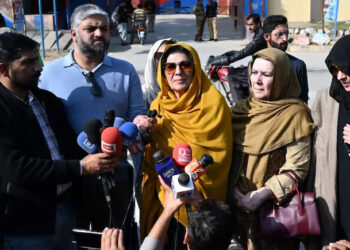
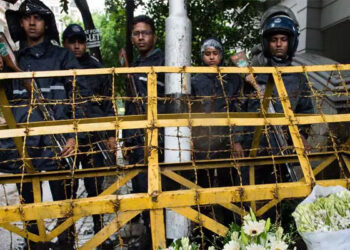
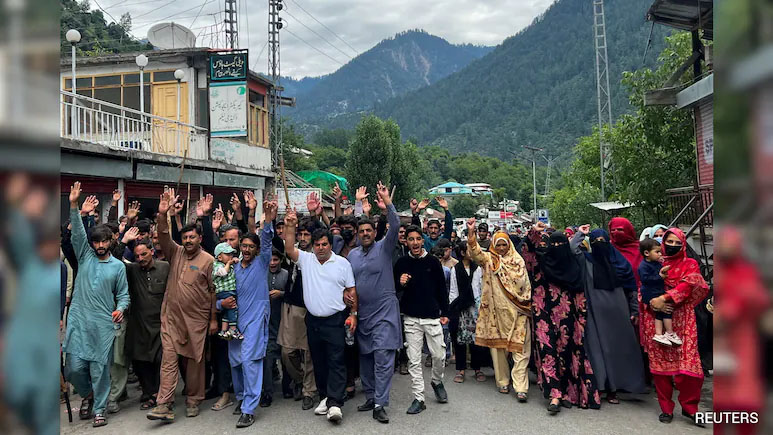
The response arrived in stages, each rougher and brutal than the last. A wave of protest over flour and electricity in 2024 was met with force before a token subsidy bought a temporary peace. When the promises lapsed and people returned to the streets in 2025, security forces opened fire on a crowd in Muzaffarabad demanding basic rights, killing at least two, while telecommunications across the territory were shut down to keep the moment from being seen. By 2026, suppression had escalated into outright prohibition: the coalition itself was proscribed under an anti-terrorism law, an instrument meant for armed militants, applied instead to an association of civic groups whose most radical demand was cheaper electricity. Its office was raided and sealed. Its members were arrested by the score. And when the protests continued anyway, including opposition to what India’s government has rightly called a farcical election exercise, the crackdown turned lethal on a scale that is difficult to describe as anything but a massacre. At least 90 civilians are now reported dead, a toll India’s Ministry of External Affairs has publicly condemned as the product of “wanton killings,” even as a media blackout and Internet ban in PoJK tries to keep the killing quiet.
Every uprising has a document at its heart, and the document usually tells you how modest the beginning was. In Pakistan-occupied Jammu and Kashmir(PoJK), the document is a charter of demands drawn up by a coalition of ordinary people, and its contents are revealing precisely because they are so unremarkable. Subsidised wheat flour. Fair pricing for electricity. An end to a set of political privileges the people do not share. These are not the demands of a secessionist militia. They are the demands of traders, teachers, transporters, and students who wanted the basic terms of a decent life. What happened to that charter, and to the people who raised it, is the story worth telling on this anniversary.
The coalition is called the Joint Awami Action Committee (JAAC), which was formed in September 2023, not as a political party seeking power but as an umbrella bringing together the civic life of the territory: its traders’ associations, its transporters, its lawyers, its teachers, its students. This matters because it tells you the movement did not come from the margins. It came from the centre of ordinary society, from the very people a functioning state depends on. When shopkeepers and schoolteachers take to the streets and stay there, the grievance is not manufactured. It is real, and it is broad.
The charter the coalition eventually raised ran to some thirty-eight points, but its spine was simple. The people wanted relief from the cost of flour and the cost of power, and they wanted an end to the reservation of legislative seats for categories they could not themselves elect, an arrangement they saw as a denial of their own political voice. In a territory rich in the rivers that generate electricity, the demand for fair power pricing carried a particular sting. The people were asking, in essence, why the wealth their land produced did not reach their own homes.
There is a contrast here that need not be laboured, but should be named. Across the Line of Control, a demand for development has been answered, imperfectly, with development, and dissent has been channelled into an elected assembly rather than crushed by an anti-terror ban. That side has its own unresolved problems, including a real and continuing security threat, and honesty requires acknowledging them. But no civil society coalition on the Indian side asking for bread and electricity has been declared a terrorist organisation and fired upon in the street. The difference is not one of degree. It is one of a kind.
The difference between the two Kashmirs, seven years after the moment that is supposed to separate them, is not a difference of degree. It is a difference of kind: one side has, however unevenly, tried to answer a demand for a better life with the material of a better life; the other has answered the same demand with tear gas, a ban, and a bullet.
An anniversary is usually an occasion for a country to look at itself. This year, the more instructive exercise may be to look across a mountain range at people who asked for almost nothing, and were given almost nothing back except grief. A demand for bread should never be met with a bullet. That it has been, again this summer, in Rawalakot and Muzaffarabad and Mirpur, is the fact that this anniversary should not be allowed to pass over.
The charter of the Joint Awami Action Committee will be remembered, if it is remembered, as a modest document that asked for very little and was answered with a great deal of force. That is the tragedy of the territory. Its people asked only for the ordinary dignities that a state exists to provide, and were met with tear gas, prohibition, and gunfire. The measure of what has been done to them is the sheer smallness of what they were asking for. A demand for bread should never be answered with a bullet. On one side of the line in Kashmir, it has not been. On the other, it has. That, in the end, is the difference the anniversary should compel us to see.
(Aditya Raj Kaul is a Senior Executive Editor, National Security & Strategic Affairs, NDTV)
Disclaimer: These are the personal opinions of the author