
Japan’s new defence paper says the country must adapt to drone and AI warfare while boosting arms production. The shift signals a faster military modernisation drive as China, Russia and North Korea raise regional tensions.
Japan needs to adapt to new methods of warfare such as drones and artificial intelligence, and strengthen its defence industry, the government said on Tuesday. A 598-page defence paper adopted by the Cabinet said the country must respond to lessons from conflicts in Ukraine and the Middle East, while also dealing with what it called China’s biggest strategic challenge, alongside concerns over Russia and North Korea.
Japan has increased military spending and capability in recent years, and has begun deploying long-range cruise missiles as a deterrent to China’s military activity. The paper said Japan is alarmed by the growing presence of Chinese warships and the increasing frequency of their activity in the Pacific Ocean.
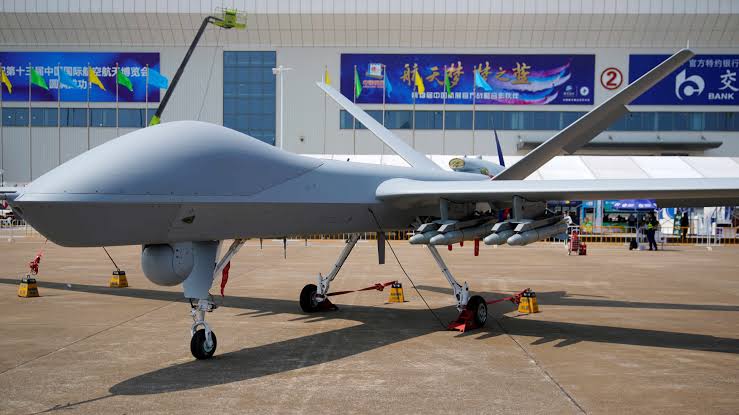
Citing the use of drones in Ukraine, the paper said it was essential for Japan to adapt to “new ways of warfare”. With many countries racing to develop combat drones, the government has made domestic development a priority for coastal defence, alongside long-range missiles. “Speed is key,” Defence Minister Shinjiro Koizumi said in early July.
Japan’s Acquisition, Technology and Logistics Agency recently selected four drone makers from 38 applicants for a rapid development programme. Their drones are to move to testing by Japan’s navy in early August before a final selection is made. A number of companies are also developing similar systems, with Toshiba announcing on Friday that it plans to jointly develop combat drones with startup Pro Drone.
The paper said uncrewed weapons could help Japan deal with a falling number of service members in a country with a shrinking population. But experts say developing fully homegrown drones will be difficult when Japan’s commercial drone market is dominated by Chinese imports.
Japan has also strengthened its military forces on its south-western islands in recent years as it worries about a conflict in Taiwan, which China claims as its territory. The defence paper said the growing presence of Chinese warships and the frequency of their activity in the Pacific are a major concern, and noted that the Defence Ministry has set up a unit to study Japan’s Pacific strategy and strengthen its defence against China.
The paper said China has consistently increased military spending without transparency and has rapidly and extensively strengthened its nuclear and missile capabilities. It also said that last December Chinese aircraft locked their radars on Japanese planes during Chinese aircraft carrier drills near south-western Japan, which is considered a possible preparation for firing missiles.
It further noted that two Chinese aircraft carriers were spotted near the southern Japanese island of Iwo Jima in June for the first time. This raised concerns in Tokyo over Beijing’s expanding military activity far beyond its borders and in disputed areas in the East China Sea. Tensions between Tokyo and Beijing have also risen since Takaichi said in November that Chinese military action against Taiwan could justify Japan’s use of force.
China’s growing joint military operations with Russia around Japan, including joint bomber flights and warship operations, are also “a grave national security concern”, the paper said. It added that North Korea’s rapid missile development, including hypersonic arsenals, is an “increasingly serious and pressing threat”, and said the North’s growing military ties with Russia and its support for Moscow’s war in Ukraine are a grave concern.
The paper said strengthening arms production and technology is essential to Japan’s military power. The government has been expanding funding for startups and scientific research. In a country that has maintained a pacifist pledge since the end of World War II, many established companies have avoided links with lethal weapons, but officials said a growing number of startups are interested in adapting dual-use technology for military purposes.
Japan’s recent decision to scrap its ban on exporting lethal weapons could also help strengthen its underdeveloped defence industry. Koizumi said weapons technology transfer, joint development and production would strengthen both Japan’s defence industrial base and its ties with defence partners. Japan has recently made major deals, including the joint development and transfer of 11 upgraded Mogami-class frigates to Australia. It is also discussing a similar deal with New Zealand and has reached an agreement to sell retired destroyers to the Philippines.
Overall, the defence paper sets out Japan’s push to modernise its military with drones and other new technologies, while building up domestic arms production and responding to growing security concerns linked to China, Russia and North Korea.
With PTI Inputs