
London: Pakistan is facing renewed scrutiny after extremist Islamic clerics were shown defending suicide attacks against the Pakistani military in a recent documentary, highlighting the country’s deepening internal security and governance challenges.
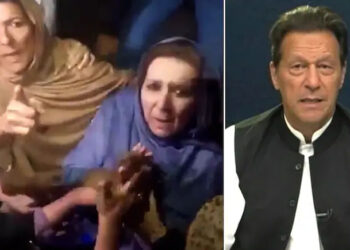
According to the documentary, Pakistan – Nuclear Power at a Crossroads, produced by DW News, one cleric is quoted as saying, “Those carrying out attacks are targeting the oppressor. Our Pakistani military is committing oppression. A large number of our scholars have gone missing.” The remarks underscore concerns over the growing influence of radical narratives directed against the Pakistani state.
The documentary portrays Pakistan as a nation confronting multiple crises simultaneously. While tensions with India over Kashmir continue to generate periodic military confrontations along the Line of Control, the report argues that Pakistan’s most pressing challenges are increasingly domestic, including extremist violence, economic stagnation, and political instability.
It notes that radical Islamist groups continue to launch attacks on security personnel and civilians, despite repeated military operations aimed at restoring stability. The documentary also highlights allegations from human rights organizations regarding the military’s dominant role in politics, while military officials maintain that extraordinary security threats necessitate their continued involvement in governance.
With nearly half of Pakistan’s estimated 240 million citizens under the age of 18, the report states that a weak education system, limited economic opportunities, and rising social frustration are creating conditions that could further fuel instability.
The documentary concludes that Pakistan stands at a critical crossroads, where persistent security threats, economic challenges, and political tensions continue to test the country’s long-term stability.