
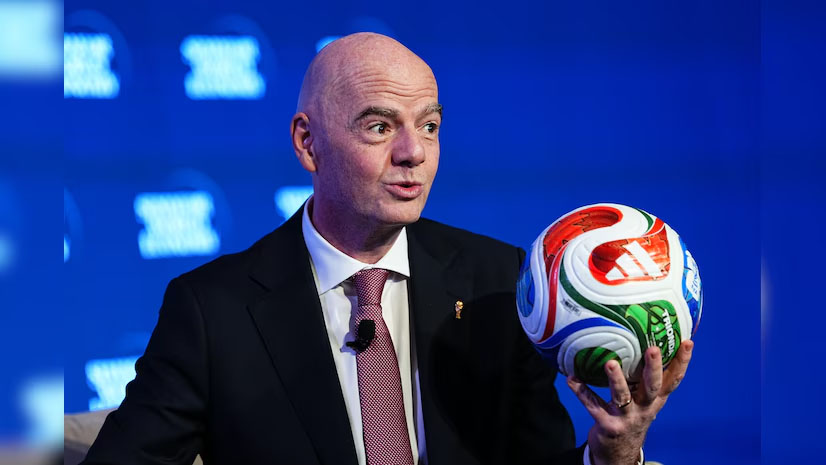
The two nonprofit organizations have long had an uneasy relationship, exacerbated recently as Fifa encroached on UEFA’s turf
UEFA is considering a boycott of Fifa events, according to a person familiar with the matter, in a seismic rift between the most powerful governing bodies of football.
The organizer of European football reacted furiously on Tuesday to proposals from Fifa that it would seek private investment. In response, UEFA has held internal discussions about how clubs and member associations could boycott events. That includes the World Cup as well as the Club World Cup, an expanded Fifa-backed tournament that could rival UEFA’s own lucrative Champions League, said the person familiar who wasn’t authorized to speak publicly about the talks.
A spokesperson for UEFA declined to comment. Fifa didn’t respond to a request for comment.
The two nonprofit organizations have long had an uneasy relationship, exacerbated recently as Fifa encroached on UEFA’s turf. It deteriorated further after Fifa unveiled plans to place major commercial and tournament operations into a new entity valued at $20 billion.
On Tuesday, UEFA responded to the news of Fifa’s commercial vehicle with a fierce warning against the growing influence of private investors, declaring that the game and its leading competitions weren’t assets to be sold.
“This crosses a line that football’s governing institutions should never cross,” said UEFA, which comprises 55 of the Fifa members. “UEFA takes it extremely seriously. So should every National Football Association. So should every stakeholder: leagues, clubs, players, supporters, governments and everyone who cares about the future of the game.”
UK Prime Minister Andy Burnham added to the criticism of Fifa, saying in a social media post that “football does not belong to investors. It belongs to the people who fill the stands and who stand on the touchline week in, week out, rain or shine.”
Fifa said the proposed company, Fifa Forward Enterprise, would remain under its control, with investors permitted to acquire only minority, non-controlling stakes. The venture could raise as much as $4.2 billion and Fifa has said it could substantially increase development funding for Fifa’s 211 member associations, supporting infrastructure, coaching, grassroots programs and women’s football.
UEFA, however, fears that the introduction of private capital could give Fifa still greater influence over member associations and their national clubs.
Fifa has recently expanded its presence in territory historically dominated by UEFA’s Champions League. The bigger Fifa Club World Cup, held in 2025, had a $1 billion prize pot shared by 32 clubs. The revamped tournament put it in direct conflict with the Champions League, one of the most lucrative footballing competitions.
Another point of contention is that player schedules have been overloaded in the last few years with more competitions, leading to complaints from player unions. Clubs, who pay player wages, have been pressing to limit international tournaments because they lead to player fatigue and injuries.