

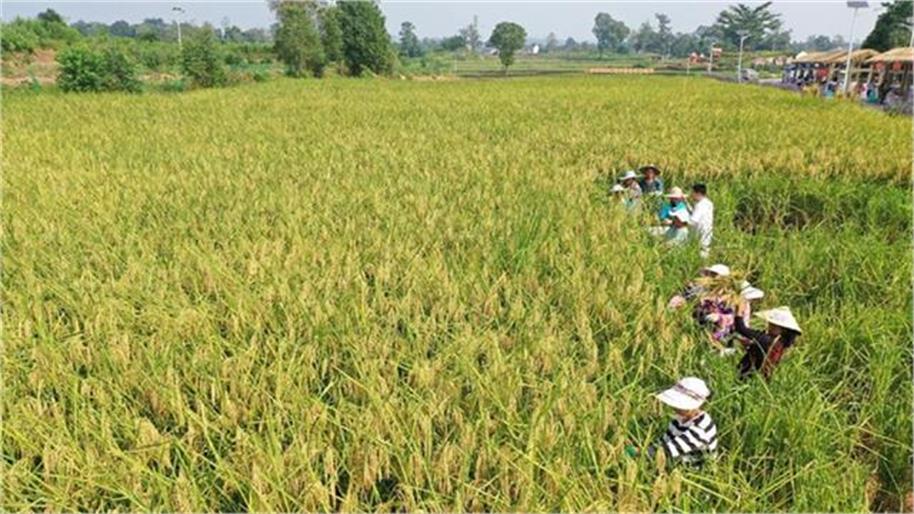
Chinese scientists say they have developed a method to clone hybrid rice, a breakthrough that could dramatically cut seed costs and boost food production. While researchers hail the innovation as a potential game-changer for global agriculture, experts caution that questions over biodiversity, disease vulnerability and long-term dependence on the technology remain unresolved.
Beijing/New Delhi: Chinese researchers have announced a significant advance in agricultural biotechnology with the successful cloning of hybrid rice, a development that could reshape farming practices and strengthen global food security. The research, led by Wang Kejian and his team at the China National Rice Research Institute, aims to allow farmers to replant harvested hybrid rice without losing its high-yield characteristics.
Scientists involved in the project say the technology could reduce farmers’ reliance on purchasing expensive hybrid seeds every growing season, potentially lowering seed costs by up to 99 per cent.
Discovery of the HUAXU Gene
The breakthrough is based on the identification of a rice gene known as HUAXU, detailed in a study published in the journal Vita. Researchers found that the gene enables rice egg cells to reproduce through parthenogenesis, allowing seeds to develop without fertilisation.
According to the study, the resulting seeds are genetically identical to the parent plant, effectively preserving the desirable traits of hybrid rice across generations. The researchers also reported a cloning success rate exceeding 99 per cent under a variety of environmental conditions.
What Could It Mean for Farmers?
If successfully commercialised, the technology could offer several advantages:
- Lower production costs: Farmers could save and replant their own hybrid seeds instead of purchasing new ones every season.
- Stable crop performance: High-yield and quality traits could remain consistent over multiple planting cycles.
- Enhanced food security: Wider adoption could increase rice production, particularly in regions facing growing food demand and climate-related challenges.
Concerns Over Widespread Adoption
Despite its promise, scientists and agricultural experts have urged caution, pointing to several potential risks that require further research.
- Biodiversity loss: Large-scale cultivation of genetically identical rice varieties could reduce the diversity of traditional and locally adapted crops.
- Higher disease risk: Uniform genetic makeup may leave entire harvests vulnerable if a new pest or disease emerges.
- Economic impact: Seed producers and local agricultural businesses that depend on annual hybrid seed sales could face significant disruption.
- Food safety questions: Some observers have raised concerns about the long-term implications of consuming cloned crops, although there is currently no scientific consensus indicating that cloned rice poses health risks. Experts stress that rigorous regulatory evaluation and long-term studies would be essential before widespread adoption.
Implications for India
The development has also prompted discussion about its potential impact on countries such as India. Some agricultural analysts believe that if Chinese-developed rice cloning technology enters the Indian market, policymakers may weigh its productivity benefits against concerns over technological dependence, domestic seed sovereignty and long-term agricultural resilience.
They argue that any future adoption would likely require careful regulatory scrutiny to balance innovation with food security, biodiversity conservation and the protection of local farming systems.