

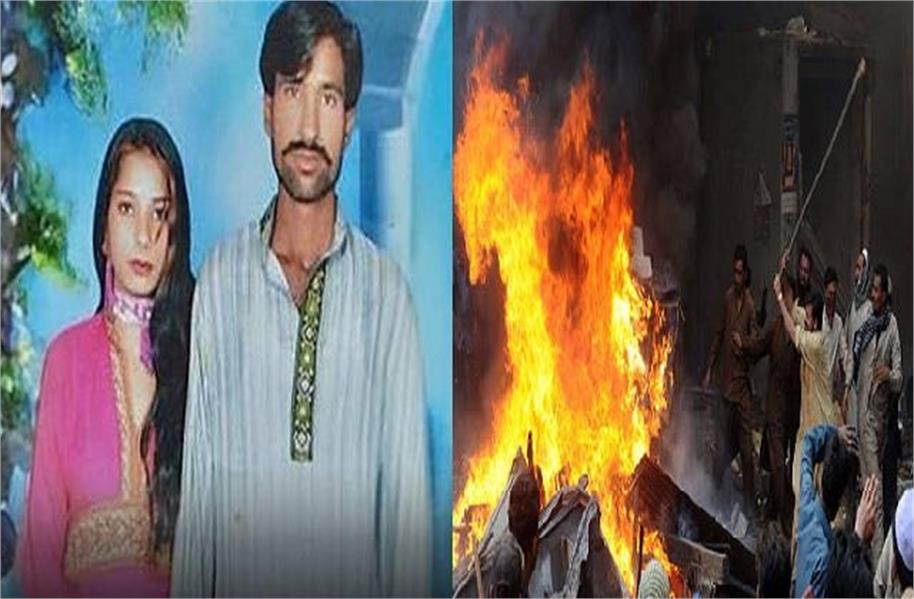
Islamabad: Pakistan’s Supreme Court has acquitted the last three men convicted in the horrific 2014 lynching and burning alive of Christian couple Shahzad Masih (26) and his pregnant wife Shama Bibi (24), leaving no one legally accountable for one of the country’s most shocking cases of religious mob violence. The verdict has intensified criticism of Pakistan’s justice system and renewed fears over the safety of religious minorities.
The brutal killings took place on 4 November 2014 in Kasur district, Punjab, where the couple worked as labourers at a brick kiln. They were falsely accused of desecrating pages of the Holy Qur’an. According to reports, the kiln owner prevented them from fleeing after a financial dispute, while a local cleric allegedly incited residents through a mosque loudspeaker. Within hours, a mob of more than 1,000 people gathered, mercilessly assaulted the couple and threw them alive into a blazing brick kiln. Shama Bibi was pregnant at the time.
Although an anti-terrorism court initially sentenced five men to death and jailed eight others, the convictions gradually unravelled over the years. Higher courts acquitted most of the accused, citing insufficient evidence, and on 10 July the Supreme Court overturned the death sentences of the final three convicted men, ruling that investigators had failed to produce reliable evidence. The Punjab Government’s appeal seeking action against 102 previously acquitted suspects was also dismissed.
The ruling has sparked outrage among Pakistan’s Christian community. Bishop Samson Shukardin, President of the Pakistan Catholic Bishops’ Conference, lamented that despite a 12-year legal battle, justice had still not been delivered.
“Shahzad and the pregnant Shama were thrown alive into the fire. After 12 years, justice has still not been served. Where is justice?”
Church leaders argue that the verdict reflects a broader pattern in which attacks on religious minorities frequently go unpunished. Bishop Indrias Rehmat of Faisalabad said weak investigations and poor prosecution repeatedly allow suspects in sectarian and religious violence cases to escape conviction.
He also pointed to the 2023 Jaranwala attacks, where mobs torched 26 churches and more than 80 Christian homes following blasphemy allegations. Despite widespread destruction, most of those accused have also been acquitted.
The National Catholic Commission for Justice and Peace (NCJP) has accused law enforcement agencies of conducting inadequate investigations that fail to secure credible evidence for trial. Church representatives further claim that many victims’ families are too intimidated to pursue justice because of fears of retaliation.
Human rights organisations have long warned that Pakistan’s blasphemy laws are frequently misused, with accusations often triggering deadly mob violence before courts can determine guilt or innocence. The Human Rights Commission of Pakistan (HRCP) and the International Federation for Human Rights (FIDH) have repeatedly raised concerns over alleged weaknesses in criminal investigations, impunity for mob violence, and discrimination faced by religious minorities.
Christian leaders have called on the United States, European countries and other democratic nations to increase diplomatic pressure on Pakistan to ensure genuine religious freedom, strengthen protections for minority communities and hold perpetrators of sectarian violence accountable.
The acquittal of every accused in one of Pakistan’s most notorious mob-lynching cases is likely to deepen international scrutiny of the country’s ability to deliver justice in crimes targeting religious minorities.