
An active fault line beneath China’s Brahmaputra mega dam has raised fresh questions over its long-term stability and renewed concerns about its downstream impact on India
China’s construction of what is expected to become the world’s largest hydropower project on the lower reaches of the Yarlung Zangbo river in Tibet has raised fresh geological safety concerns. The river enters Arunachal Pradesh as the Siang and becomes the Brahmaputra in Assam.
According to a report in the South China Morning Post, Chinese geologists have identified an active fault line directly beneath the mega-dam project, warning that it could pose risks to the infrastructure’s long-term stability.
What geological concerns have Chinese scientists raised?
The findings were published last month in the Chinese-language journal Sedimentary Geology and Tethyan Geology, which operates under the China Geological Survey.
The researchers said a fracture in the earth’s crust in the eastern Himalayan region could significantly affect the integrity of the massive hydropower project’s infrastructure. According to the study, the Paizhen Fault, which has been highly active since the Pleistocene (also known as the Ice Age), could significantly impact the structural stability and construction of nearby infrastructure, including dams, roads, bridges, tunnels and the reservoir area.
The researchers found that parts of the reservoir area had loosely structured and weakly bonded material. Prolonged saturation after the reservoir is filled, combined with fault movement or earthquakes, could destabilise slopes on both sides of the reservoir.
They recommended strengthening slope-stabilisation measures, retaining structures and geological monitoring to reduce these risks.
The findings contrast with Beijing’s longstanding assertions that the project has been designed to the highest safety standards and would help reduce disaster risks in the region.
Why does the project raise concerns for India?
The multi-billion-dollar project is situated close to the Indian border in Arunachal Pradesh, raising both geological and water security concerns.
The dam is being built on the Yarlung Tsangpo, China’s name for the upper reaches of the river that eventually becomes the Brahmaputra, at the point where it bends sharply before entering India and later flowing into Bangladesh. As the upstream state, concerns surround China’s ability to regulate the timing and volume of water releases to a certain extent, raising downstream water security concerns.
An Indian government analysis seen by Reuters estimated that the project could reduce dry-season flows by as much as 85 per cent under some conditions. It also estimated that the project might enable China to divert up to 40 billion cubic metres of water, slightly more than one-third of the annual flow received at a key border point.
Arunachal Pradesh Chief Minister Pema Khandu has described the project as a “ticking water bomb”. He has warned that reduced flows during reservoir filling or sudden releases could threaten communities along the Siang.
India and China do not have a comprehensive treaty allocating the Brahmaputra’s waters. They do, however, have agreements covering hydrological information and an expert-level mechanism for discussing transboundary rivers.
How is India responding?
India has accelerated plans for its own hydropower development in Arunachal Pradesh in response to China’s dam-building efforts.
According to Reuters, India is pushing forward with the Siang Upper Multipurpose Project (SUMP), an 11,000 MW hydroelectric and flood-control mega-dam proposed on the Siang river in Arunachal Pradesh’s Upper Siang and Siang districts.
Led by state-run NHPC, the project would become India’s largest hydropower station if completed. It is expected to generate around 47 billion units of electricity annually and is projected to cost nearly ₹1.5 trillion.
What is China’s Brahmaputra mega dam project?
The project, commonly known as the Medog Dam or the Yarlung Tsangpo Hydropower Project, is being constructed at the river’s great bend in Medog County in Tibet, where the Yarlung Tsangpo makes a sharp U-turn before entering Arunachal Pradesh as the Siang river and eventually becoming the Brahmaputra.
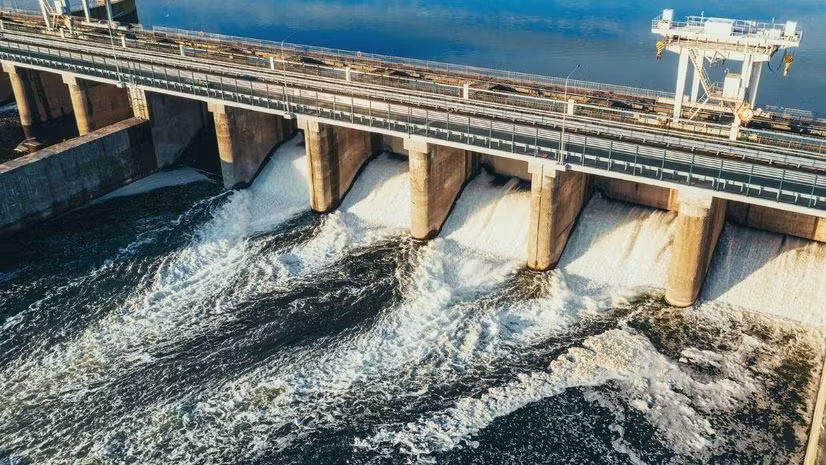
Designed around five cascade power stations, the project is expected to have a combined installed capacity of more than 60 gigawatts. The project is expected to generate over 300 billion kilowatt-hours (kWh) of electricity annually, sufficient to meet the yearly power requirements of over 300 million people. With a total investment of 1.2 trillion yuan (approximately $167 billion), it is expected to become the world’s biggest infrastructure project once completed.