
By Chandan Singh | Page 3 News Worldwide | New Delhi
New Delhi: The Delhi Government has intensified its rainwater harvesting mission, with more than 750 conservation projects completed or currently under execution across government institutions, as it seeks to strengthen groundwater recharge and improve long-term water security in the national capital.
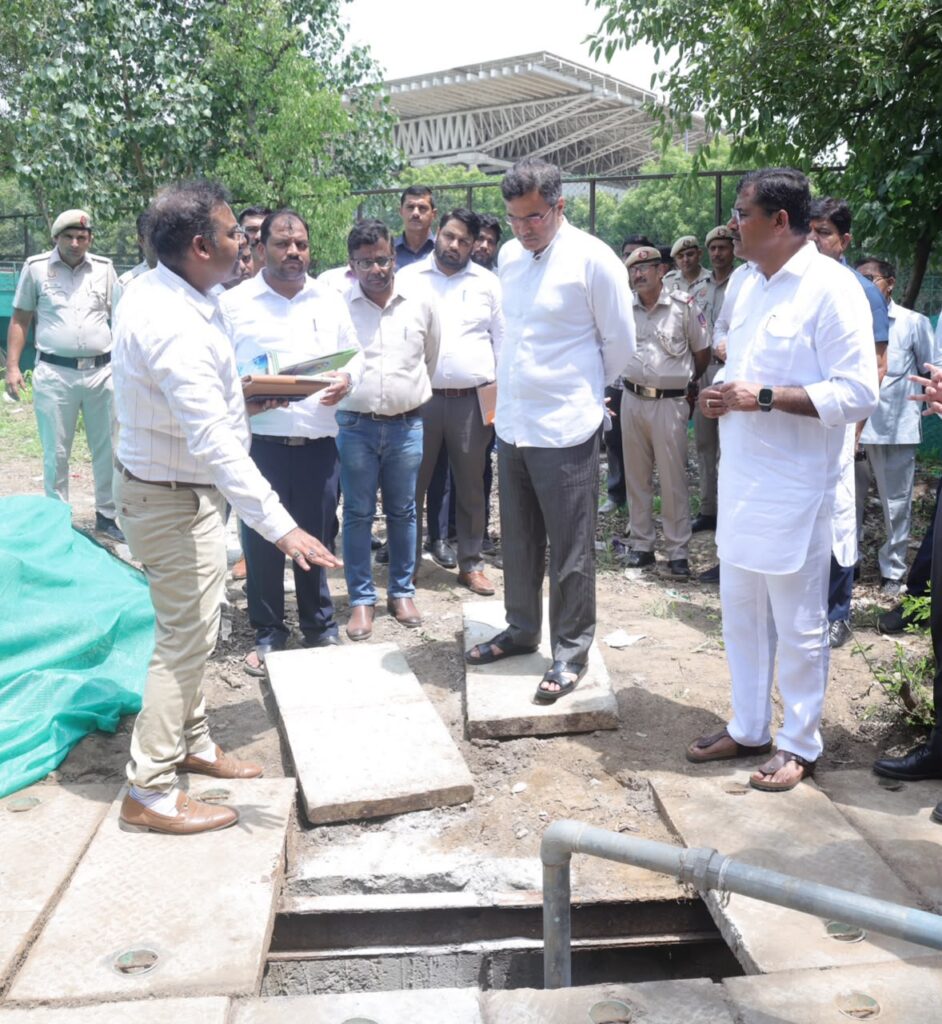
PWD and Water Minister Parvesh Sahib Singh on Thursday inspected the restored rainwater harvesting (RWH) system at Thyagraj Stadium, saying the initiative is aligned with Prime Minister Narendra Modi’s “Catch the Rain – Where it Falls, When it Falls” campaign to address declining groundwater levels.
The government has launched a large-scale programme to restore 1,000 existing rainwater harvesting systems and construct 500 new structures at government offices, schools, hospitals, stadiums and other public institutions.
According to the minister, nearly 400 existing systems have already been restored, while work is underway on over 400 additional sites, taking the total number of completed and ongoing restoration projects to more than 800. Of the 500 planned new rainwater harvesting structures, around 100 have been completed and over 250 are under construction.
The Delhi Jal Board is also carrying out a parallel restoration programme, with 611 existing rainwater harvesting systems identified for revival. Of these, 330 have been restored, 120 are under renovation, while work on the remaining sites will be completed in phases.
Officials from the Public Works Department and Delhi Jal Board are jointly inspecting government premises to ensure existing rainwater harvesting systems become fully operational while identifying locations for new installations.
The government is also examining a proposal to make rainwater harvesting mandatory for new borewell permissions, linking groundwater extraction with groundwater recharge.
The initiative forms part of Delhi’s broader strategy to improve water sustainability and build climate resilience through enhanced rainwater conservation infrastructure across public institutions.