

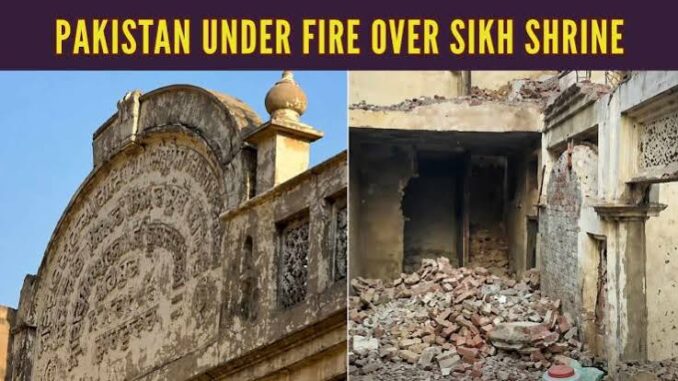
Islamabad/London: The demolition of the 125-year-old Gurdwara Sri Guru Singh Sabha Sahib in Farooqabad, Pakistan, has sparked widespread protests from the Sikh community and drawn strong diplomatic condemnation from India, intensifying concerns over the protection of minority religious heritage in the country.
According to Pakistani officials, sections of the historic Gurdwara—located around 70 kilometres from Lahore—were illegally demolished during the night of June 24–25 by a local businessman without obtaining the mandatory No Objection Certificate (NOC) from the relevant heritage and property authorities. The shrine, built more than a century ago, is regarded as a significant landmark associated with the late 19th-century Singh Sabha Movement, a major Sikh religious and social reform initiative.
The demolition reportedly went unnoticed by local authorities until members of Pakistan’s Sikh minority staged protests, prompting official intervention.
India’s Ministry of External Affairs strongly condemned the incident, describing it as a “highly deplorable and targeted act of vandalism” against a revered Sikh place of worship. New Delhi urged Pakistan to swiftly identify and prosecute those responsible, immediately restore the damaged sections of the Gurdwara, and address what it called a continuing pattern of attacks on minority religious communities and their places of worship.
The issue also prompted diplomatic engagement, with a delegation from the Delhi Sikh Gurdwara Management Committee meeting Indian external affairs officials to seek stronger intervention aimed at safeguarding the historic shrine.
Amid growing domestic and international pressure, Punjab’s Minorities Minister Ramesh Singh Arora visited the site with senior local officials and announced that Punjab Chief Minister Maryam Nawaz had ordered the immediate reconstruction and restoration of the damaged structure.
Pakistani authorities have also launched an official inquiry into the legal status and ownership of the land surrounding the Gurdwara. However, the planned restoration has raised concerns among local traders and residents who have occupied nearby abandoned properties for decades, with many calling for alternative housing arrangements should evictions become necessary.
The incident has once again placed the spotlight on the preservation of minority religious heritage in Pakistan and the challenges surrounding the protection of historic places of worship.