
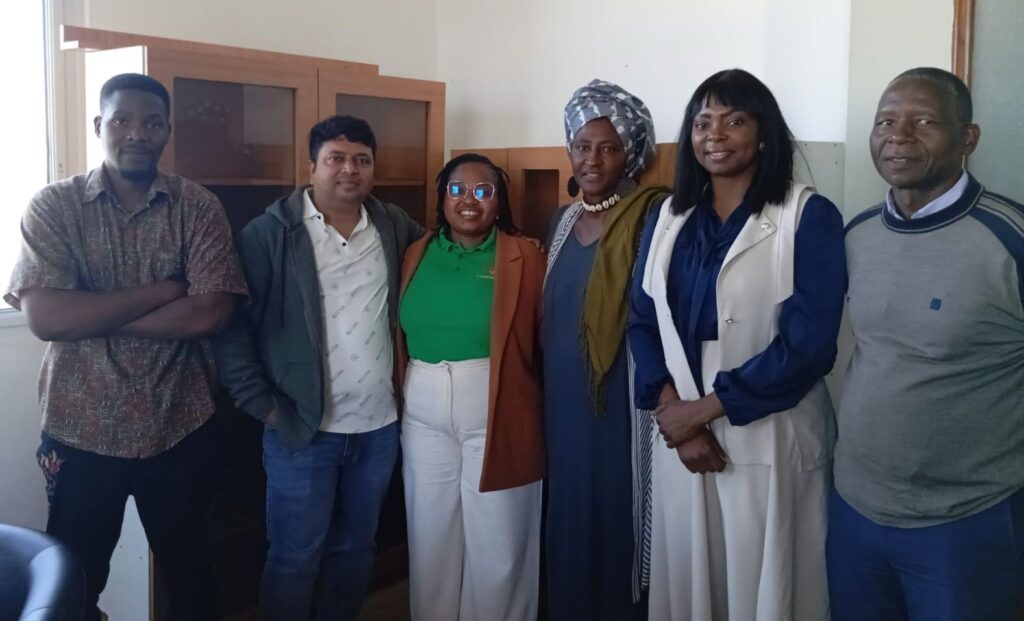
A Stakeholder Consultation to promote cooperation between India and Mozambique was organised at the office of Fundação Universitária in Maputo on 12th June. Dr. Nepeti Nicanor, Head of The Project Implementation and Survey Units of the Fundação Universitária ( University Foundation) chaired the meeting and Mr. Sumit Singh, Cooperative Entrepreneurship Expert from India and Member, Trade and Business Committee, International Cooperative Alliance (Asia – Pacific) was the Chief Guest of the meeting. University Foundation is a non-profit organization, created to promote the application of scientific, cultural, social and economic solutions of Eduardo Mondlane University (UEM) for the welfare of society as a whole. With a presence in all 11 provinces of Mozambique, the University Foundation facilitates knowledge, innovation and technology development on the one hand, and the business, public and development sectors on the other, through projects on incubation, entrepreneurship, R&D and business intelligence.
Ten representatives of women cooperative associations, civil society and startup companies from Mozambique attended the event. Mr. Nekeshimana Cedrick welcomed all participants. In her keynote address, Dr. Nepeti highlighted the key activities of the government and cooperative federations to promote socioeconomic development in Mozambique. She also mentioned the key challenges faced in the areas of agriculture, horticulture, dairy, packaging, fisheries and other sectors where the collectives and entrepreneurs need support from India. Mr. Sumit Singh gave a detailed presentation about the novel initiatives taken by Ministry of Cooperation and National Cooperative Union of India in the past five years to strengthen cooperative movement in India . He also invited experts in various industry sectors from India to interact with the delgates virtually.
Mr. Ashok Pillai, former Executive Director, National Cooperative Development Cooperation spoke about the best practices and innovative approaches adopted by fishery cooperative federations in India. Mr. Madhavendra Thakur, Chairperson, VEGFED Union shared the achievement of his federation in establishing horticulture supply-chain through integrated approach and solar-powered warehousing solutions. Ms. Shubhra Thakur, Food Processing Expert and Founder, Meira Foods explained the sustainable processing systems adopted by women collectives in north-east India for value addition of the fruits and vegetables. Dr. Richa Tripathi, Wellness Expert and Founder, Reviving Rituals talked about the importance of a balanced lifestyle and sustainable food habits for healthy living.
Mr. Eugenio Benhe, an entrepreneur working in the field of food products and eco-tourism talked about his journey as an entrepreneur and sought support to get access to efficient food processing and packaging infrastructure to scale up his business. Mr. Adelino, Founder of Adellart Design shared his journey as an entrepreneur and showcased the beautiful wood art work and products manufactured by his company. Ms. Ivete Chinde of Cooperativa Mulheres spoke about the business activities and welfare measures taken by her women cooperative federation to empower the women across Mozambique. Mr. Milton Matediane, Executive Director at AADIS gave a presentation about the entrepreneurial activities taken by his organisation to empower youth and women. AADIS is a non-profit organization dedicated to empowering African communities through education, health, food security and job skills. Ms. Felicina Langa, Founder of Finestetic (a health and aesthetic clinic) spoke about the importance of diet and massage techniques to cure obesity and other diseases. She requested support to connect with the right vendors in India for importing machines and oils as well as learning the traditional healing systems.
Mr. Sumit Singh responded to the queries of the participants and asked them to consider low-cost and effective livelihood options like Bioenzyme, candle and Cowdung products for enhancing income of the rural communities. He also mentioned the carbon credit, eco-tourism, green pads and other innovative projects implemented by Kairali Agriculture Multi-State Cooperative Society in Kerala and Tamilnadu which can be replicated in Mozambique. Dr. Nepeti thanked all the participants for their valuable inputs. She suggested that the government and civic agencies should collaborate actively with cooperative federations to extend the benefits of their initiatives to the needy communities. It was decided that such meetings will be conducted every month and a comprehensive roadmap detailing the export potential from Mozambique and machine and other requirements from India will be prepared before the next meeting. Furthermore, the possibility of fostering partnership of University Foundation with Kairali MSCS and other relevant institutions in India.